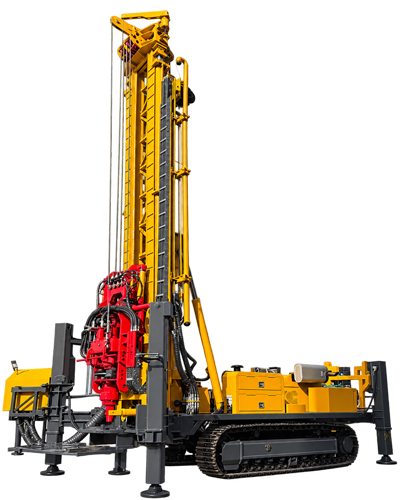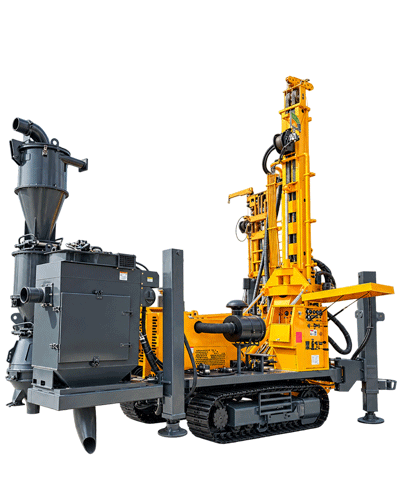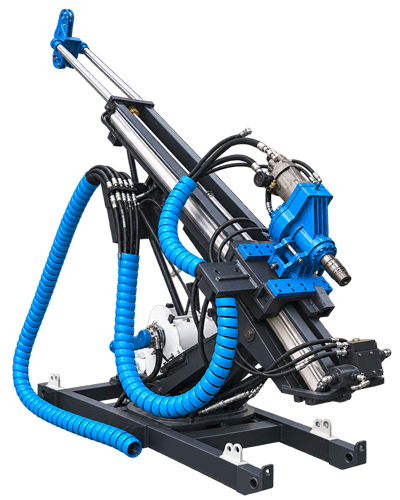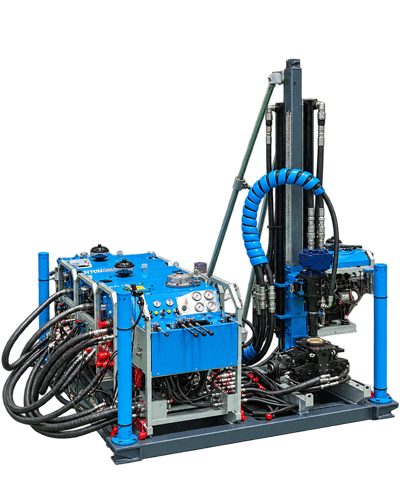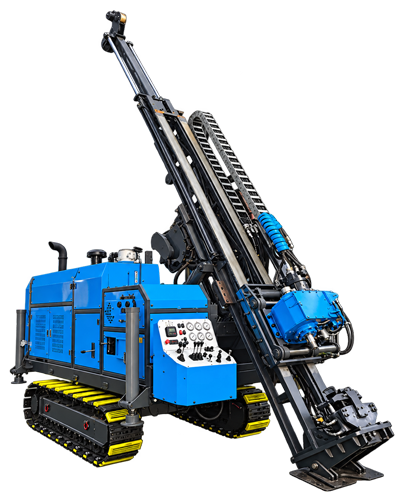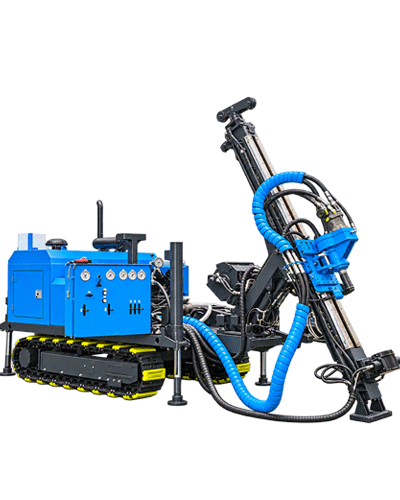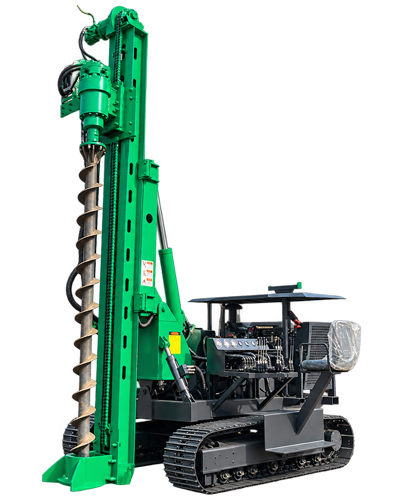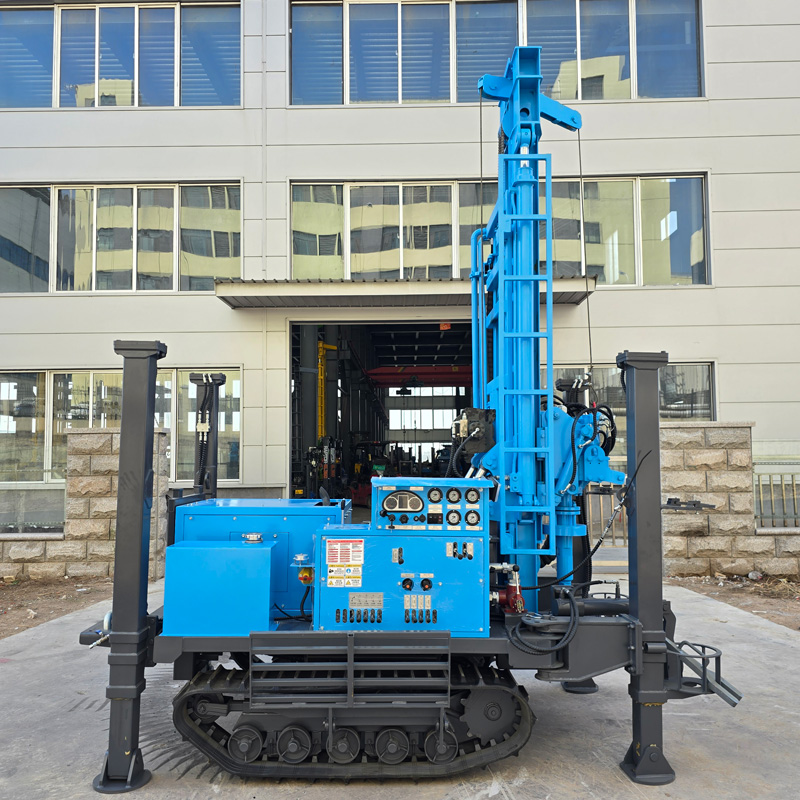
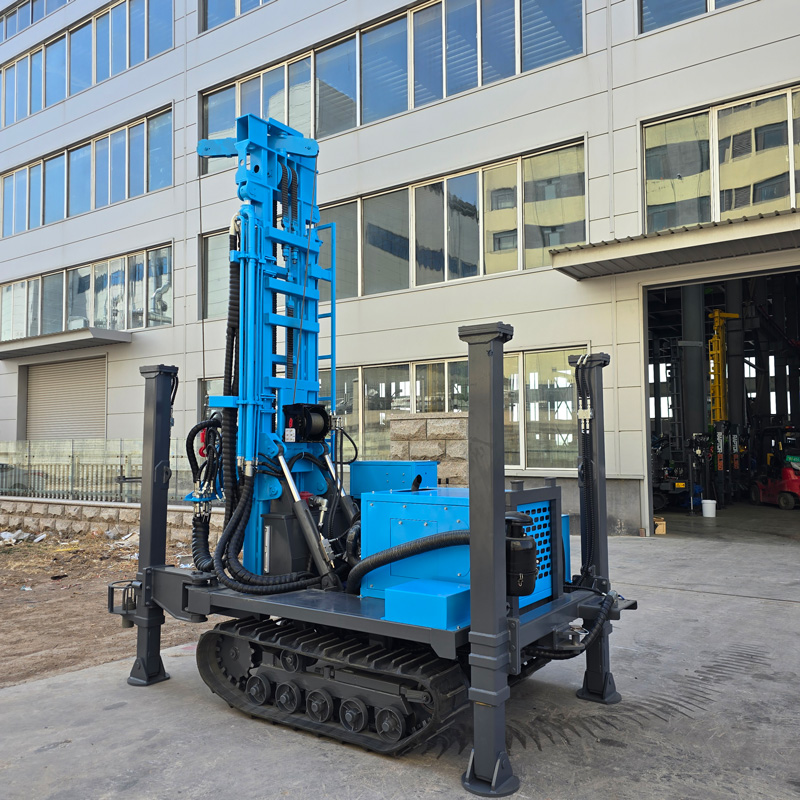
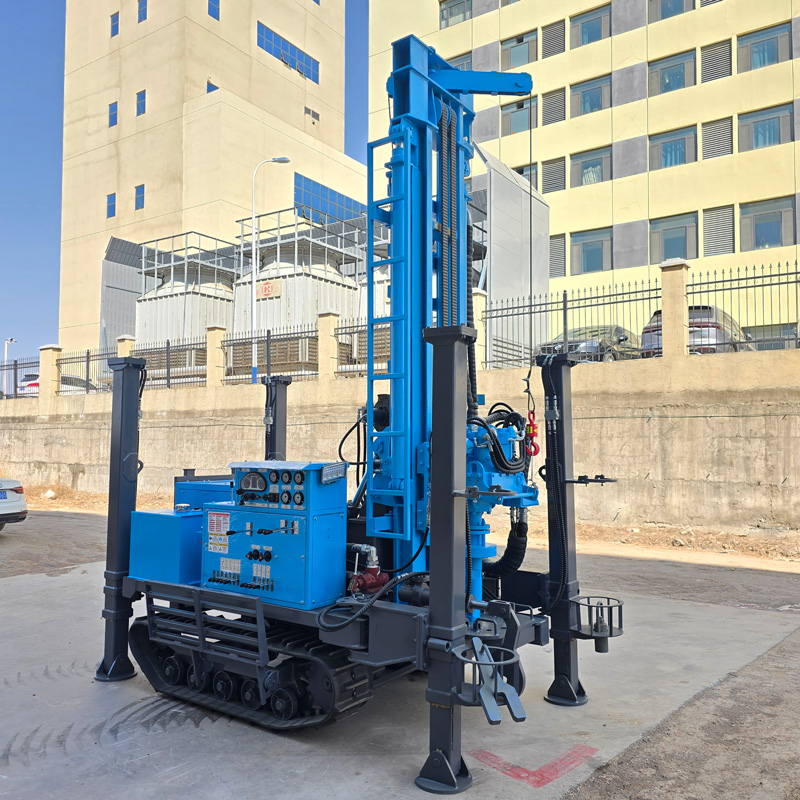
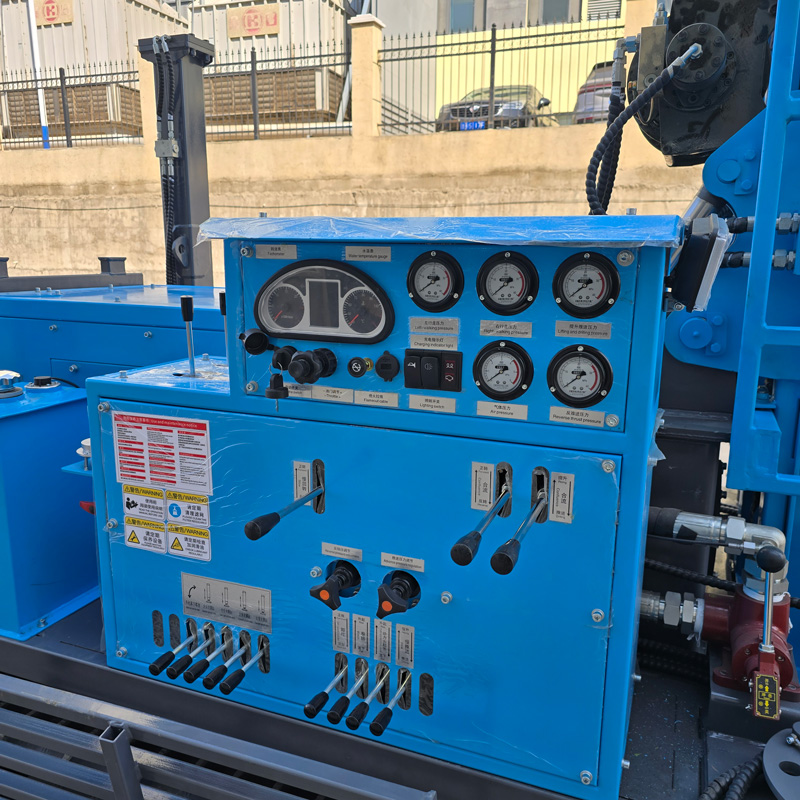
Crawler-Mounted Water Well Drilling Rig
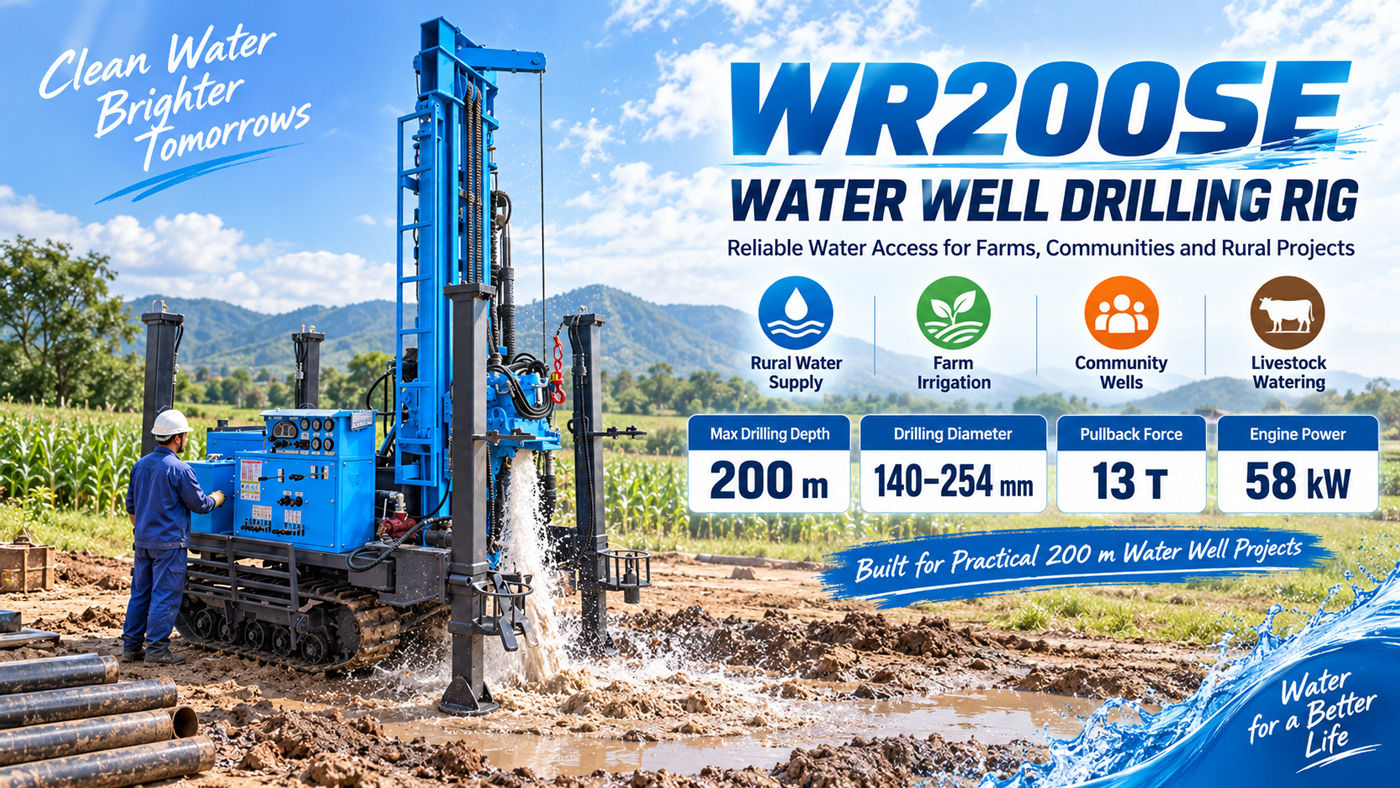
WR200SE is a cost-effective crawler-mounted fully hydraulic drilling rig designed for conventional medium-to-shallow water well construction. Compared with 120 m class small rigs, it further improves drilling depth, lifting capacity, rotary torque and air compressor compatibility, with a maximum drilling depth of 200 m and a drilling diameter of 140–254 mm. It is suitable for projects such as rural water supply, farmland irrigation, livestock water use, construction water use and small mining area water wells.
The E in WR200SE represents a cost-effective configuration. The focus is not on stacking complex functions, but on balancing equipment price, maintenance difficulty and daily operating cost while meeting the requirements of conventional 200 m class water well construction. For regional well drilling teams, farmland water conservancy construction teams and customers who have just entered the water well drilling business, this type of configuration is more likely to achieve a stable input-output ratio.
This model adopts a telescopic mast with a single feed length of 3.3 m and can be equipped with 1.5 m, 2.0 m and 3.0 m drill pipes. Compared with a fixed long mast, the telescopic structure is more flexible in transportation and site adaptability; under normal working conditions, it can also provide good working space for drill pipe handling and continuous drilling.
The 200 m class drilling depth has a wider application range than small shallow well equipment, and is especially suitable for rural areas with relatively deep groundwater levels, farmland irrigation areas and hilly areas. The actual completed well depth still needs to be determined based on local hydrogeology, aquifer position, hole diameter, drilling tools and construction technology.
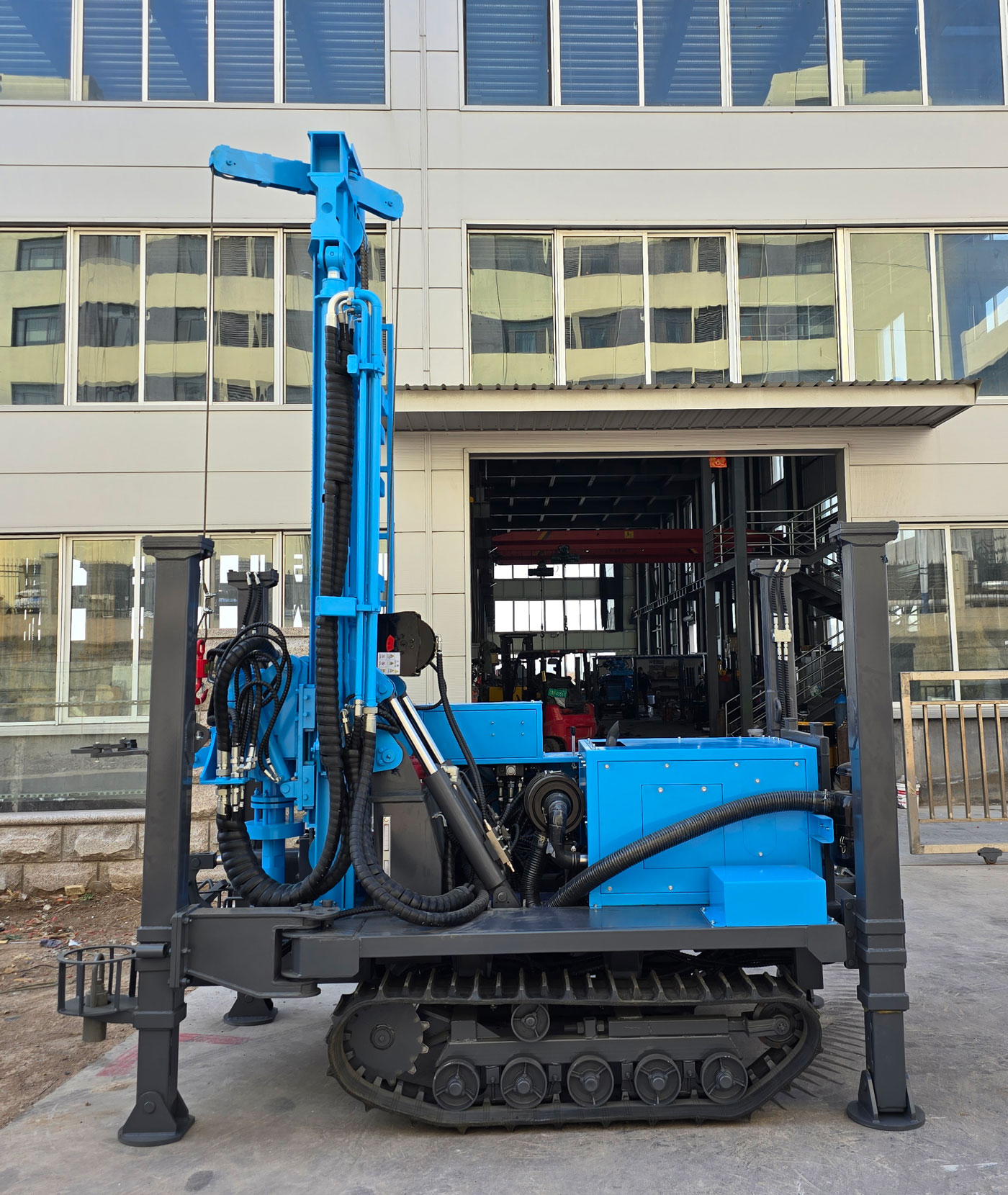
WR200SE can be used for farmland irrigation wells, orchard water wells, greenhouse water supply and nursery irrigation projects. The 140–254 mm drilling diameter can cover common well casing and water pump configurations. For agricultural wells that require long-term pumping, the well diameter, filter pipe and pump type should be determined before construction based on the expected water yield, rather than simply pursuing a larger hole diameter.
In villages where centralized water supply is unstable or far from the water supply network, WR200SE can be used for household wells, village domestic water wells and small public water intake wells. The crawler structure is suitable for rural roads and general unpaved sites, and the 58 kW diesel power also reduces dependence on a fixed on-site power supply.
Livestock drinking water, site washing and agricultural production all require a stable water source. For farms and ranches, 200 m class equipment can provide a greater water-finding depth margin than 120 m class models. During construction, the well location should be reasonably determined based on local groundwater data, avoiding relying only on increased drilling depth to compensate for site selection errors.
WR200SE is also suitable for temporary water supply in small mining areas, geological exploration camps and engineering projects, and can be used for domestic water, equipment cleaning and some dust suppression water. For working conditions with more hard rock in mining areas, DTH hammers, drill bits and air compressors should be reasonably matched so that the air supply capacity is compatible with the hole diameter, rock formation and target depth.
The rotary torque is 3400–4700 N·m and the rotary speed is 45–70 r/min, allowing operation with common DTH hammers in weathered rock and intact rock formations. During drilling, rotation and feed should be adjusted according to rock hardness and cuttings removal conditions. Long-term rigid construction with a single set of parameters is not recommended.
The 13 T lifting force can be used for normal tripping, drill pipe handling and some casing operations. When encountering stuck drill pipes, hole wall shrinkage or abnormal water return, the formation and downhole conditions should first be assessed, and the problem should be solved through hole cleaning, pulling out for inspection or casing treatment, avoiding simply relying on high lifting force to pull the drilling tools forcefully.
The rapid lifting speed of 30 m/min and rapid feed speed of 60 m/min are mainly used for power head movement and drill pipe operations in non-drilling states, which can reduce auxiliary time such as loading and unloading drill pipes and lifting and lowering drilling tools. The actual penetration rate in rock formations depends on lithology, DTH hammer, drill bit and air compressor capacity.
The reference working air pressure is 1.7–2.5 MPa, and the air consumption is 17–31 m³/min. Different hole diameters, DTH hammers and rock formations have greatly different requirements for air compressors. For example, when the hole diameter increases, the rock formation becomes harder or the altitude rises, a more sufficient displacement is usually required. Insufficient air compressor matching will directly affect impact frequency, cuttings removal and drilling efficiency.
Weathered rock formations usually have faster penetration, but the hole wall stability may be poor. Whether to follow up with casing should be determined according to block falling and hole shrinkage conditions. After entering relatively intact rock formations such as limestone, sandstone and granite, suitable DTH hammers and drill bits can be used for pneumatic drilling, with emphasis on controlling the coordination of air volume, rotation and feed.
In upper soil layers, clay, sand layers or gravel layers, direct use of a DTH hammer is not necessarily the best solution. Loose overburden is prone to hole collapse, drill burial and hole diameter enlargement. The upper hole section should first be treated with casing, mud or other hole stabilization methods before continuing drilling into stable rock formations.
Broken rock and fissure-developed formations may cause air leakage, block falling and stuck drilling. During construction, excessively fast feed should be avoided, continuous hole cleaning should be maintained, and changes in downhole air pressure and cuttings removal should be observed. If the fracture zone is thick, casing or follow-up casing methods can be considered to reduce the probability of downhole accidents.
After drilling into an aquifer, water inrush will change the cuttings removal state in the hole and the working conditions of the DTH hammer. The air compressor air supply and hole cleaning method should be adjusted according to the actual water yield, and the aquifer depth should be recorded in a timely manner. Before completing the well, the well casing, filter pipe and water stop structure also need to be reasonably arranged according to the water layer conditions.
The overall walking speed is about 2.5 km/h, and the maximum climbing ability is referenced at 30°. The crawler chassis is suitable for rural roads, farmland, gravel sites and slightly uneven ground. When moving on slopes, the center of gravity should be lowered, the mast should be retracted and ground adhesion conditions should be confirmed. The actual safe climbing ability should be judged according to site conditions.
The 1.4 m high outrigger stroke can be used to support and level the equipment on uneven sites. Before drilling begins, the chassis and outriggers should be ensured to bear force stably, and pads should be added when necessary to avoid tower tilting and hole position deviation caused by sinking on soft ground.
The overall weight is about 4.7 T, and the overall dimensions are about 3950 × 1750 × 2250 mm, placing it in the range of small and medium-sized crawler water well drilling rigs. Compared with large rigs above 500 m, it is easier to arrange transport vehicles and is also suitable for water well construction teams with many hole positions and frequent site transfers.
According to the project, 76 mm or 89 mm drill pipes, DTH hammers, drill bits, casing tools, air compressors, air hoses, oil misters and foam equipment can be configured. Matching equipment should be combined according to the target hole depth, hole diameter, rock formation and construction method. It is not recommended to configure all items only according to maximum parameters.
Before starting work every day, check hydraulic lines, rotary head, winch, crawler, mast and drill pipe connections; check joints and safety devices of the air compressor and high-pressure air hose; continuously observe air pressure, cuttings removal, water return and equipment temperature during construction; clean mud and dust in a timely manner after completion, and inspect wearing drilling tools.
Due to differences in actual geological conditions, downhole tools, drilling angle and operating methods, the final drilling efficiency, drilling depth and completed well effect should be based on on-site working conditions.
| Parameter Item | Parameter Value |
|---|---|
| Basic Parameters | |
| Product Model | WR200SE |
| Equipment Type | Cost-effective telescopic mast crawler water well drilling rig |
| Maximum Drilling Depth | 200 m |
| Drilling Diameter | 140–254 mm |
| Drill Pipe Diameter | 76 / 89 mm |
| Drill Pipe Length | 1.5 / 2.0 / 3.0 m |
| Reference Drilling Efficiency | 10–35 m/h |
| Mast and Feed System | |
| Mast Structure | Telescopic mast |
| Single Feed Length | 3.3 m |
| Lifting Force | 13 T |
| Rapid Lifting Speed | 30 m/min |
| Rapid Feed Speed | 60 m/min |
| High Outrigger Stroke | 1.4 m |
| Rotary System | |
| Rotary Torque | 3400–4700 N·m |
| Rotary Speed | 45–70 r/min |
| Power System | |
| Engine Brand | Yuchai |
| Engine Power | 58 kW |
| Air Compressor Matching Parameters | |
| Working Air Pressure | 1.7–2.5 MPa |
| Air Consumption | 17–31 m³/min |
| Matching Description | The air compressor should be selected according to hole diameter, DTH hammer specifications, target hole depth, altitude and rock hardness |
| Auxiliary System | |
| Winch Lifting Force | 1.5 T |
| Crawler Chassis | |
| Walking Speed | 2.5 km/h |
| Maximum Climbing Ability | 30° |
| Loading Width | 2.6 m |
| Applicable Ground | Rural roads, farmland, gravel ground and general uneven sites |
| Overall Dimensions and Weight | |
| Overall Dimensions | 3950 × 1750 × 2250 mm |
| Overall Weight | 4.7 T |
| Typical Formation Adaptability | |
| Intact Hard Rock | DTH drilling can be carried out after matching with suitable DTH hammer and air compressor |
| Weathered Rock | Adjust feed according to hole wall stability and follow up with casing in a timely manner |
| Loose Overburden | Casing or upper hole stabilization measures may be required |
| Broken Formation | Control feed speed and strengthen hole cleaning |
| Aquifer | Adjust air supply, casing and hole cleaning method according to water inflow |
We are a professional drilling equipment manufacturer specializing in the research and development, production and supply of water well drilling rigs, core drilling rigs, reverse circulation drilling rigs, down-the-hole drilling rigs, truck-mounted drilling rigs and mineral exploration equipment.
© 2026 Shandong Hengjianhang Construction Machinery Co., Ltd. All rights reserved.