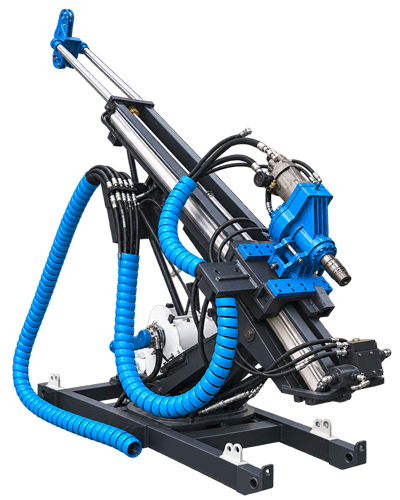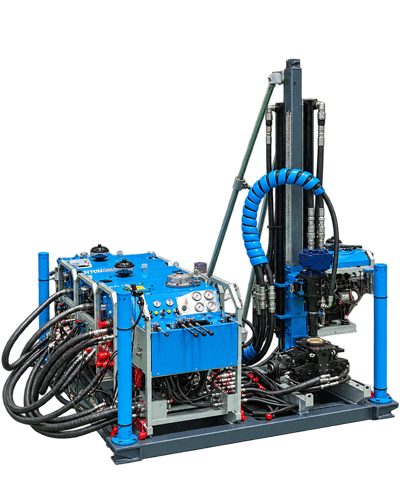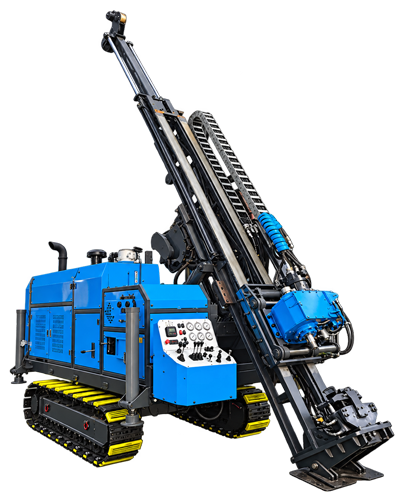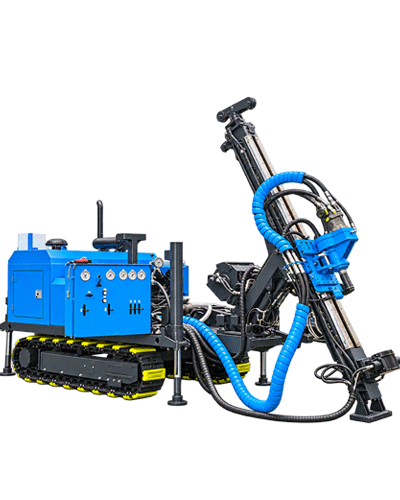
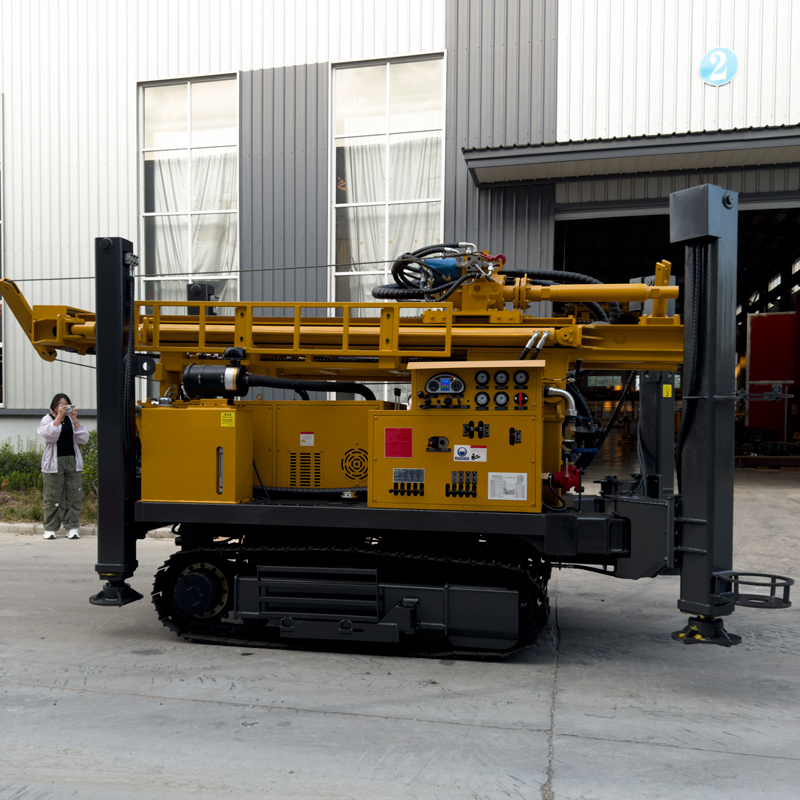
Crawler-Mounted Water Well Drilling Rig
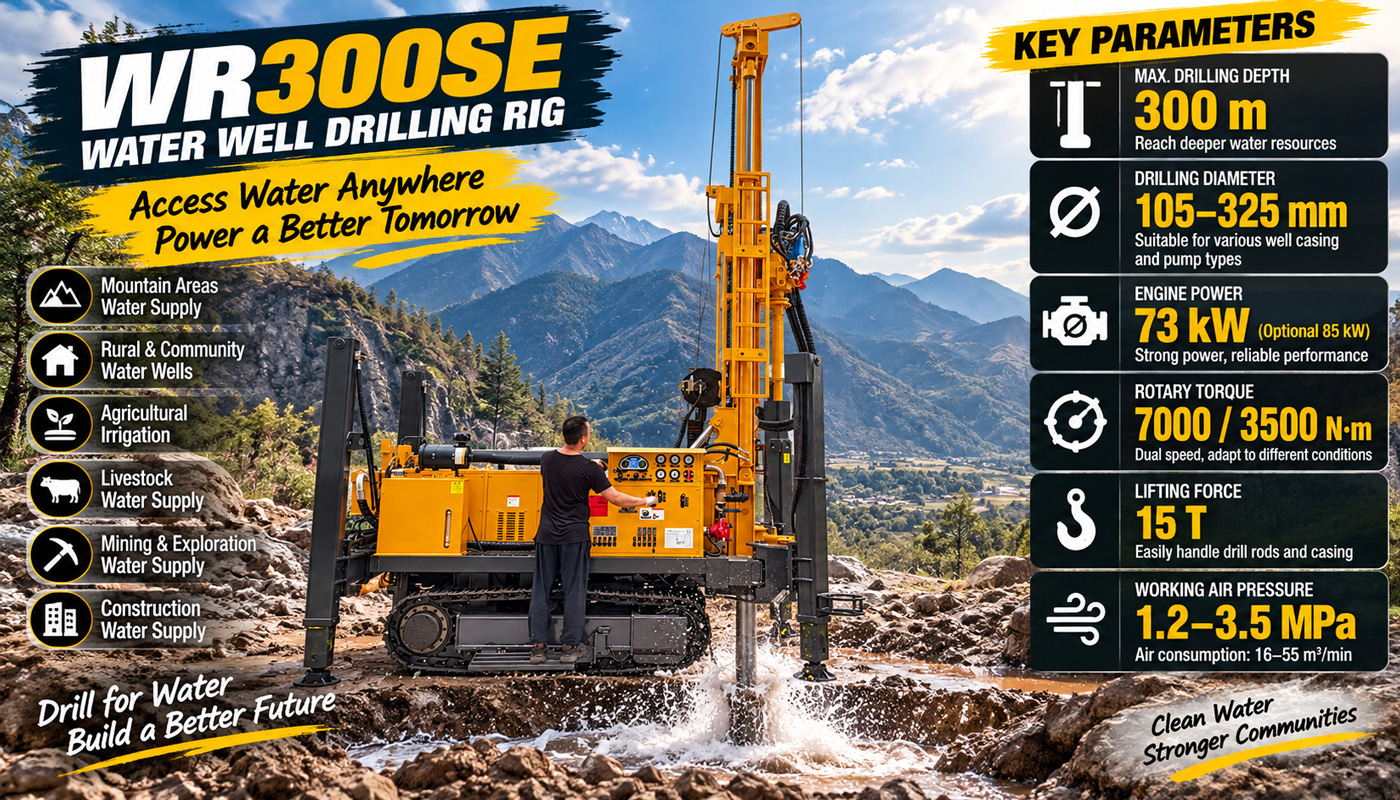
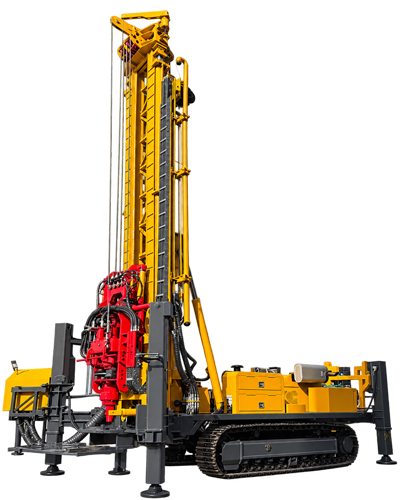
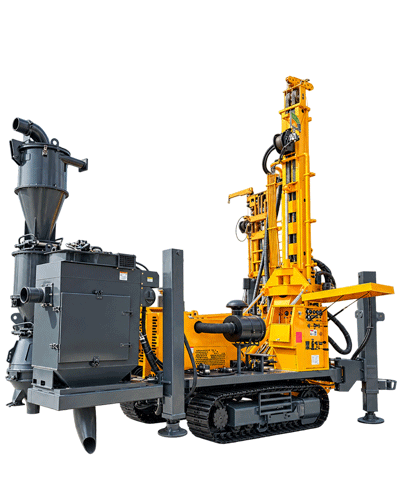
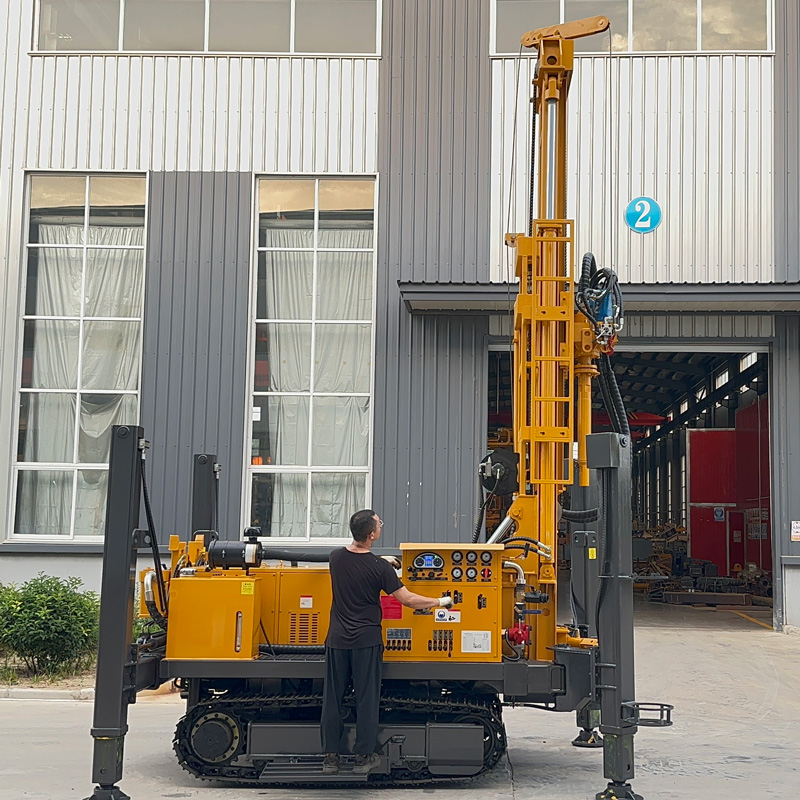
The WR300SE is a cost-effective crawler-mounted fully hydraulic drilling rig designed for conventional 300 m class water well projects. It does not simply pursue higher specifications, but is configured around common depth, common hole diameters, conventional formations and lower equipment investment. It has a maximum drilling depth of 300 m and a drilling diameter of 105–325 mm, making it suitable for farmland irrigation, rural water supply, livestock water use, groundwater investigation and general engineering water well construction.
For small and medium-sized well drilling teams, whether equipment is easy to use often depends not only on maximum parameters, but also on whether it can cover daily projects, whether relocation is convenient, whether spare parts are easy to match and later operating costs. The WR300SE is positioned as a cost-effective series, with standard power of 73 kW and optional 85 kW, providing customers with different power configuration options while meeting conventional 300 m class projects.
Agricultural irrigation wells usually focus on the balance between completed well depth, water yield, hole diameter and construction cost. The WR300SE can be used for irrigation projects in farmland, orchards, greenhouses and nurseries. The 105–325 mm drilling diameter can be compatible with a variety of well casings and submersible pump configurations. The final hole diameter should be determined according to the designed water yield, casing size and formation stability.
In areas with insufficient centralized water supply coverage, long water supply distances or relatively deep groundwater levels, 300 m class drilling rigs have greater water-finding margin than 200 m class equipment. The WR300SE can be used for household water wells, village water supply wells and small public water intake projects. Before completing the well, the target aquifer should be judged based on local hydrogeological data. It is not recommended to blindly deepen the well based only on the maximum drilling depth.
Farms and ranches usually require stable water sources for drinking, cleaning and production. The WR300SE can be used for livestock drinking water wells, auxiliary wells on farms and remote agricultural projects. The crawler chassis is suitable for village roads, farms and general unpaved ground, and can perform short-distance relocation between multiple hole positions.
In addition to well completion projects, this equipment can also be used for groundwater investigation and general hydrogeological drilling. Through formation observation at different depths, changes in return water and aquifer records, it can assist in judging groundwater occurrence. If the project has higher requirements for sample integrity, special sampling or coring equipment matching the project objectives should be selected.
The data clearly states that the WR300SE can be used in loose formations and rock. Soil, clay, sand and gravel layers can use mud rotary and other methods to maintain borehole wall stability; after entering weathered rock or intact rock, down-the-hole hammer drilling can be switched according to lithology. Its multi-process adaptability makes it more suitable for water well projects with obvious formation changes.
During down-the-hole hammer drilling, the recommended working air pressure is 1.2–3.5 MPa and the air consumption is 16–55 m³/min, which can match medium and high-pressure series down-the-hole hammers. The actual air compressor selection cannot be based only on pressure; it must also consider hole diameter, drill pipe, DTH hammer specifications, rock hardness and altitude. Insufficient displacement usually directly affects impact efficiency and bottom-hole cuttings removal.
The maximum torque of the rotary system is 7000 / 3500 N·m, corresponding to maximum rotary speeds of 80 / 160 r/min. The lower speed and high torque state is more suitable for larger hole diameters and higher load conditions; the higher speed state can be used for drilling stages with lower resistance. The appropriate working range should be selected on site according to drilling tools and formation changes.
The 15 T lifting force can be used for drill pipe tripping, DTH hammer recovery and some casing operations. As hole depth increases, both the self-weight of the drill pipe and borehole wall friction increase, so lifting resistance should be continuously observed during construction. If obvious abnormalities occur, priority should be given to checking diameter reduction, falling blocks, sticking or cuttings removal problems, rather than directly relying on maximum lifting force to handle them forcibly.
The fast lifting speed is 30 m/min and the fast propulsion speed is 55 m/min, mainly used for drill pipe handling, power head return and auxiliary actions. The reference drilling efficiency in the data is 10–35 m/h. The actual penetration rate depends on formation, hole diameter, drilling tools, air compressor and operation method. The fast propulsion speed cannot be understood as the actual drilling speed.
The WR300SE supports 3 m and 6 m drill pipes, with recommended drill pipe diameters of 89 / 102 mm. The 3 m drill pipe is more flexible in transportation, site conditions and manual operation; the 6 m drill pipe can reduce the number of pipe connections and improve continuous drilling efficiency. The actual choice should be combined with transportation conditions, mast structure and construction site space.
Soil, clay, sand and gravel layers are prone to collapse, diameter reduction and drill burial. For such formations, priority should be given to mud circulation, casing and borehole wall protection, avoiding the simple pursuit of fast penetration. Mud pumps and centrifugal pumps can be optionally configured according to project needs for circulation, drainage and auxiliary well completion.
After entering weathered rock, limestone, sandstone or other relatively intact rock, DTH hammers and air compressors can be configured according to hardness and hole diameter. Hard rock drilling should pay attention to DTH hammer lubrication, bit wear, air volume and cuttings removal status to prevent bottom-hole rock powder accumulation from reducing efficiency.
Fracture zones, fissures and local cavities may cause air leakage, falling blocks and sticking. When encountering such hole sections, propulsion should be reduced, hole cleaning strengthened and air pressure changes observed. If necessary, foam, casing or other auxiliary methods can be used. Foam pumps can be used as an optional system for some pneumatic drilling conditions.
When the borehole enters the main aquifer, the return water and cuttings removal status may change significantly. The aquifer depth should be recorded in time, and the air supply, mud or hole cleaning method should be adjusted according to water inflow. During well completion, the filter pipe position and sealing section should also be reasonably determined according to aquifer distribution.
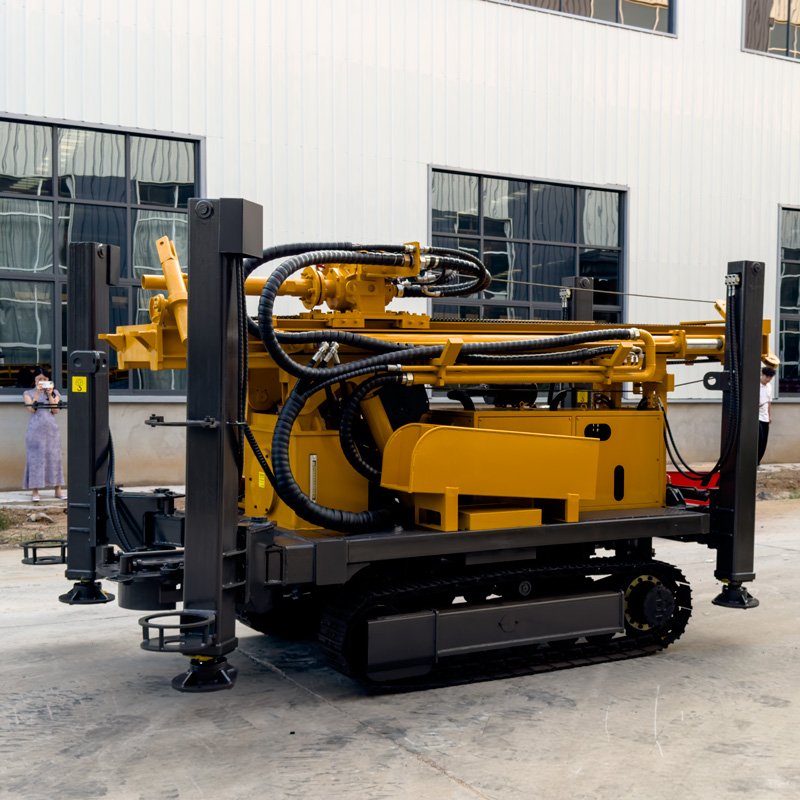
The overall weight is about 7.2 T, the travel speed is 2.5 km/h and the maximum climbing angle is a reference value of 21°. The crawler chassis is suitable for rural roads, gravel ground, construction sites and general uneven ground. Before moving the equipment, the mast should be retracted and the ground bearing capacity confirmed. Extra caution is required on wet slopes and soft soil areas.
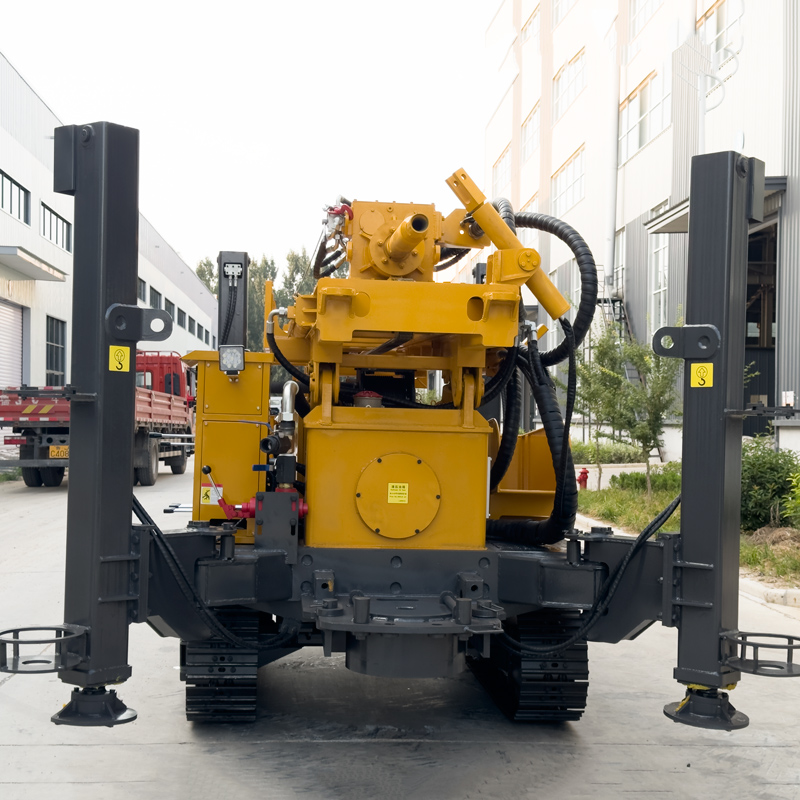
The hydraulic outrigger stroke is 1.5 m, which can be used for equipment support and site leveling. Before formal hole opening, ensure the outriggers are evenly stressed. Additional pads should be added on soft ground to avoid equipment settlement and tilting during drilling, which could affect hole position and safety.
The standard engine power is 73 kW, with 85 kW optional. For projects mainly involving conventional hole diameters and general formations, standard power helps control equipment cost; if the project is long-term under larger hole diameters, hard rock or high-altitude conditions, a higher power configuration can be evaluated. The final power choice should be based on actual load rather than simply choosing greater power.
The data provides optional accessories such as mud pumps, centrifugal pumps, generators and foam pumps. Different customers do not need to uniformly configure all accessories. They should be combined according to the main drilling method, on-site power supply, drainage conditions and formation characteristics to avoid unnecessary procurement costs and transportation burdens.
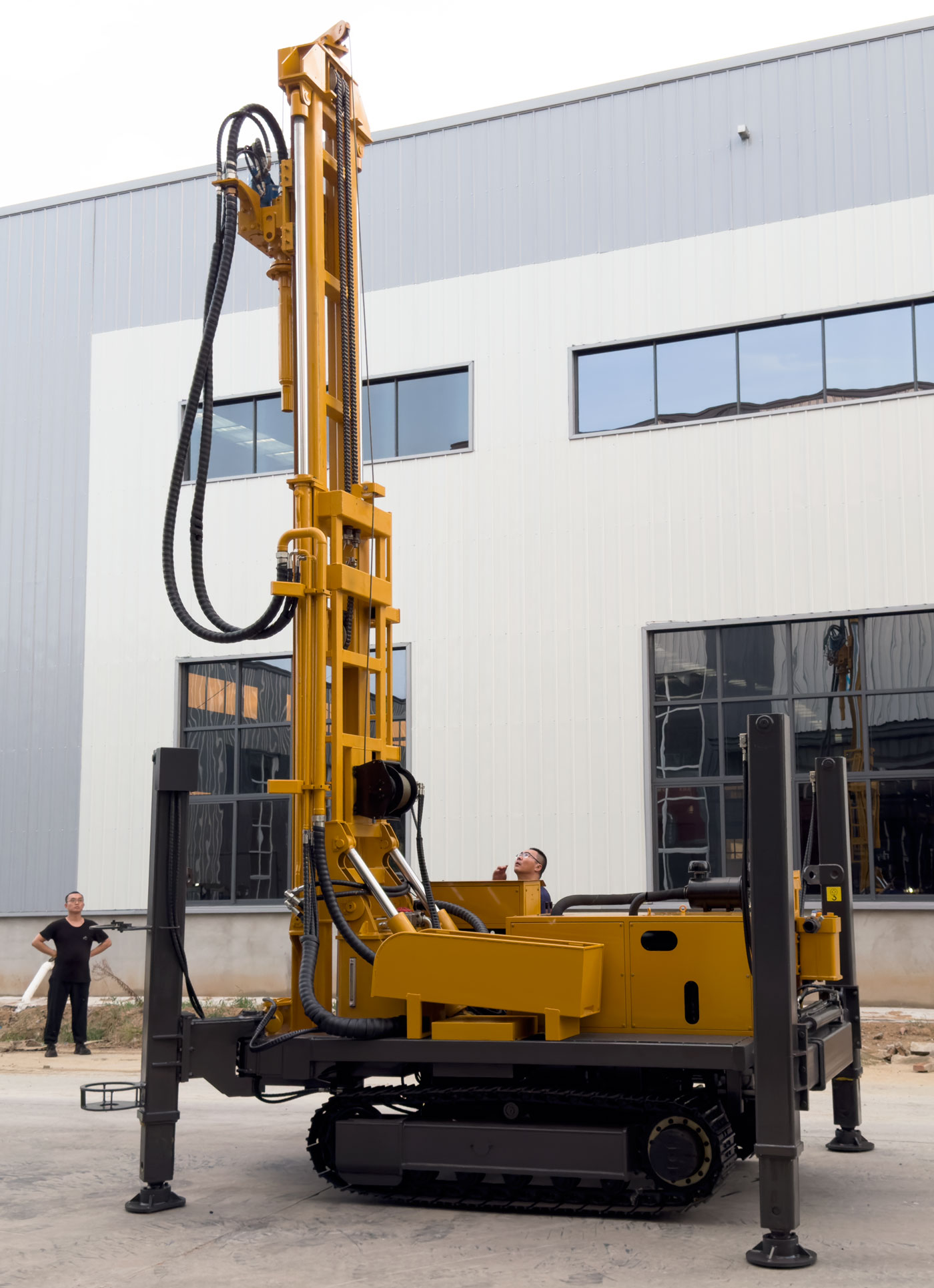
Before construction, check the hydraulic system, rotary head, crawler, outriggers, drill pipes and high-pressure air pipes; during pneumatic drilling, check the air compressor and DTH hammer lubrication; during mud drilling, pay attention to whether circulation is smooth; after each day, clean mud, dust and rock powder, and check drill pipe threads, hydraulic joints and wear parts.
Due to differences in actual geological conditions, downhole tools, drilling angle and operation methods, the final drilling efficiency, drilling depth and well completion effect should be based on on-site working conditions.
| Parameter item | Parameter value |
|---|---|
| Basic parameters | |
| Product model | WR300SE |
| Series positioning | Cost-effective / lower equipment investment |
| Maximum drilling depth | 300 m |
| Drilling diameter | 105–325 mm |
| Applicable formations | Loose formations and rock |
| Drill pipe configuration | |
| Drill pipe length | 3 / 6 m |
| Recommended drill pipe diameter | 89 / 102 mm |
| Rotary and feed system | |
| Lifting force | 15 T |
| Fast lifting speed | 30 m/min |
| Fast propulsion speed | 55 m/min |
| Maximum rotary torque | 7000 / 3500 N·m |
| Maximum rotary speed | 80 / 160 r/min |
| Auxiliary winch lifting force | 1.1 T |
| Hydraulic outrigger stroke | 1.5 m |
| Pneumatic system matching | |
| Recommended working air pressure | 1.2–3.5 MPa |
| Recommended air consumption | 16–55 m³/min |
| Compatible DTH hammers | Medium and high-pressure series |
| Power system | |
| Standard engine power | 73 kW |
| Optional engine power | 85 kW |
| Travel and overall parameters | |
| Travel speed | 2.5 km/h |
| Maximum climbing angle | 21° |
| Overall weight | 7.2 T |
| Dimensions | 5.78 × 1.7 × 2.4 m |
| Drilling methods | |
| Hydraulic rotary drilling | Top-drive hydraulic rotary drilling |
| DTH hammer drilling | Suitable for weathered rock and relatively intact rock |
| Mud rotary drilling | Suitable for soil, clay, sand and other loose formations |
| Optional accessories | |
| Mud pump | Optional |
| Centrifugal pump | Optional |
| Generator | Optional |
| Foam pump | Optional |
We are a professional drilling equipment manufacturer specializing in the research and development, production and supply of water well drilling rigs, core drilling rigs, reverse circulation drilling rigs, down-the-hole drilling rigs, truck-mounted drilling rigs and mineral exploration equipment.
© 2026 Shandong Hengjianhang Construction Machinery Co., Ltd. All rights reserved.