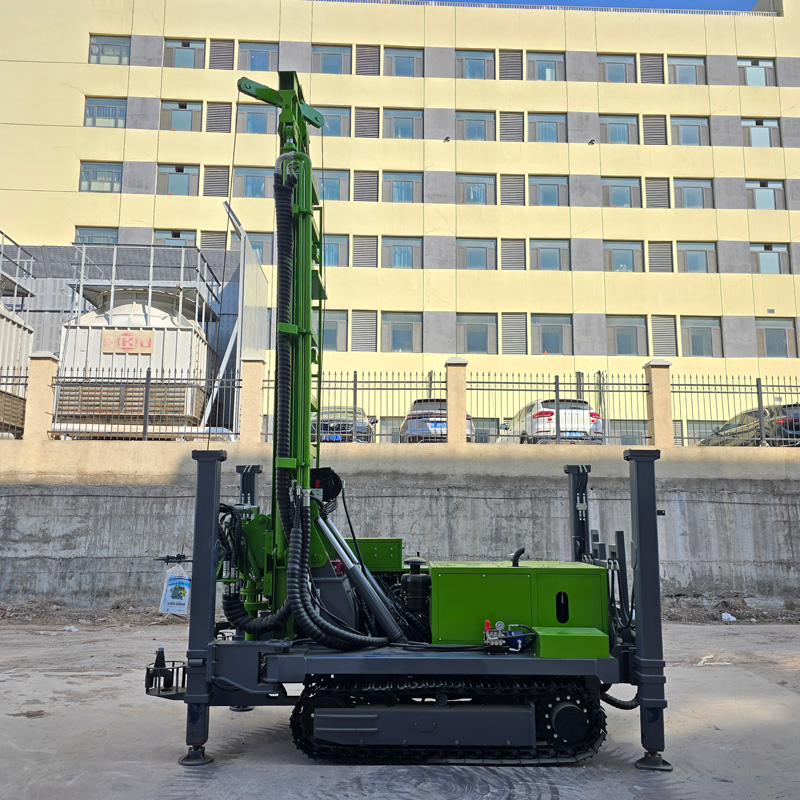
Crawler-Mounted Water Well Drilling Rig
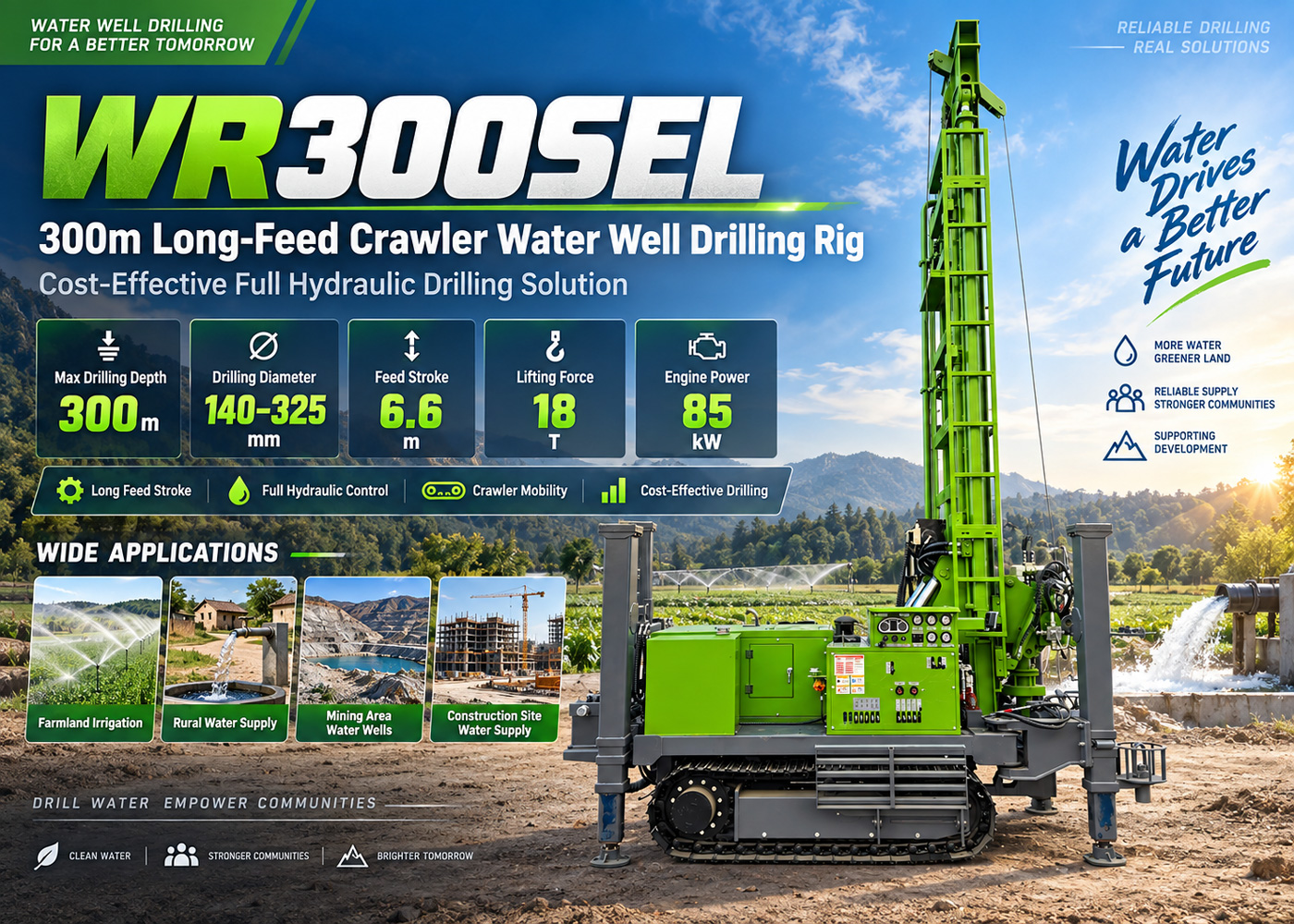
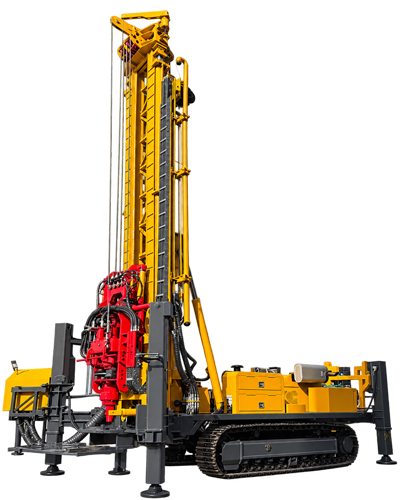
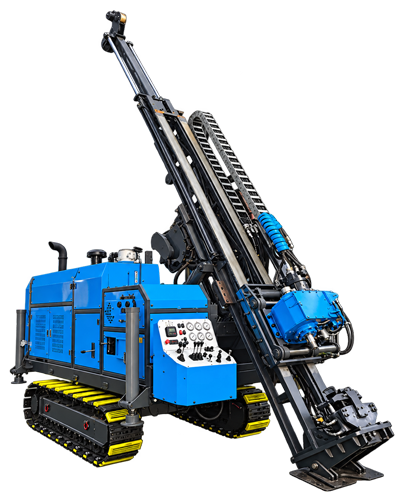
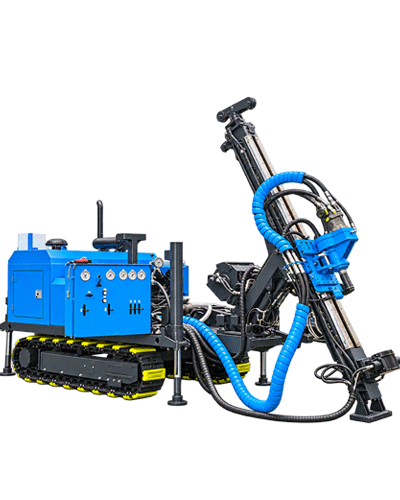
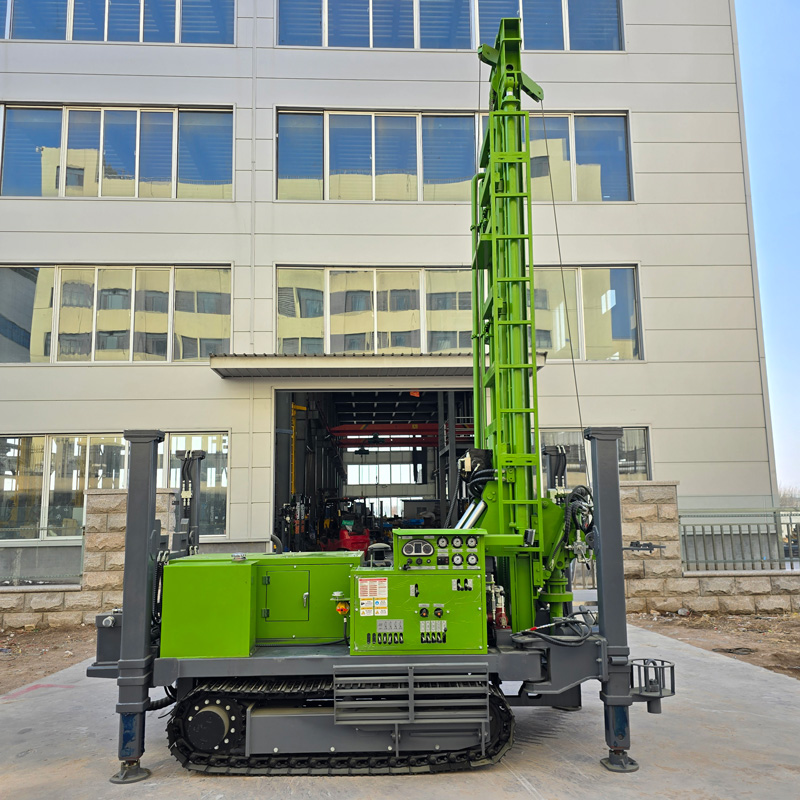
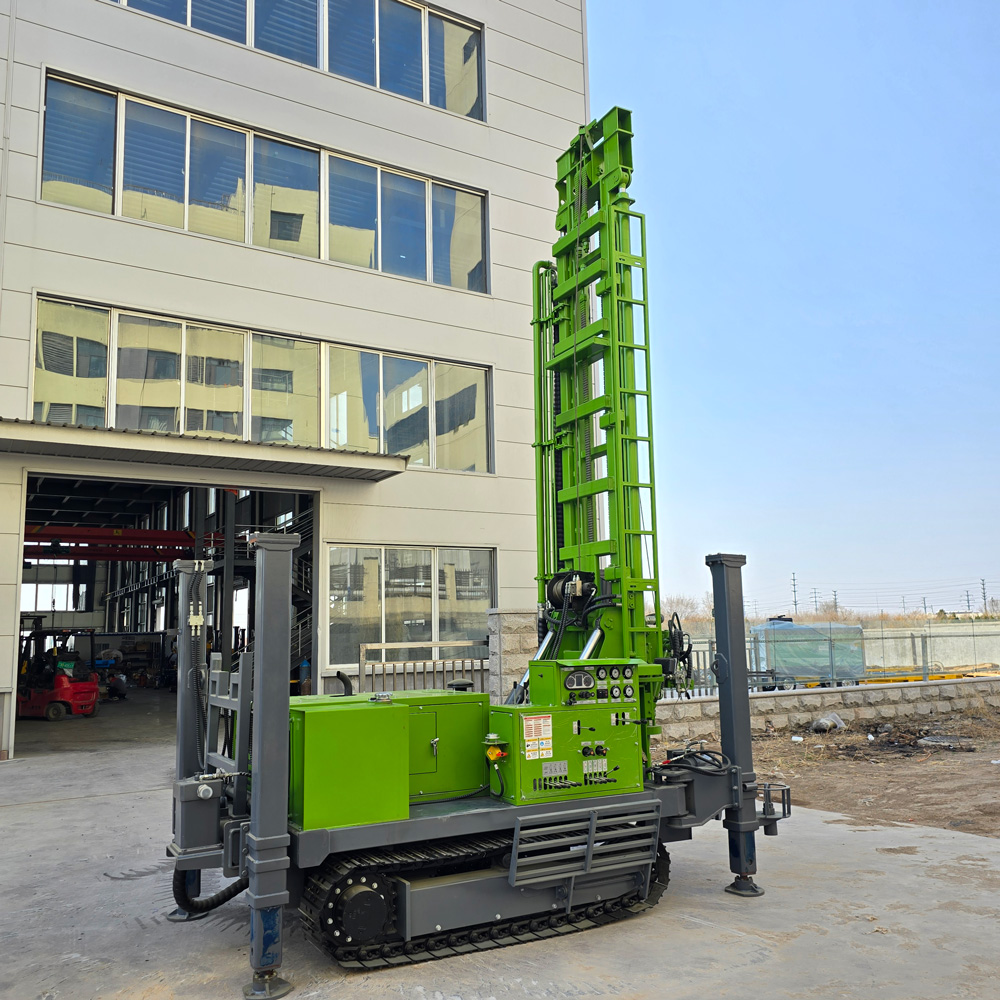
The WR300SEL is a 300-meter-class crawler water well drilling rig characterized by "long stroke, fewer pipe connections, and higher continuous drilling efficiency." It belongs to the same cost-effective series as the WR300SE, but their positioning differs: the WR300SE favors standard stroke and conventional configuration, while the WR300SEL adopts a 6.6 m single feed length and can directly use drill pipes up to 6 m, making it more suitable for customers who value pipe connection efficiency, continuous construction, and medium-depth water well projects.
The greatest practical value of a long-stroke mast is not simply a "longer mast," but reducing the number of drill pipe connections. When using 6 m drill pipes, completing a 300-meter-class borehole requires significantly fewer pipe make-up and break-out operations, thereby reducing auxiliary time. For customers who need continuous drilling throughout the day, have limited crew, or are sensitive to project schedules, this difference is more meaningful than simply increasing engine power.
The WR300SEL can use 1.5 m, 2 m, 3 m, and 6 m drill pipes, with optional diameters of 76 / 89 / 102 mm. Shorter pipes can be used in narrow sites or when transportation is restricted; when the site is spacious and continuous drilling is the main task, the advantages of 6 m pipes can be fully utilized. This retains construction flexibility while improving drilling rhythm in suitable projects.
With a maximum drilling depth of 300 m and a borehole diameter of 140–325 mm, it covers rural domestic water wells, agricultural irrigation wells, livestock water, mining area water supply, and general industrial water wells. For most projects that do not require ultra-deep boreholes beyond 500 m, 300-meter-class equipment achieves a better balance among equipment cost, transport weight, and construction capability.
Farmland irrigation areas often require continuous construction of multiple water wells. If short pipes must be frequently connected and disconnected for each well, auxiliary time will continuously accumulate. When using 6 m drill pipes, the WR300SEL reduces pipe connection frequency, making it more suitable for continuous drilling tasks in large farmland, orchards, nurseries, and greenhouse parks. For contracting crews, this efficiency improvement directly affects effective working time per day.
The equipment adopts a crawler chassis and an 85 kW Yuchai engine, does not rely on a fixed power supply, and is suitable for groundwater development in villages, schools, clinics, and remote settlements. The 300-meter-class drilling depth can cover a wider range of groundwater layers than small shallow well rigs, but the final well depth should still be determined based on local hydrogeological conditions.
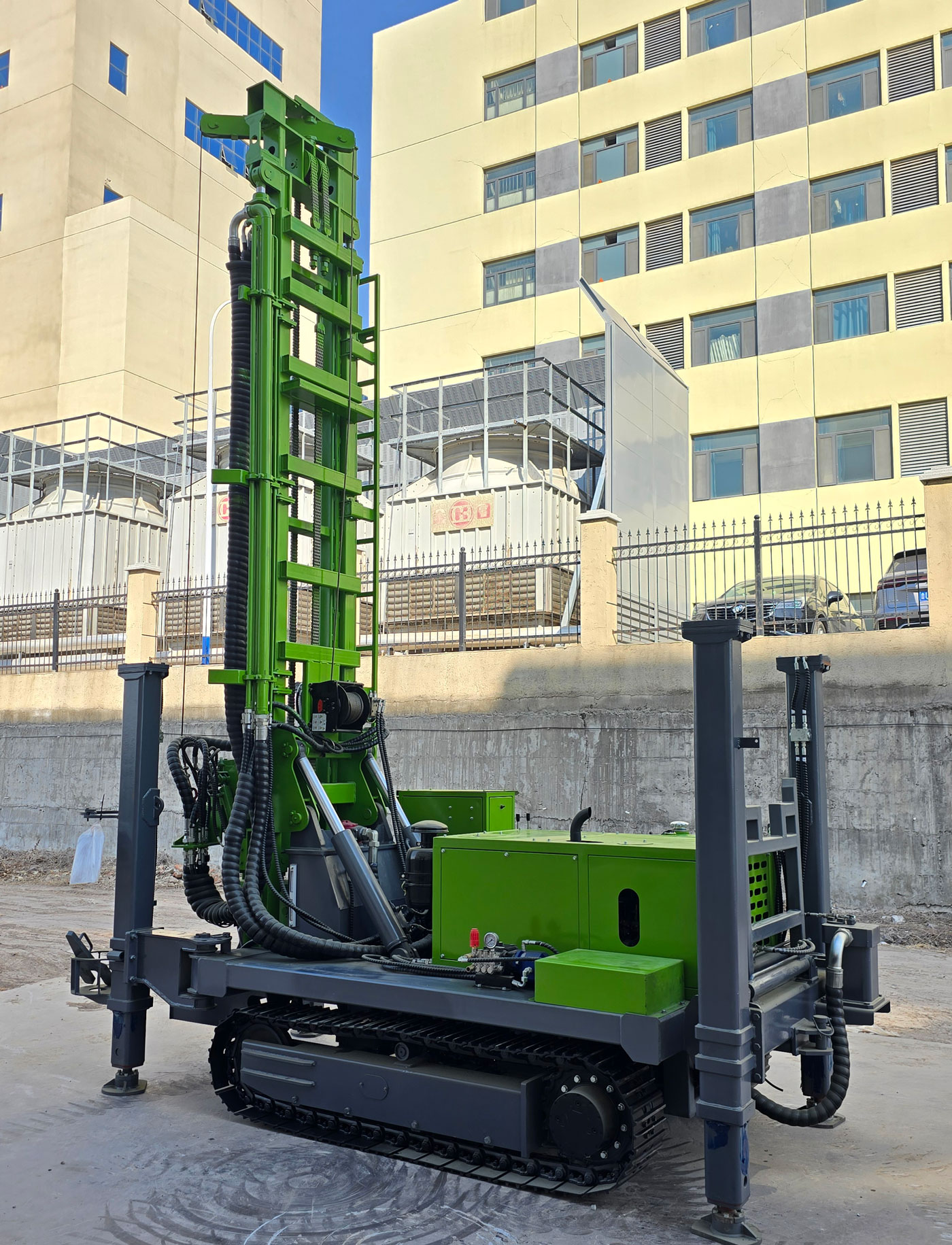
Mining areas often have ordinary road conditions, abundant gravel on the ground, and scattered hole positions. The WR300SEL crawler structure facilitates short-distance movement within the mining area and can be used for domestic water, dust suppression, equipment cleaning, and some auxiliary production water wells. If the project requires dewatering wells, the well completion structure should also be designed separately based on hydrogeological data, well diameter, and pump capacity.
Factories, industrial parks, road construction camps, and infrastructure projects may also require independent water sources. The WR300SEL is suitable for such medium-depth water well construction, especially for sites with long project cycles and a need for stable water supply. The long-stroke structure can reduce manual pipe connection frequency during continuous drilling and improve equipment utilization.
Compared with the standard 300-meter economical rig, the WR300SEL has a lifting force of 18 T. As hole depth increases, the self-weight of the drill pipe and borehole wall friction increase simultaneously. Higher lifting capacity facilitates normal tripping and some casing operations. If sticking, hole shrinkage, or borehole wall caving occurs, the problem should first be solved through hole cleaning, slow pulling, and process adjustments, avoiding direct use of maximum lifting force to pull forcefully.
With a rotary torque of 5700–7500 N·m and a rotation speed of 40–70 r/min, it can be used with a DTH hammer to drill in weathered rock, limestone, sandstone, granite, and other formations. Different hole diameters and DTH hammers have different torque requirements. During construction, rotary parameters should be adjusted according to drilling tool load, formation changes, and cuttings discharge status.
The reference working air pressure for pneumatic DTH drilling is 1.7–3.0 MPa, with an air consumption of 17–36 m³/min. Air compressor selection should consider both pressure and displacement. When the hole diameter increases, the formation becomes harder, or the altitude rises, if displacement is insufficient, even if the pressure meets the requirement, insufficient DTH hammer impact and difficult cuttings discharge may occur.
In relatively complete rock formations such as limestone, sandstone, and granite, DTH hammers can be used for pneumatic drilling. Hard rock construction should focus on DTH hammer lubrication, drill bit wear, and bottom-hole cuttings discharge. During continuous drilling, if return cuttings decrease or wind pressure changes significantly, the hole should be cleaned and the drilling tools inspected promptly.
Although weathered rock has lower drilling resistance, the borehole wall is more prone to caving and shrinkage. When encountering alternating soft-hard formations, the feed speed should be adjusted according to torque, penetration, and return cuttings changes. When necessary, casing should be used to protect the upper unstable hole section to avoid sticking during deep drilling.
Loose formations place more emphasis on hole stabilization than impact efficiency. Soil, clay, sand, and gravel layers may require mud, casing, or other hole stabilization methods to first treat the upper hole section before entering rock formations for DTH drilling. If the project has thick loose layers, mud pumps and casing plans should be considered in advance during the equipment matching stage.
Broken zones are prone to air loss, caving, and sticking. During construction, excessive feed should be reduced, hole cleaning should be maintained, and methods such as foam or casing should be used as needed. If air loss is significant, the fracture and cavity conditions should be assessed first rather than simply increasing air compressor pressure.
After entering an aquifer, groundwater will change the cuttings discharge and working state of the DTH hammer. Air supply and hole cleaning methods should be adjusted according to water inflow, and the depth of main water-producing layers should be recorded. During formal well completion, the well casing, screen, and sealing structure should also be determined based on aquifer positions.
Fast lifting and fast feed mainly serve non-drilling actions, such as pipe handling, power head return, and tool adjustment. They can reduce auxiliary time but are not equivalent to actual rock penetration rate. The reference drilling efficiency given in the data is 15–35 m/h; actual efficiency is affected by formation, drill bit, DTH hammer, and air compressor.
The auxiliary winch has a lifting force of 2 T and can be used to handle DTH hammers, drill pipes, casing tools, and some accessories. For 6 m drill pipe construction, proper use of the winch and ladder can reduce manual handling intensity, but load must be controlled during lifting and personnel must stay away from the suspended area.
The equipment has a travel speed of approximately 2.5 km/h and a reference maximum gradeability of 30°. The crawler structure is suitable for general rural roads, mining area gravel roads, and incompletely hardened ground. Before actual relocation, slope, wetness, and ground bearing capacity should be evaluated, and the long-stroke mast must be in a safe transport position.
The WR300SEL has a reference overall weight of approximately 8 T and dimensions of approximately 5900 × 1850 × 2200 mm. Due to the 6.6 m long-stroke configuration, vehicle length, loading fixation points, and site turning space should be confirmed before transport. Compared with standard-stroke models, it emphasizes construction efficiency, so transport organization should also be planned in advance.
This model adopts an 85 kW Yuchai engine to provide power for the hydraulic system, rotation, feed, and crawler travel. For long drill pipes, larger hole diameters, and hard rock conditions, higher power reserve helps maintain continuous operation. During long-term high-load construction, focus on checking engine cooling, air filter, and hydraulic oil temperature.
The data also provides optional configurations such as generator and electric motor power. For fixed mining areas or sites with stable power supply conditions, electric solutions can be evaluated based on energy costs and maintenance conditions; remote field projects are usually more suitable for diesel power. The final configuration should be determined based on on-site energy conditions.
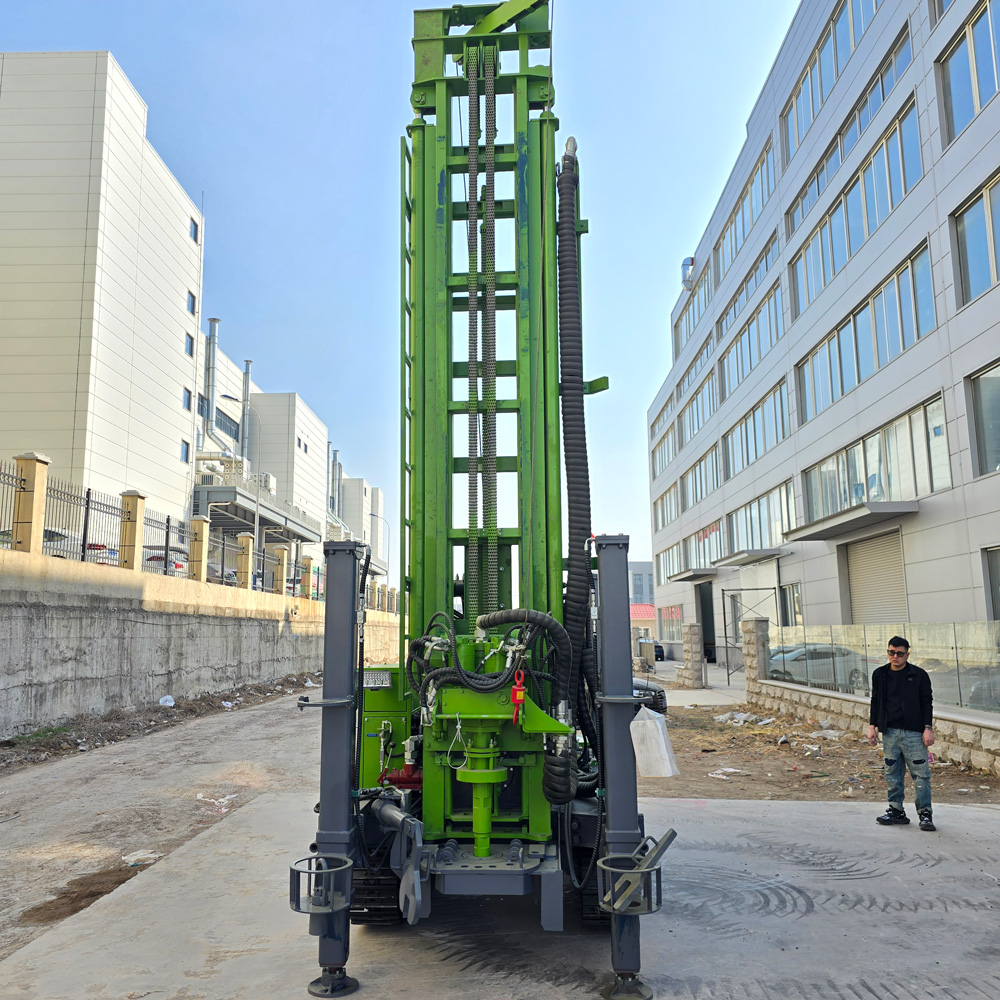
The long-stroke mast and 6 m drill pipes can reduce pipe connection frequency, but they place higher demands on site clearance, drill pipe handling, and equipment stability. Before drilling, confirm mast extension space, ground bearing capacity, and outrigger force; avoid lateral collision and bending when using long drill pipes; daily inspections should also include mast slideways, connecting pins, and ladder fixation status.
Due to differences in actual geological conditions, downhole tools, drilling angle, and operating methods, the final drilling efficiency, drilling depth, and well completion effect should be based on on-site conditions.
| Parameter Item | Parameter Value |
|---|---|
| Basic Parameters | |
| Product Model | WR300SEL |
| Equipment Type | Cost-effective long-stroke telescopic mast crawler water well drilling rig |
| Model Difference | WR300SE is the standard-stroke version; WR300SEL is the 6.6 m long-stroke version |
| Maximum Drilling Depth | 300 m |
| Borehole Diameter | 140–325 mm |
| Drill Pipe Configuration | |
| Drill Pipe Diameter | 76 / 89 / 102 mm |
| Drill Pipe Length | 1.5 / 2.0 / 3.0 / 6.0 m |
| Mast and Feed System | |
| Mast Structure | Telescopic mast / long-stroke version |
| Single Feed Length | 6.6 m |
| Lifting Force | 18 T |
| Fast Lifting Speed | 22 m/min |
| Fast Feed Speed | 40 m/min |
| High Outrigger Stroke | 1.4 m |
| Rotary System | |
| Rotary Torque | 5700–7500 N·m |
| Rotation Speed | 40–70 r/min |
| Power System | |
| Engine Brand | Yuchai |
| Engine Power | 85 kW |
| Air Compressor Matching Parameters | |
| Working Air Pressure | 1.7–3.0 MPa |
| Air Consumption | 17–36 m³/min |
| Matching Description | Select air compressor according to hole diameter, DTH hammer specifications, target hole depth, altitude, and formation hardness |
| Auxiliary System | |
| Winch Lifting Force | 2 T |
| Ladder | Long-stroke mast configuration |
| Generator / Electric Motor Power | Optional according to final configuration |
| Crawler Chassis | |
| Travel Speed | 2.5 km/h |
| Maximum Gradeability | 30° |
| Loading Width | 2.6 m |
| Applicable Sites | Rural roads, mining areas, gravel ground, and general uneven sites |
| Overall Dimensions and Weight | |
| Dimensions | 5900 × 1850 × 2200 mm |
| Overall Weight | 8 T |
| Typical Formation Adaptability | |
| Complete Hard Rock | DTH drilling with suitable DTH hammer and air compressor |
| Weathered Rock | Adjust feed according to borehole wall stability and use casing as needed |
| Loose Overburden | May require casing, mud, or other hole stabilization measures |
| Broken Formation | Control feed, strengthen hole cleaning, and optionally combine with foam or casing |
| Aquifer | Adjust air supply, casing, and hole cleaning methods according to water inflow |
| Typical Applications | |
| Rural and Community Water Supply | Groundwater development for villages, schools, clinics, and small communities |
| Agricultural Irrigation | Water wells for farmland, orchards, greenhouses, and livestock |
| Industrial and Construction Water | Factories, industrial parks, construction camps, and infrastructure projects |
| Mining Area Water Supply | Domestic water, dust suppression, auxiliary production, and some dewatering wells in mining areas |
| Geothermal Survey | Temperature gradient holes and some shallow geothermal survey projects |
We are a professional drilling equipment manufacturer specializing in the research and development, production and supply of water well drilling rigs, core drilling rigs, reverse circulation drilling rigs, down-the-hole drilling rigs, truck-mounted drilling rigs and mineral exploration equipment.
© 2026 Shandong Hengjianhang Construction Machinery Co., Ltd. All rights reserved.