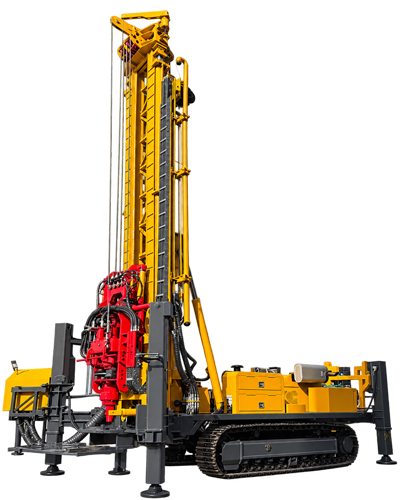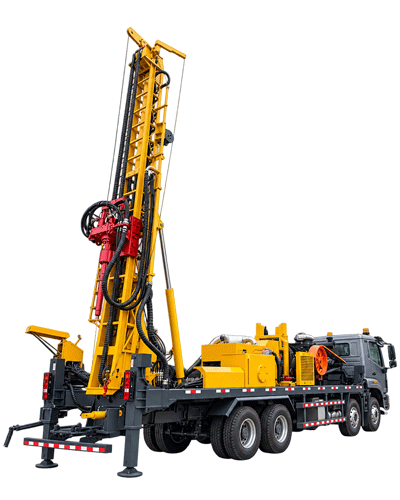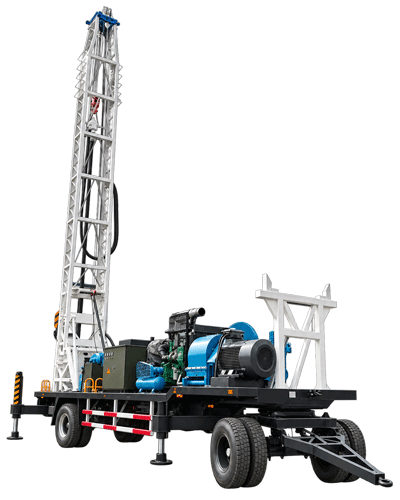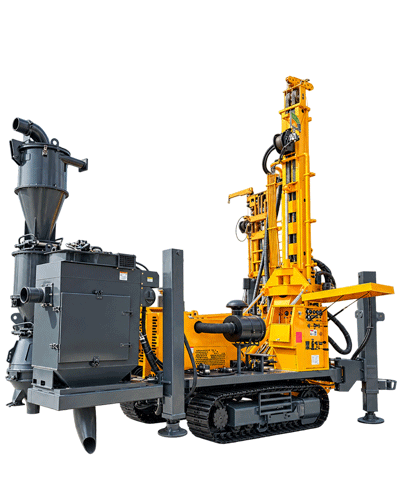
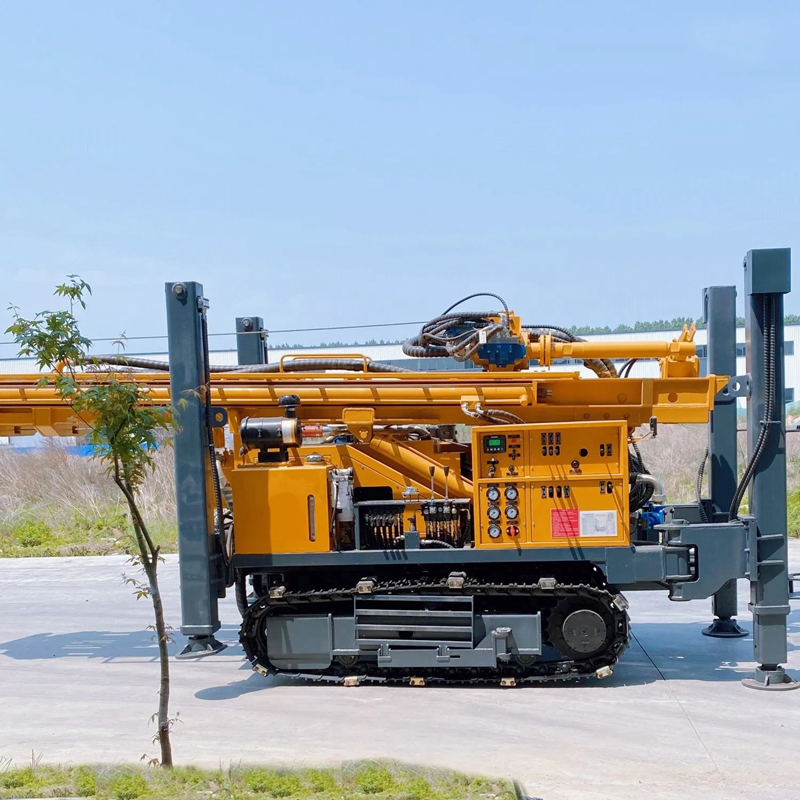
Crawler-Mounted Water Well Drilling Rig
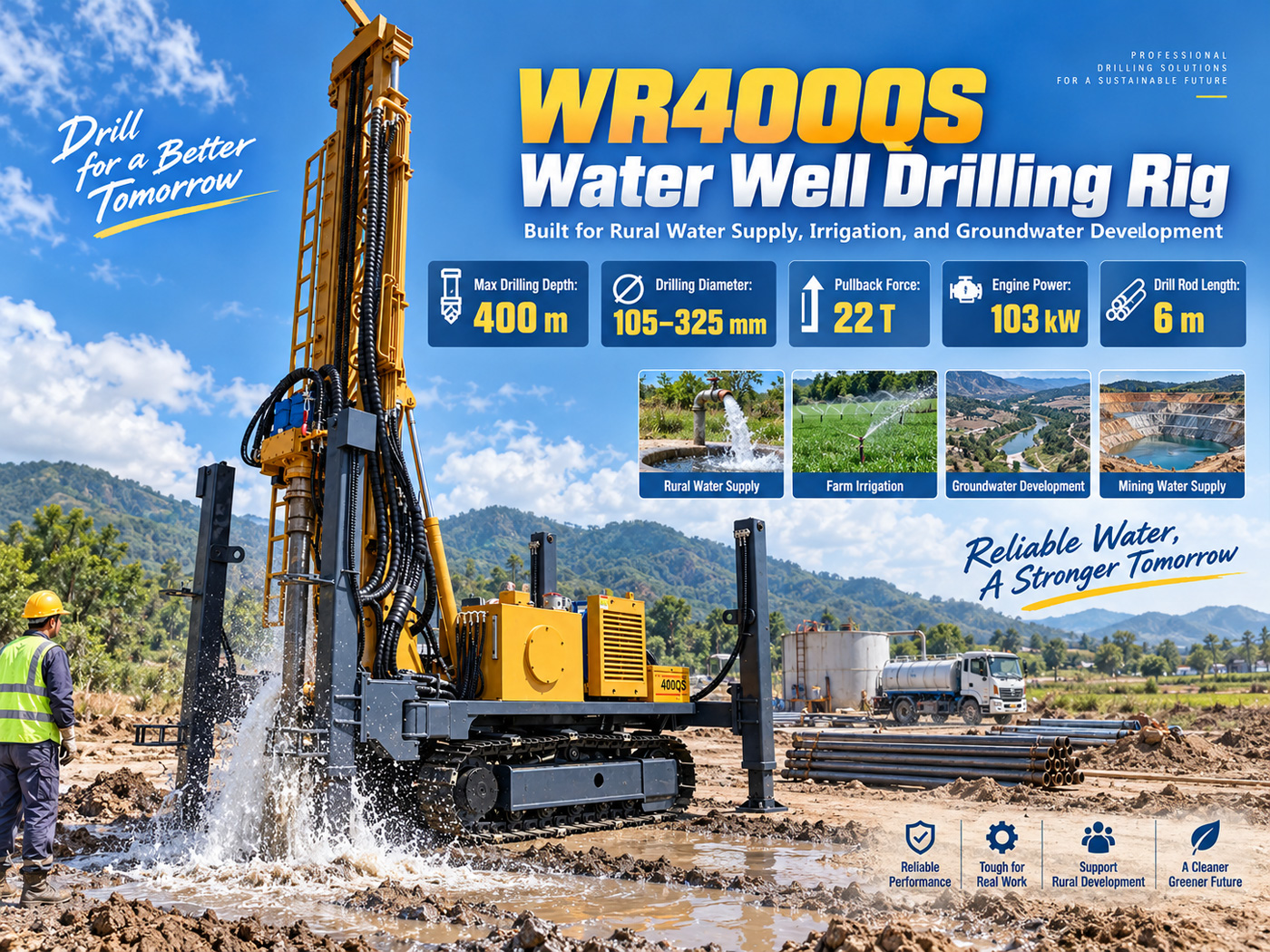
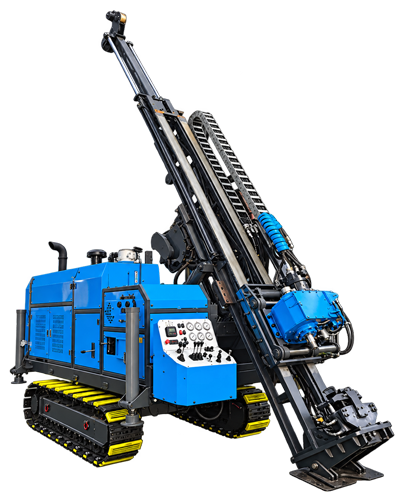
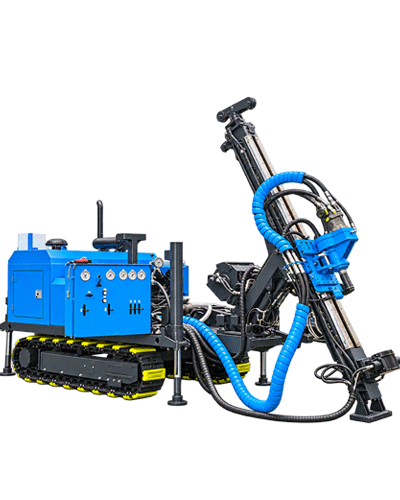
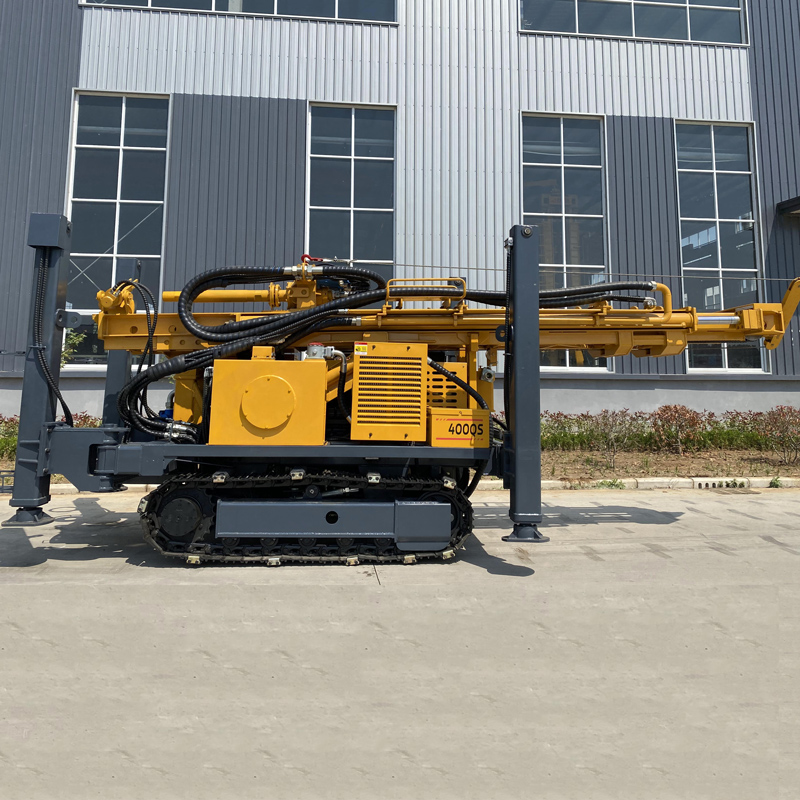
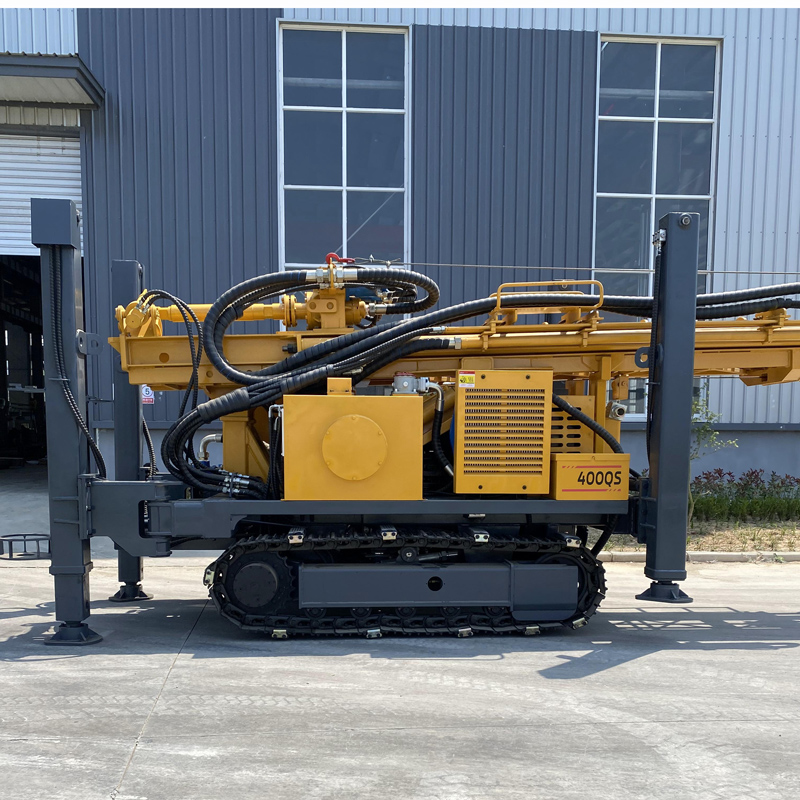
The WR400QS is a crawler fully hydraulic drilling rig designed for 400 m class medium-deep water well construction. Compared with 300 m and 350 m class models, it further improves drilling depth, lifting capacity, and overall load capacity, while directly supporting 6 m drill pipe. It is suitable for farmland irrigation, rural water supply, mining water supply, groundwater investigation, and medium-deep projects with higher requirements for continuous construction efficiency.
With a maximum drilling depth of 400 m and a drilling diameter of 105–325 mm, the WR400QS can cover more medium-deep groundwater development needs. For areas where shallow aquifers are unstable, groundwater levels are deeper, or projects require greater water-finding margin, 400 m class equipment offers greater construction space than conventional 300 m models, but the final well depth should still be determined based on local hydrogeological conditions.
This equipment directly supports 6 m drill pipe, with recommended drill pipe diameters of 89 / 102 mm. The main value of long drill pipe is reducing the frequency of adding rods, which is especially noticeable in 300–400 m class water well projects. For construction crews, fewer rod make-up and break-out operations mean less auxiliary time and can also reduce the labor burden caused by frequent handling.
The WR400QS provides 22 T lifting force, significantly higher than conventional small and medium water well drilling rigs. As hole depth increases, drill pipe weight, borehole wall friction, and casing weight all rise. Greater lifting capacity facilitates normal tripping, drill tool recovery, and casing handling. However, when encountering stuck pipe, hole shrinkage, or borehole wall caving, priority should still be given to solving the issue through hole cleaning and process adjustment rather than simply relying on maximum lifting force to pull forcefully.
The rotary system has a maximum torque of 8000 / 4000 N·m, corresponding to maximum speeds of 75 / 150 r/min. Low speed and high torque are more suitable for large-diameter, hard rock, and high-load conditions; higher speed is suitable for drilling stages with relatively lower resistance. On site, the appropriate mode should be selected according to hole diameter, drilling tools, and changes in rock formation, avoiding long-term fixed use of a single speed.
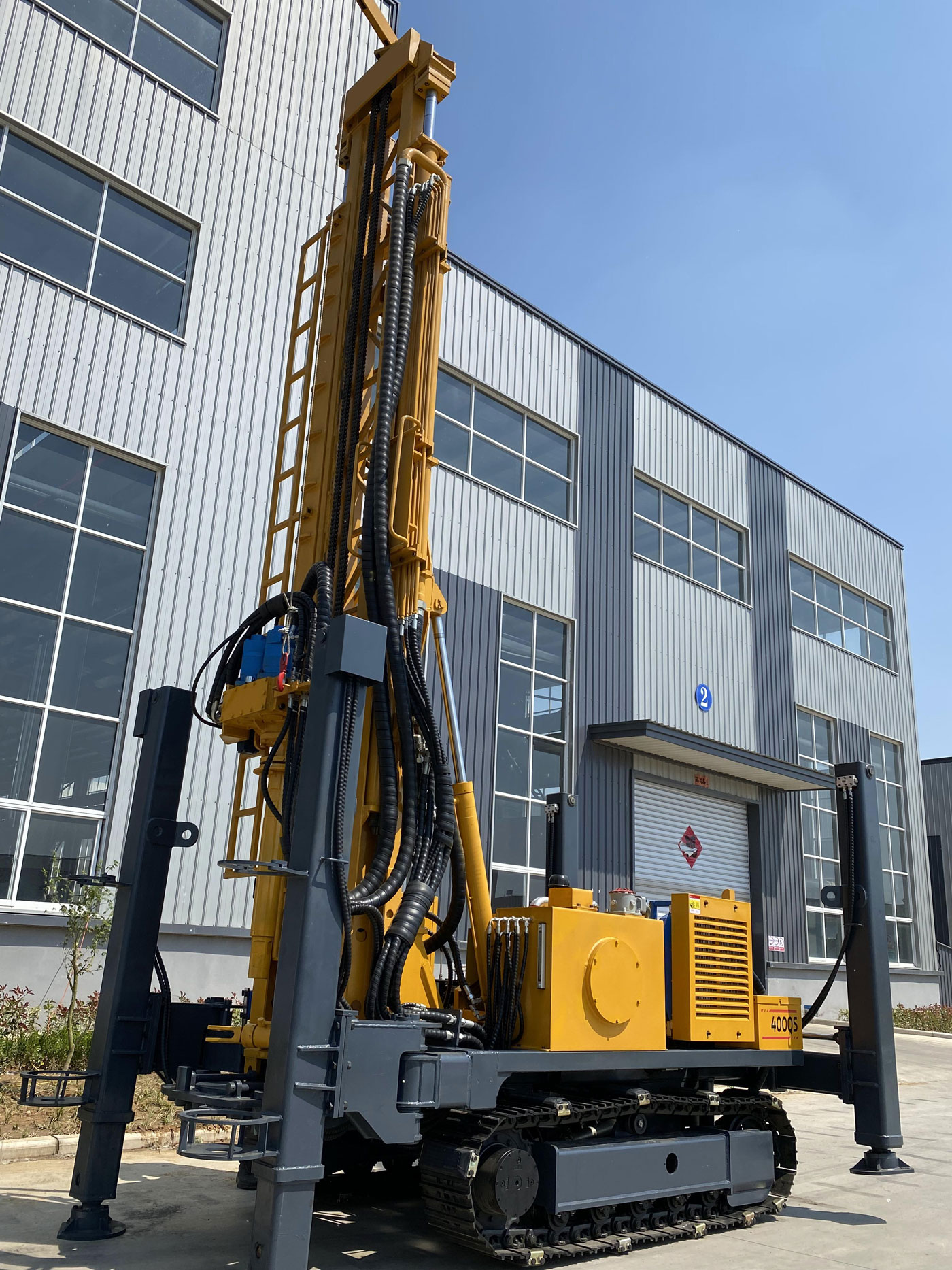
Reference axial pressure is 4 T, fast feed speed is 56 m/min, and fast lifting speed is 29 m/min. Axial pressure is mainly used for drilling tool feed control, while fast feed and fast lifting are more used for power head return, drill pipe handling, and non-drilling actions. The actual penetration rate in rock formations still depends on the formation, bit, DTH hammer, and air compressor capacity.
When using DTH hammer drilling, the recommended working air pressure is 1.2–3.5 MPa, with air consumption of 16–55 m³/min, compatible with medium and high pressure series DTH hammers. For larger hole diameters, intact hard rock, or high-altitude conditions, whether the air compressor displacement is sufficient is often more important than simply reaching a pressure value.
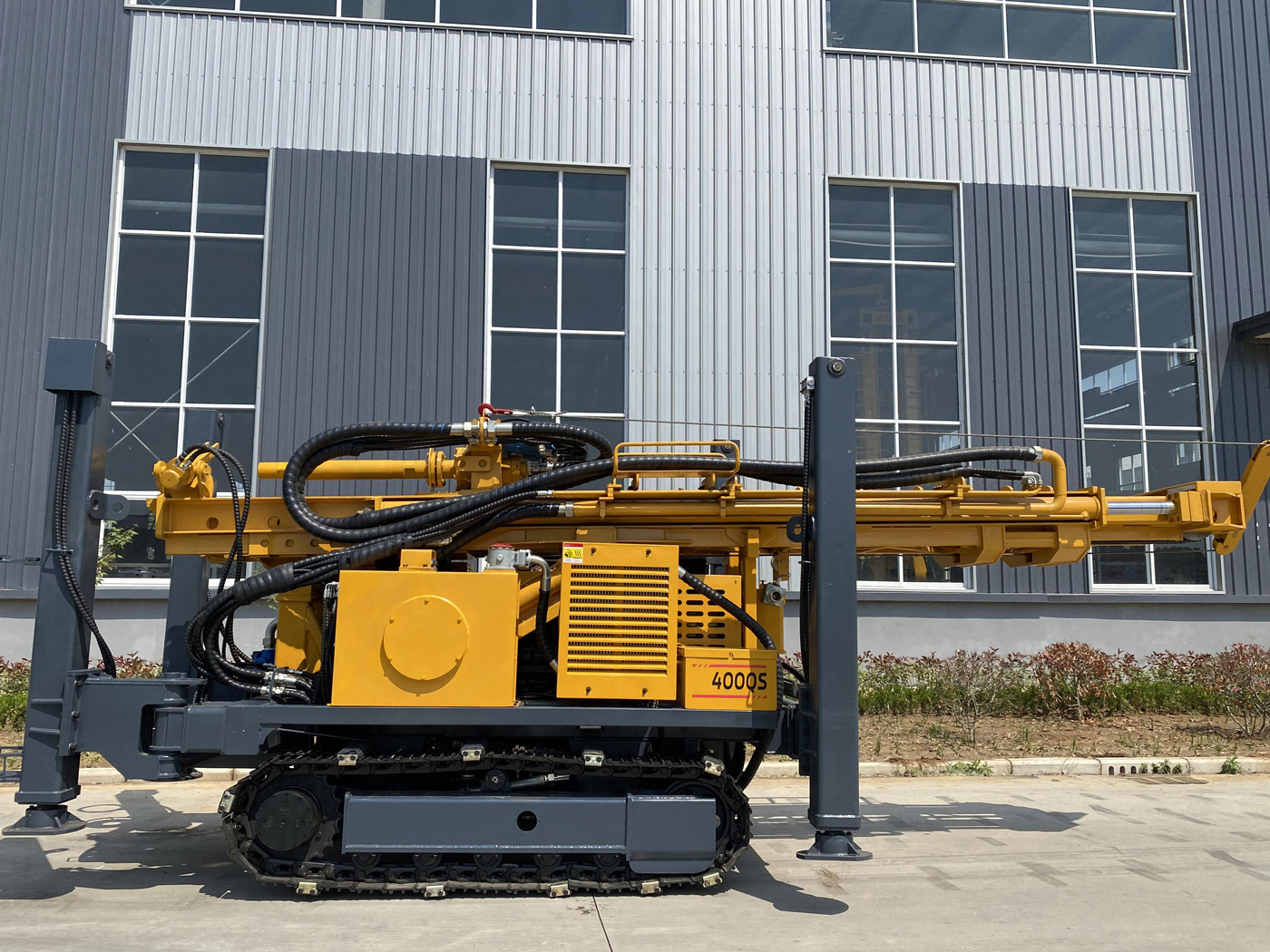
After entering formations such as weathered rock, limestone, sandstone, and granite, the DTH hammer and bit can be selected according to rock hardness and hole diameter. In intact hard rock, stable air supply and reasonable rotation should be maintained, and rock cuttings at the bottom of the hole should be cleaned in time; if return cuttings decrease or air pressure is abnormal, first determine whether there is blockage, air leakage, or accumulated cuttings at the bottom of the hole.
Information shows that the WR400QS can not only use DTH hammer drilling but also supports mud rotary drilling. For soil, clay, sand layers, and other loose formations, mud circulation helps with wall protection, carrying drill cuttings, and maintaining hole diameter. When the upper overburden is thick, priority should be given to solving borehole wall stability before entering rock formations for pneumatic DTH drilling.
Fractured zones may cause caving, air leakage, and stuck pipe. At this time, excessively fast feed should be reduced, continuous hole cleaning should be maintained, and foam, casing, or other auxiliary measures should be used according to air leakage and borehole wall conditions. If the rotational resistance of the drilling tool suddenly increases, timely determine whether there is caving or hole shrinkage in the hole.
After entering the main aquifer, groundwater will change cuttings discharge in the hole and the working state of the DTH hammer. The depth of the water-producing layer should be recorded in time, and air supply, hole cleaning, and casing methods should be adjusted according to water inflow. During well completion, filter pipes and water-stop sections should also be reasonably set according to the aquifer position to ensure later pumping performance.
Mining areas often require domestic water, dust suppression, equipment cleaning, and auxiliary production water. The WR400QS crawler chassis is suitable for gravel roads and generally uneven sites in mining areas, and the 400 m class drilling depth can cover deeper groundwater layers, making it especially suitable for water supply projects for mining camps, exploration bases, and open-pit mining areas.
For farmland, orchards, and greenhouse planting areas with deeper groundwater levels, 400 m class drilling rigs can provide greater water-finding depth margin. The 6 m drill pipe reduces jointing frequency and is suitable for continuous construction of multiple irrigation wells. Actual well diameter and pump type should be designed separately according to expected water yield and irrigation scale.
In villages and remote areas where centralized water supply networks are insufficient, the WR400QS can be used for village-level water supply wells, schools, clinics, and small community groundwater development. The equipment uses diesel power and a crawler chassis, with less dependence on fixed on-site power, making it more suitable for field water well projects.
In addition to direct well completion, the equipment can also be used for groundwater investigation and general hydrogeological drilling. Through records of formation changes, water return, water inflow, and hole depth during drilling, it can provide reference for subsequent well site selection and groundwater evaluation. If the project requires high-quality core samples, a dedicated core drilling rig should be used.
Crawler travel speed is about 3 km/h, and the maximum climbing angle is a reference value of 21°. Compared with smaller machines, the WR400QS has an overall weight of 8.6 T, so during transfer, more attention should be paid to ground bearing capacity, slope stability, and transport routes. Movement should be cautious on wet and slippery ground, soft soil, and side slopes.
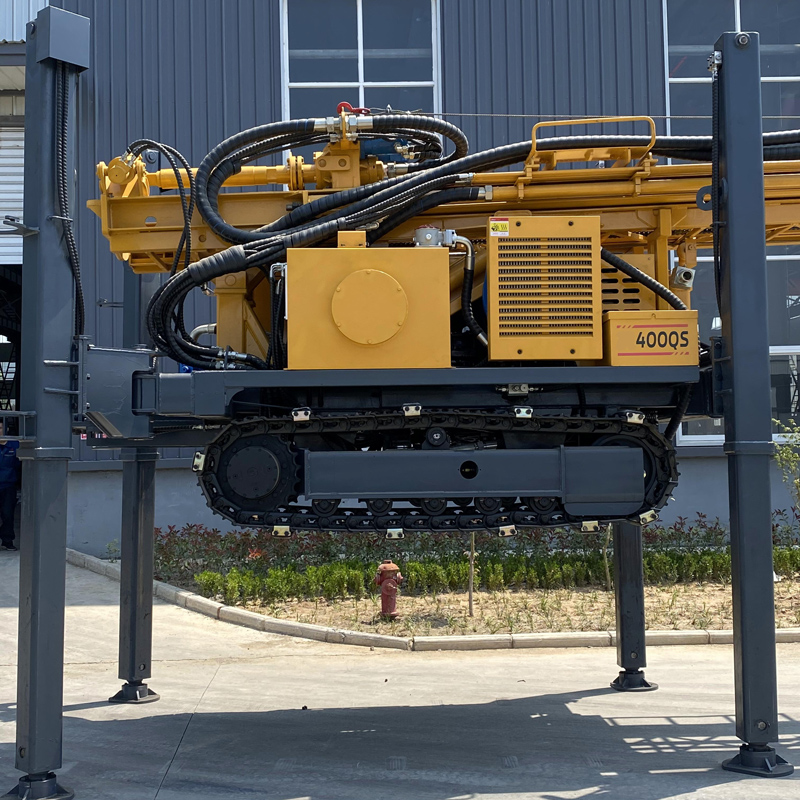
Hydraulic outrigger stroke is 1.6 m, which can be used for equipment leveling and stable support. The construction cycle of 400 m class drilling is longer, so equipment stability during drilling is very important. On soft ground, pads should be used to ensure even force on the outriggers and avoid long-term settlement causing tower tilt.
The WR400QS uses a 103 kW Weichai engine to provide power for rotation, feed, crawler travel, outriggers, and auxiliary systems. Medium-deep hole and hard rock construction lasts for a long time, so the air filter and radiator should be cleaned regularly, and attention should be paid to engine cooling and fuel quality to avoid power decline under high-load conditions.
The small auxiliary winch has a lifting force of 1.5 T and can be used for handling DTH hammers, drill pipes, casing tools, and other on-site accessories. Reasonable use of the winch can reduce manual labor intensity, but the load should be controlled during lifting, and personnel should avoid standing under suspended objects or in the direction of wire rope force.
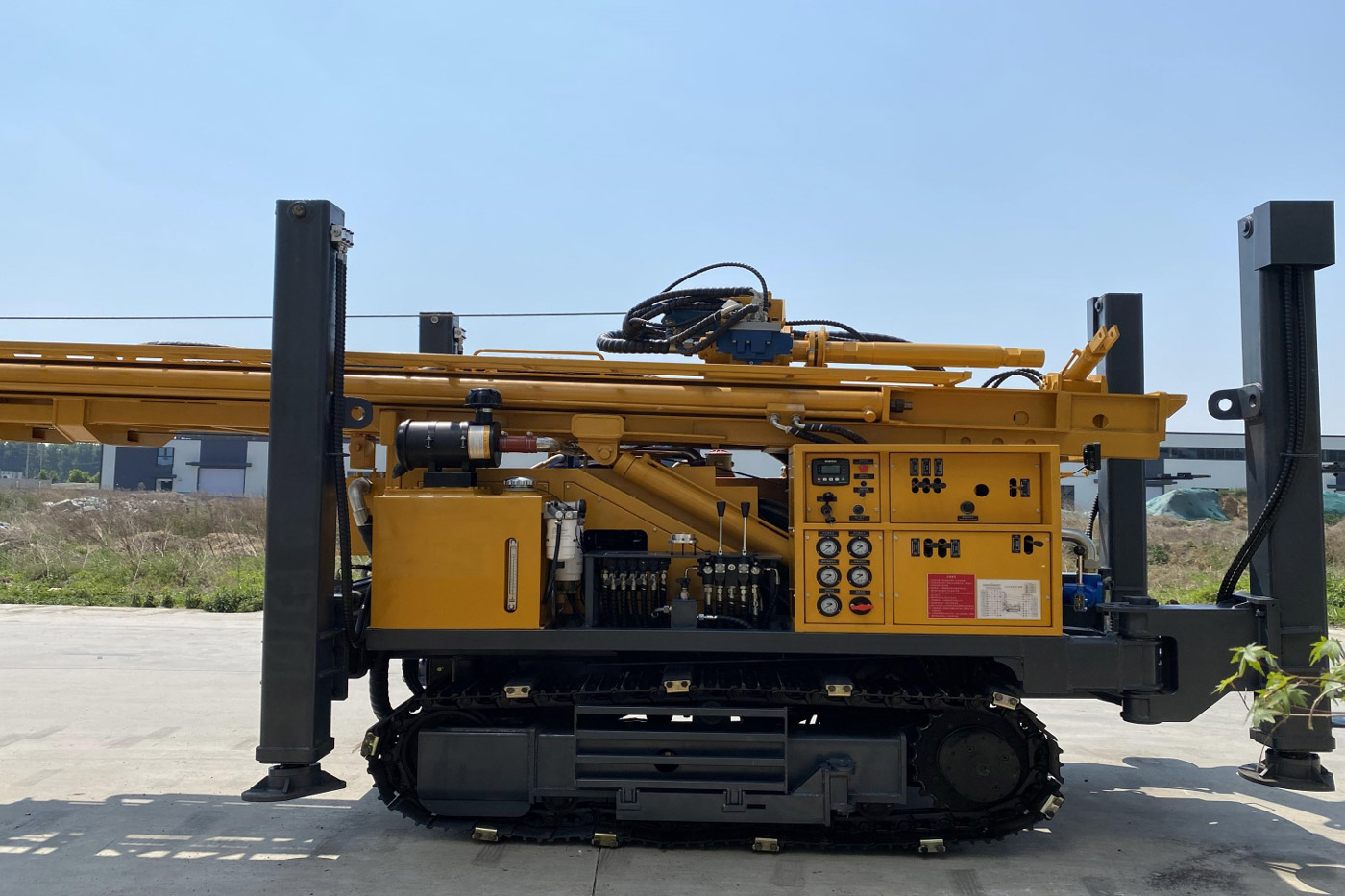
The overall weight is about 8.6 T, and the overall dimensions are about 6.25 × 1.7 × 2.39 m. Compared with larger deep well equipment, it still maintains a relatively compact structure, but transport requires a suitable flatbed truck, fixing points, and loading/unloading ramps. The 6 m drill pipe and other accessories should be secured separately to avoid rolling and collision during transport.
The WR400QS can be equipped with an optional mud pump, centrifugal pump, generator, and foam pump according to the project. Loose formation projects place more emphasis on mud and drainage systems, hard rock projects focus more on DTH hammers and air compressors, and formations with severe air leakage may require foam assistance. Project-based optional equipment can reduce unnecessary equipment investment.
Before starting work each day, check the engine, hydraulic system, rotary head, crawler, outriggers, drill pipe, and high-pressure air hose; during DTH drilling, check DTH hammer lubrication and air compressor status; during mud drilling, pay attention to whether circulation is smooth; after construction, clean mud, dust, and rock cuttings in time, and check drill pipe threads, hydraulic joints, and wear parts.
Due to differences in actual geological conditions, downhole tools, drilling angle, and operating methods, the final drilling efficiency, drilling depth, and well completion effect should be based on on-site working conditions.
| Parameter Item | Parameter Value |
|---|---|
| Basic Parameters | |
| Product Model | WR400QS |
| Equipment Type | Crawler fully hydraulic water well drilling rig |
| Maximum Drilling Depth | 400 m |
| Drilling Diameter | 105–325 mm |
| Applicable Formations | Loose formations and rock formations |
| Drill Pipe Configuration | |
| Drill Pipe Length | 6 m |
| Recommended Drill Pipe Diameter | 89 / 102 mm |
| Rotary and Feed System | |
| Axial Pressure | 4 T |
| Lifting Force | 22 T |
| Fast Lifting Speed | 29 m/min |
| Fast Feed Speed | 56 m/min |
| Maximum Rotary Torque | 8000 / 4000 N·m |
| Maximum Rotary Speed | 75 / 150 r/min |
| Auxiliary Winch Lifting Force | 1.5 T |
| Hydraulic Outrigger Stroke | 1.6 m |
| Pneumatic System Matching | |
| Recommended Working Air Pressure | 1.2–3.5 MPa |
| Recommended Air Consumption | 16–55 m³/min |
| Compatible DTH Hammer | Medium and high pressure series |
| Power System | |
| Engine Brand | Weichai |
| Engine Power | 103 kW |
| Travel and Overall Parameters | |
| Travel Speed | 3 km/h |
| Maximum Climbing Angle | 21° |
| Overall Weight | 8.6 T |
| Overall Dimensions | 6.25 × 1.7 × 2.39 m |
| Drilling Methods | |
| Top drive hydraulic rotary drilling | Suitable for conventional water wells and construction with different hole diameters |
| DTH hammer drilling | Suitable for weathered rock, fissured rock, and relatively intact rock formations |
| Mud rotary drilling | Suitable for soil, clay, sand layers, and other loose formations |
| Optional Accessories | |
| Mud pump | Optional |
| Centrifugal pump | Optional |
| Generator | Optional |
| Foam pump | Optional |
| Typical Applications | |
| Water well projects | Household, village, and general groundwater development |
| Agricultural irrigation | Farmland, orchards, greenhouses, and large-scale planting areas |
| Mining water supply | Domestic water, dust suppression, auxiliary production, and exploration camp water supply |
| Groundwater investigation | Hydrogeological investigation and medium-deep groundwater verification |
| Medium-deep projects | Water well construction requiring 400 m class drilling depth and strong lifting capacity |
We are a professional drilling equipment manufacturer specializing in the research and development, production and supply of water well drilling rigs, core drilling rigs, reverse circulation drilling rigs, down-the-hole drilling rigs, truck-mounted drilling rigs and mineral exploration equipment.
© 2026 Shandong Hengjianhang Construction Machinery Co., Ltd. All rights reserved.