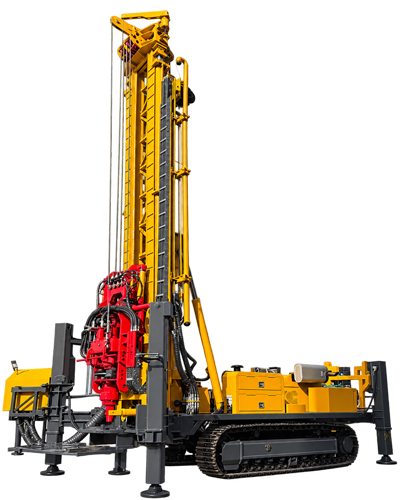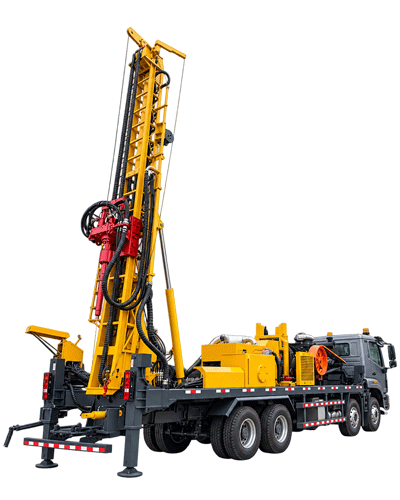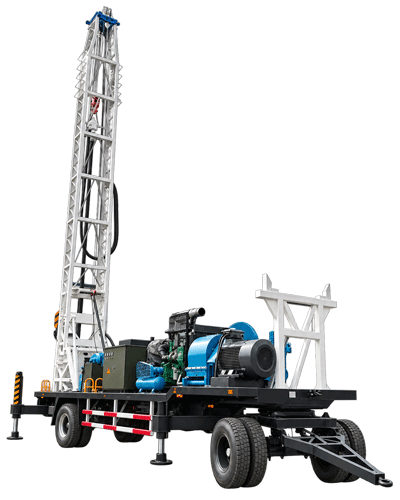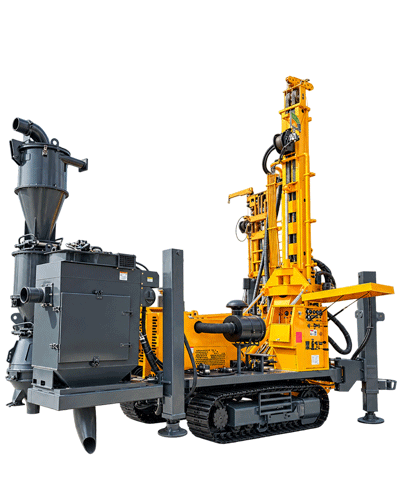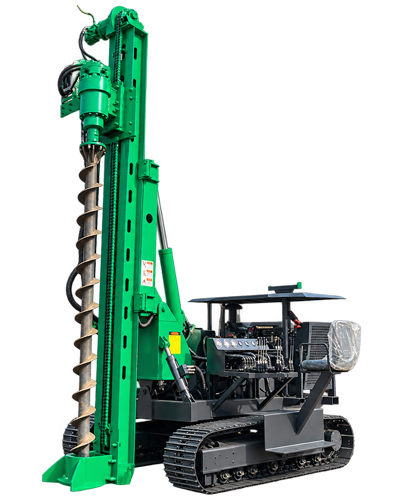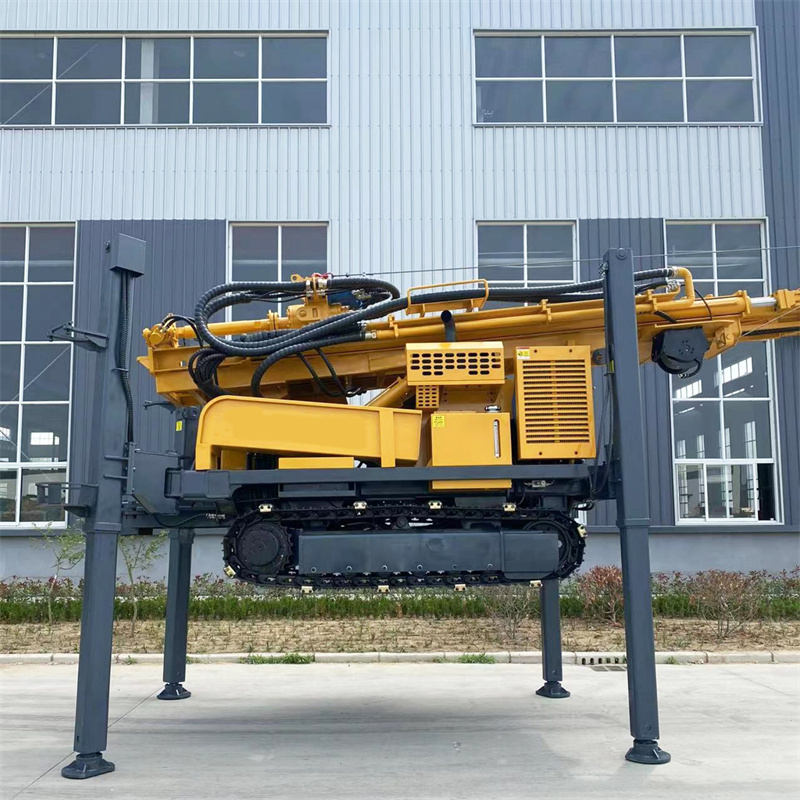
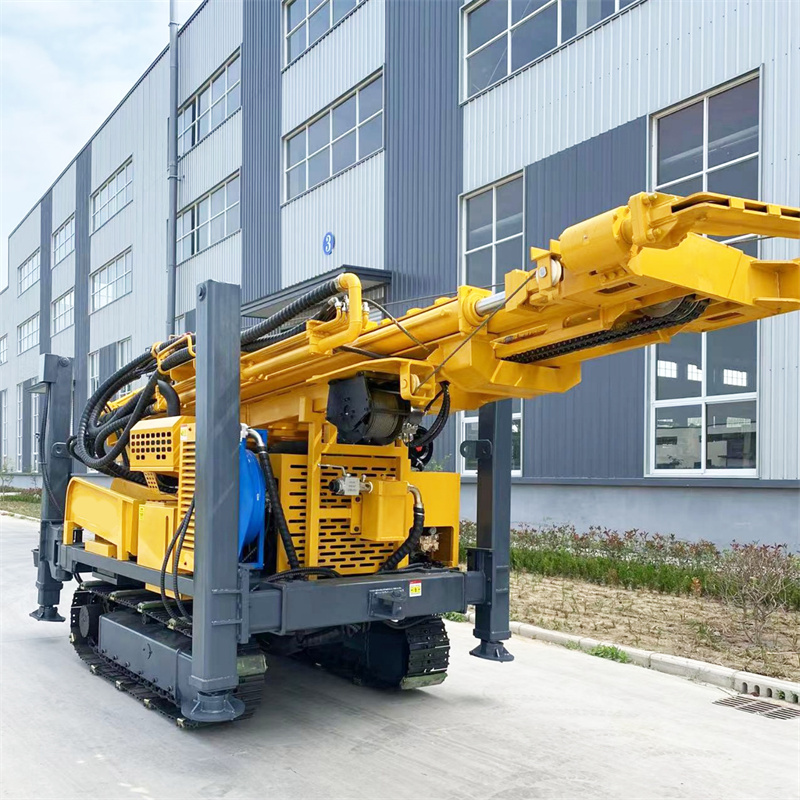
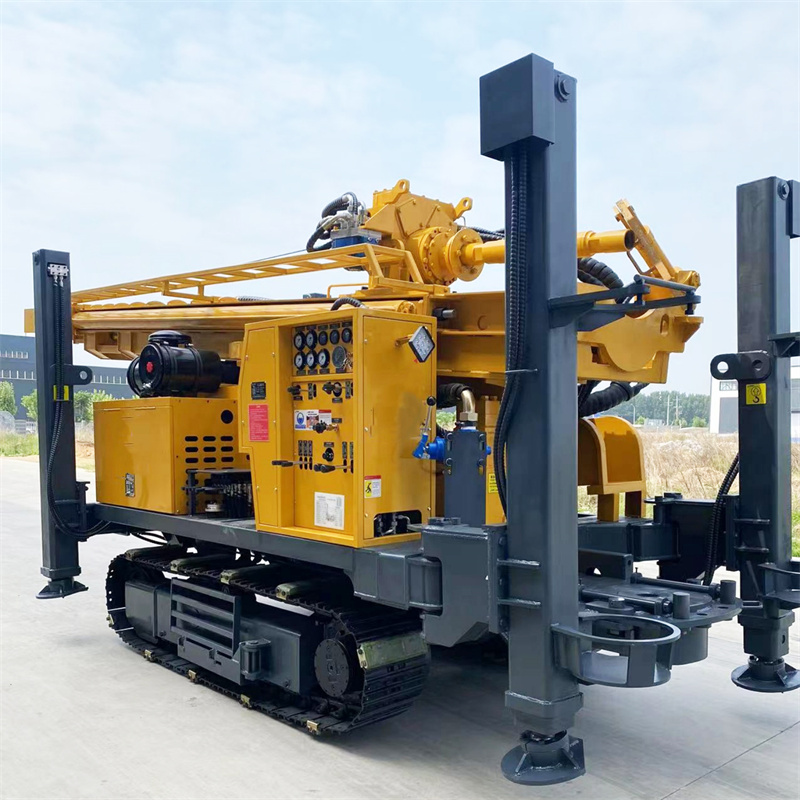
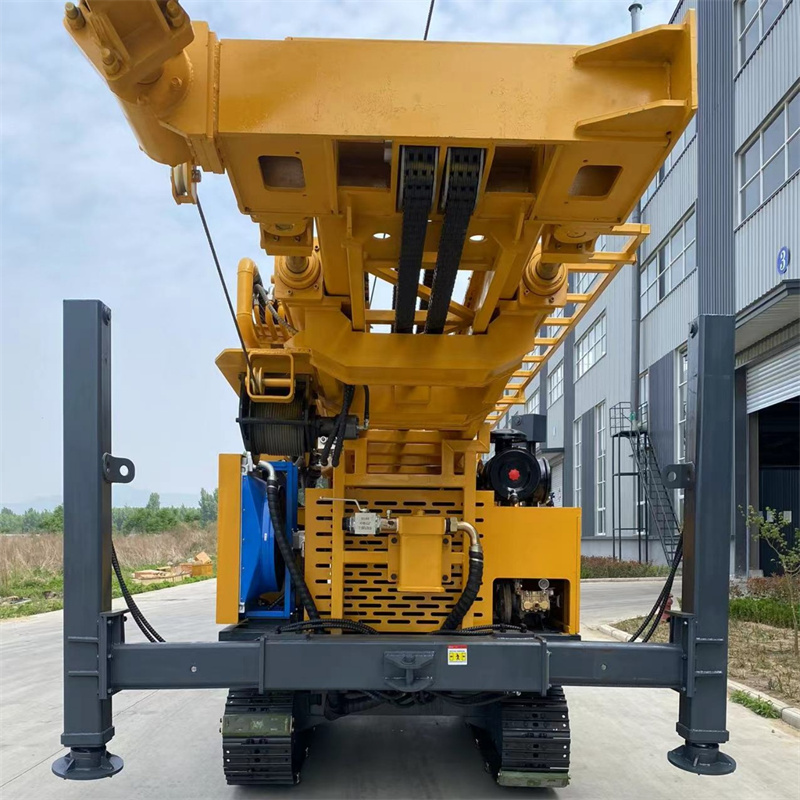
Crawler-Mounted Water Well Drilling Rig
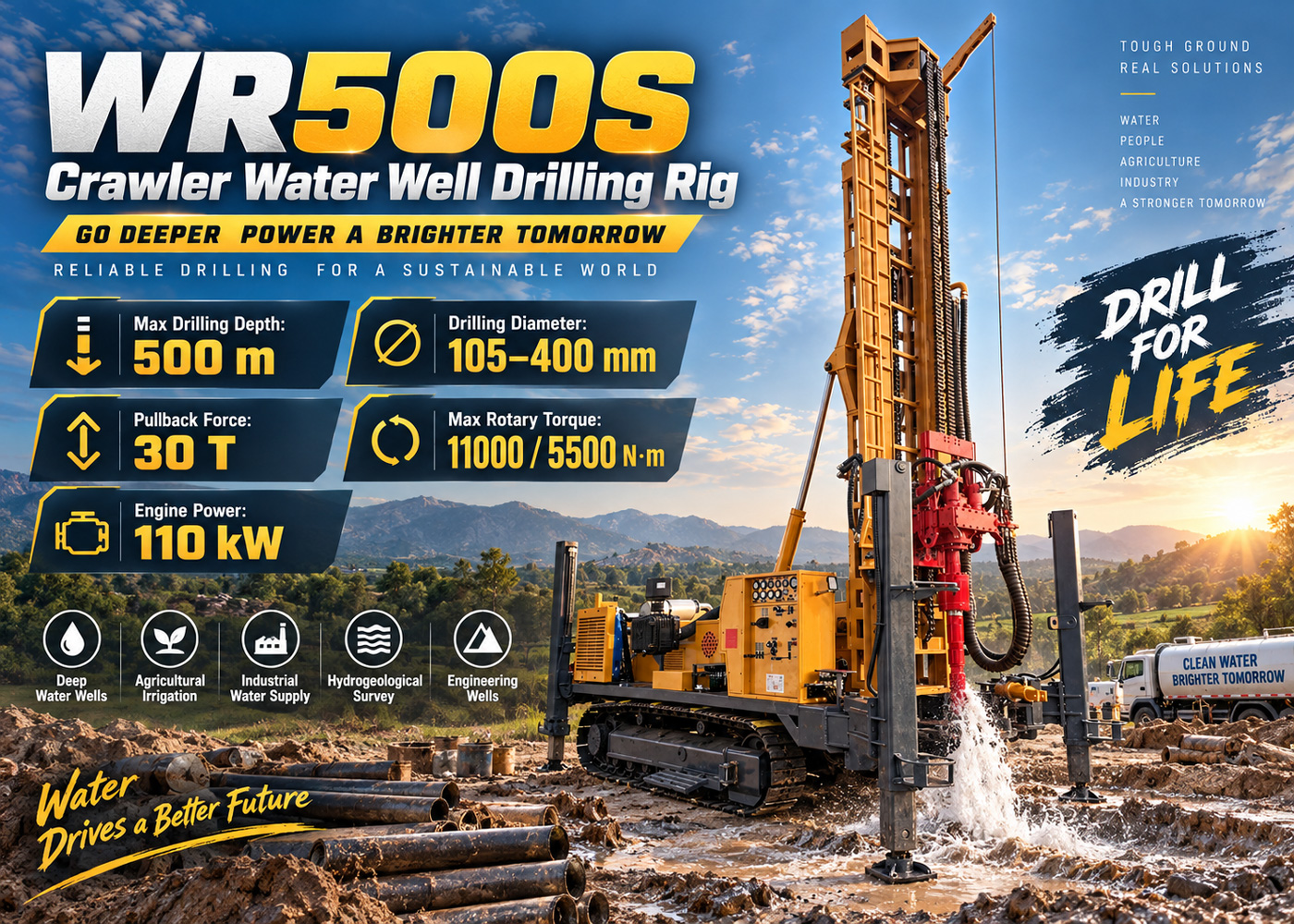
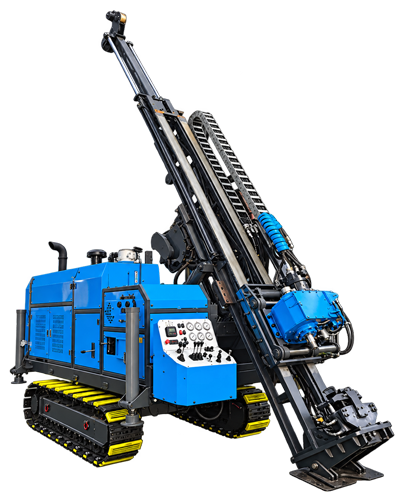
The WR500S is a heavy-duty crawler fully hydraulic drilling rig designed for 500 m class medium-deep water well construction. It adopts a telescopic mast structure, supports 6 m drill pipes, and is equipped with 30 T lifting force, 11000 / 5500 N·m dual-mode rotary torque, and a 110 kW Yuchai engine. It is suitable for rural deep water wells, farmland irrigation, mining area water supply, industrial water use, and groundwater development projects.
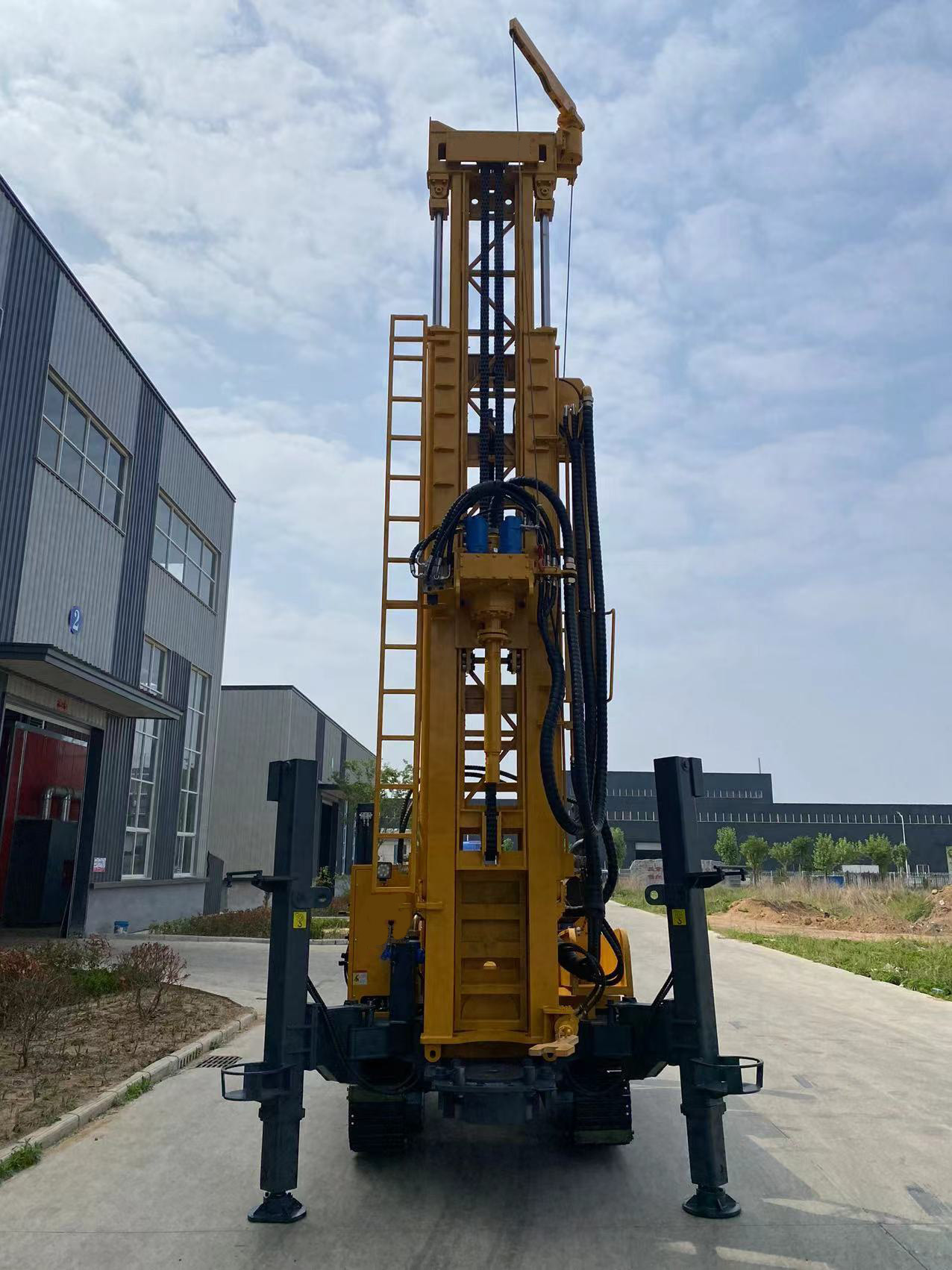
The S in WR500S stands for telescopic mast. Compared with a fixed long mast, the telescopic structure can shorten the equipment outline during transport, facilitating loading, road passage, and cross-project relocation. After arriving at the site, the mast can be extended to support continuous construction with 6 m drill pipes. For 500 m class hole depths, reducing the number of pipe connections can significantly lower auxiliary time.
With a maximum drilling depth of 500 m and a drilling diameter of 105–400 mm, it is suitable for projects with deep groundwater levels, unstable shallow aquifers, or the need for greater depth margin for water exploration. Compared with 400 m class equipment, the WR500S further improves depth reserve and lifting capacity, making it more suitable for long-term medium-deep water well construction.
For large farmland, orchards, greenhouses, and large-scale planting areas, the 500 m class drilling depth can cover more groundwater layers, while the 6 m drill pipe helps reduce pipe connection frequency and improve continuous drilling efficiency. When completing the well, the hole diameter and well structure should be designed according to the expected water yield, casing size, and submersible pump specifications.
In villages with insufficient centralized water supply or deep groundwater burial, the WR500S can be used for household water wells, village-level water supply wells, and public water projects such as schools and clinics. A 500 m class depth does not mean every well must be drilled to 500 m; the final well depth should be determined based on local hydrogeology and the location of water-producing layers.
Mining areas often require stable domestic water, dust suppression water, equipment cleaning, and auxiliary production water. The WR500S crawler chassis is suitable for gravel roads and generally uneven ground, and its 500 m drilling depth and 30 T lifting force are also more suitable for water supply projects in mining areas with a high proportion of hard rock and larger hole depths.
Factories, industrial parks, construction camps, and large infrastructure projects can use the WR500S for medium-deep water well construction. The equipment supports DTH hammer drilling and mud rotary drilling, and the process can be switched according to the upper loose layer and lower rock layer conditions, improving hole-forming adaptability in different formations.
At 500 m class hole depths, the self-weight of drill pipes, borehole wall friction, and casing weight all increase significantly. The 30 T lifting force facilitates normal tripping, DTH hammer recovery, and some casing operations. If abnormal resistance occurs during pulling out, the hole should be cleaned first and the borehole wall and drilling tool condition assessed, avoiding direct use of maximum lifting force for forced handling.
The rotary system has a maximum torque of 11000 / 5500 N·m, corresponding to maximum rotary speeds of 75 / 150 r/min. The low-speed high-torque mode is suitable for large diameters, hard rock, and higher loads; the higher-speed mode is suitable for drilling stages with relatively lower resistance. On site, rotary parameters should be adjusted according to hole diameter, DTH hammer, and cuttings return conditions.
Reference axial pressure is 6 T, fast feed speed is 48 m/min, and fast lifting speed is 29 m/min. Axial pressure is used to control drill tool feed, while fast feed and fast lifting mainly serve power head movement and drill pipe handling. Actual penetration efficiency in rock formations is still affected by lithology, drill bit, air compressor, and operating method.
Recommended working air pressure for pneumatic DTH drilling is 1.2–3.5 MPa, with air consumption of 16–55 m³/min. When hole diameter increases, rock becomes harder, hole depth increases, or altitude rises, the air compressor displacement requirement becomes higher. Air compressor selection should consider both pressure and flow, not just a single pressure indicator.
After entering relatively intact rock formations, medium and high pressure DTH hammers with matching drill bits can be used for construction. During hard rock drilling, ensure DTH hammer lubrication, sufficient air volume, and continuous cuttings removal; if cuttings return decreases or air pressure fluctuates, promptly check for bottom-hole cuttings accumulation, air leakage, or abnormal drill bit wear.
Although weathered rock is easy to drill, the borehole wall may be unstable. When encountering alternating soft-hard formations, parameters should be adjusted promptly according to rotary torque and feed resistance. When the upper weathered layer is thick, casing or mud can be used to stabilize the hole, reducing diameter shrinkage and block falling problems in the later stages of deep holes.
The WR500S supports mud rotary drilling. Upper soil, clay, sand, and gravel layers can be stabilized through mud circulation, casing, or other hole stabilization measures before entering rock formations and switching to DTH hammer drilling. For deep water wells, stabilizing the upper hole section is often more important than simply increasing penetration rate.
Fracture zones may cause block falling, air leakage, sticking, and abnormal cuttings return. During construction, excessive feed should be avoided, continuous hole cleaning should be maintained, and foam or casing should be used according to site conditions. If air loss is obvious, determine whether large fissures or cavities exist rather than only increasing air compressor pressure.
After entering the main aquifer, groundwater will change the cuttings return and DTH hammer working state in the hole. The aquifer depth should be recorded promptly, and air supply, hole cleaning, and casing methods should be adjusted according to water inflow. During well completion, filter pipes and sealing layers should be set according to the aquifer location to ensure long-term pumping effect.
The equipment travel speed is about 3 km/h, and the maximum climbing angle is approximately 21°. The crawler structure is suitable for gravel roads in mining areas, rural roads, and generally uneven sites. Since the overall weight is about 10.6 T, ground bearing capacity, slope, and wet slippery conditions should be confirmed during relocation.
The hydraulic outrigger stroke is 1.6 m, which can be used for equipment leveling and stable support. 500 m class water well construction has a long cycle, and the equipment level state affects mast stress and hole deviation control. On soft ground, pads should be added to avoid settlement after long-term outrigger loading.
The WR500S uses a 110 kW Yuchai engine to provide power for rotation, feed, crawler travel, and auxiliary hydraulic systems. Deep hole and hard rock construction last for long periods, so engine cooling, air filtration, and fuel system maintenance should be strengthened. On dusty sites, radiator and filter cleaning frequency should be increased.
The auxiliary winch has a lifting force of 1.5 T and can be used for handling DTH hammers, drill pipes, casing tools, and other accessories. When using 6 m drill pipes, lifting points and manual guidance should be reasonably set to avoid lateral swinging of drill pipes, collision with the mast, or personnel safety impact.
The overall weight is about 10.6 T, and the overall dimensions are about 6.52 × 1.85 × 2.51 m. During transport, flatbed trucks should be arranged according to vehicle load, road width, and height limits, and the telescopic mast locking, equipment fixing points, and drill pipe bundling status should be checked. After arriving at the site, sufficient space for mast extension should also be reserved.
Mud pumps, centrifugal pumps, generators, and foam pumps can be optionally configured according to the project. Projects with many loose layers place more emphasis on the mud system, hard rock projects rely more on air compressors and DTH hammers, and formations with severe air leakage may require foam assistance. Selecting according to actual working conditions can reduce unnecessary investment.
In addition to daily checks of the engine, hydraulic system, crawler, outriggers, and drilling tools, focus should also be placed on checking the telescopic mast guide rails, cylinders, pins, and locking structures. When using 6 m drill pipes, ensure the mast is fully extended and reliably fixed, avoiding high-load drilling when the mast is not locked or the site is not leveled.
Due to differences in actual geological conditions, downhole tools, drilling angles, and operating methods, the final drilling efficiency, drilling depth, and well completion effect should be based on on-site working conditions.
| Parameter Item | Parameter Value |
|---|---|
| Basic Parameters | |
| Product Model | WR500S |
| Equipment Type | Telescopic mast crawler fully hydraulic water well drilling rig |
| Maximum Drilling Depth | 500 m |
| Drilling Diameter | 105–400 mm |
| Applicable Formations | Loose formations and rock formations |
| Telescopic Mast and Drill Pipe Configuration | |
| Mast Structure | Telescopic mast |
| Drill Pipe Length | 6 m |
| Recommended Drill Pipe Diameter | 89 / 102 mm |
| Casing Adaptability | 6 m casing can be configured according to project |
| Rotary and Feed System | |
| Axial Pressure | 6 T |
| Lifting Force | 30 T |
| Fast Lifting Speed | 29 m/min |
| Fast Feed Speed | 48 m/min |
| Maximum Rotary Torque | 11000 / 5500 N·m |
| Maximum Rotary Speed | 75 / 150 r/min |
| Auxiliary Winch Lifting Force | 1.5 T |
| Hydraulic Outrigger Stroke | 1.6 m |
| Pneumatic System Matching | |
| Recommended Working Air Pressure | 1.2–3.5 MPa |
| Recommended Air Consumption | 16–55 m³/min |
| Compatible DTH Hammer | Medium and high pressure series |
| Power System | |
| Engine Brand | Yuchai |
| Engine Power | 110 kW |
| Travel and Overall Parameters | |
| Travel Speed | 3 km/h |
| Maximum Climbing Angle | 21° |
| Overall Weight | 10.6 T |
| Overall Dimensions | 6.52 × 1.85 × 2.51 m |
| Drilling Methods | |
| Top drive hydraulic rotary drilling | Suitable for conventional water wells and different hole diameter construction |
| DTH hammer drilling | Suitable for weathered rock, fractured rock, and relatively intact hard rock |
| Mud rotary drilling | Suitable for soil, clay, sand, and other loose overburden |
| Optional Accessories | |
| Mud Pump | Optional |
| Centrifugal Pump | Optional |
| Generator | Optional |
| Foam Pump | Optional |
| Typical Applications | |
| Deep Water Wells | Rural, community, industrial, and general groundwater development |
| Agricultural Irrigation | Farmland, orchards, greenhouses, and large-scale planting areas |
| Mining Area Water Supply | Mine domestic water, dust suppression, camp, and auxiliary production water |
| Groundwater Investigation | Hydrogeological investigation and medium-deep groundwater verification |
| Engineering Water Wells | Construction sites, industrial parks, and infrastructure supporting water wells |
We are a professional drilling equipment manufacturer specializing in the research and development, production and supply of water well drilling rigs, core drilling rigs, reverse circulation drilling rigs, down-the-hole drilling rigs, truck-mounted drilling rigs and mineral exploration equipment.
© 2026 Shandong Hengjianhang Construction Machinery Co., Ltd. All rights reserved.