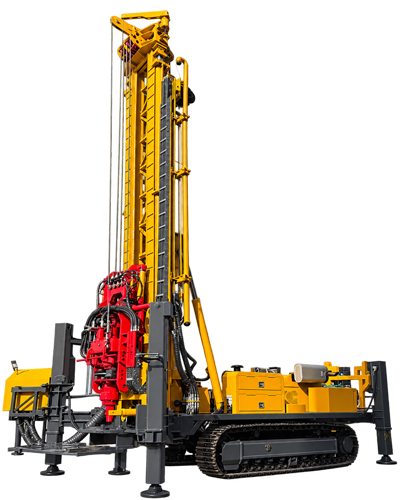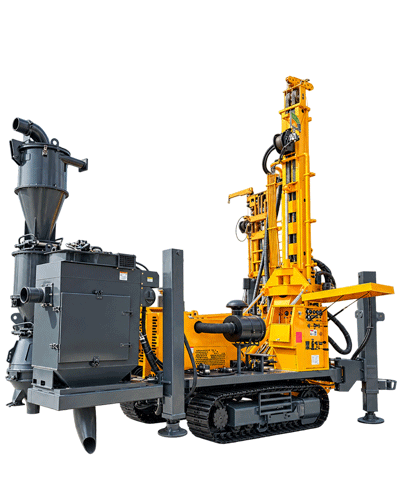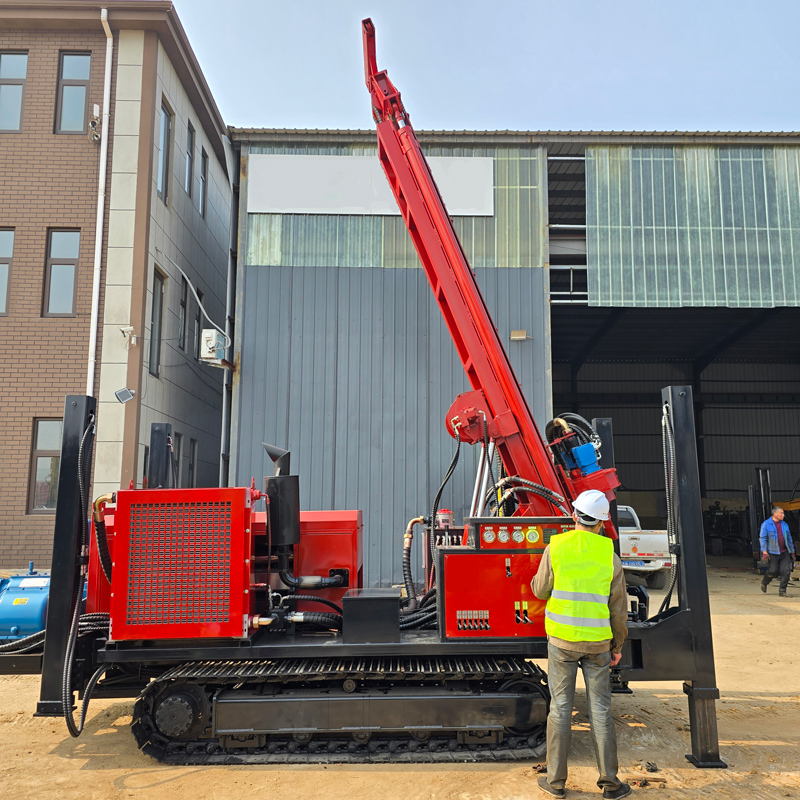
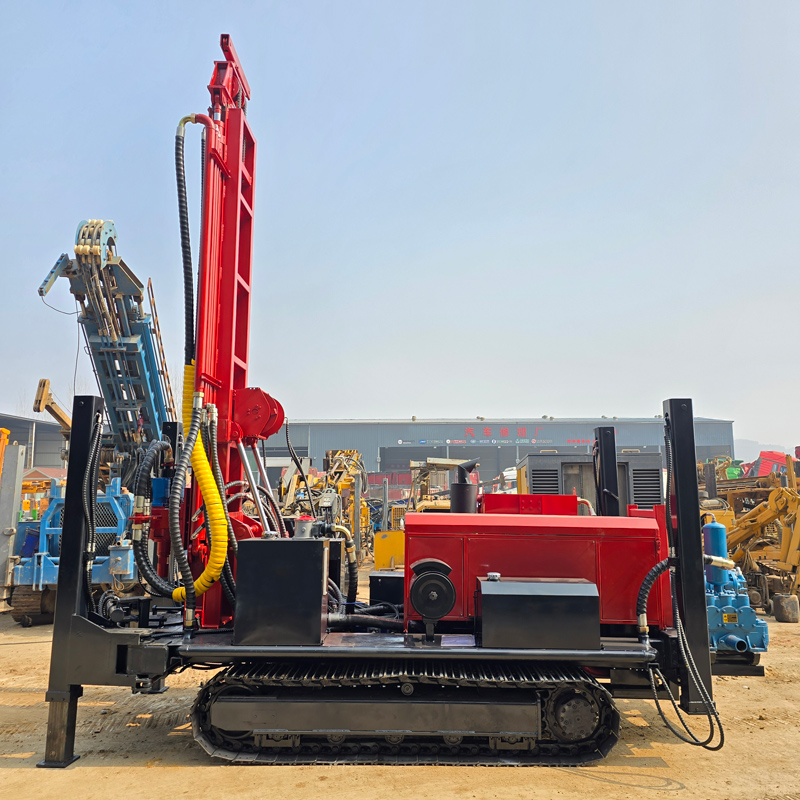
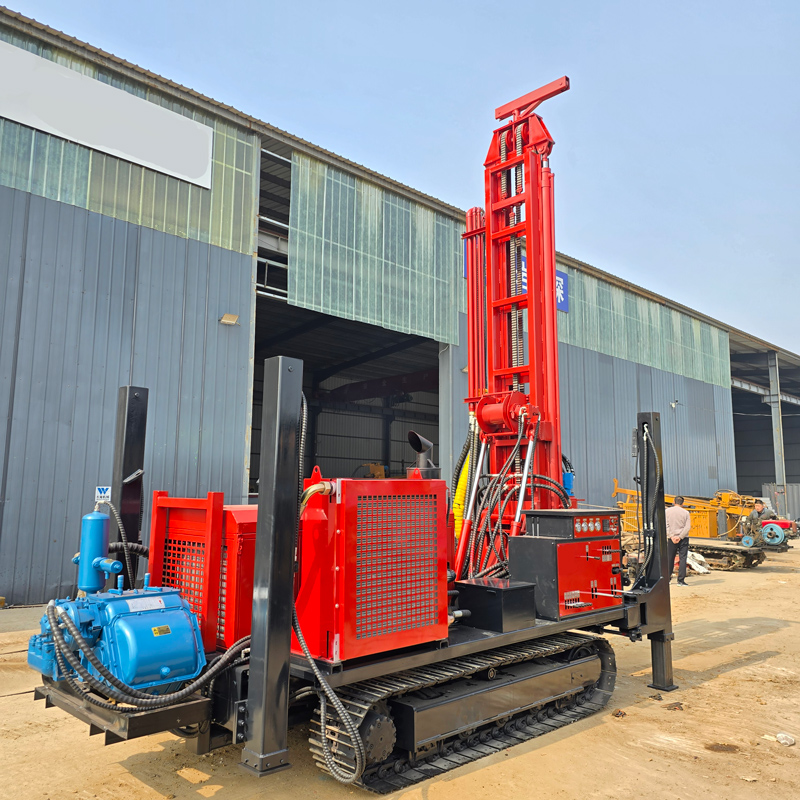
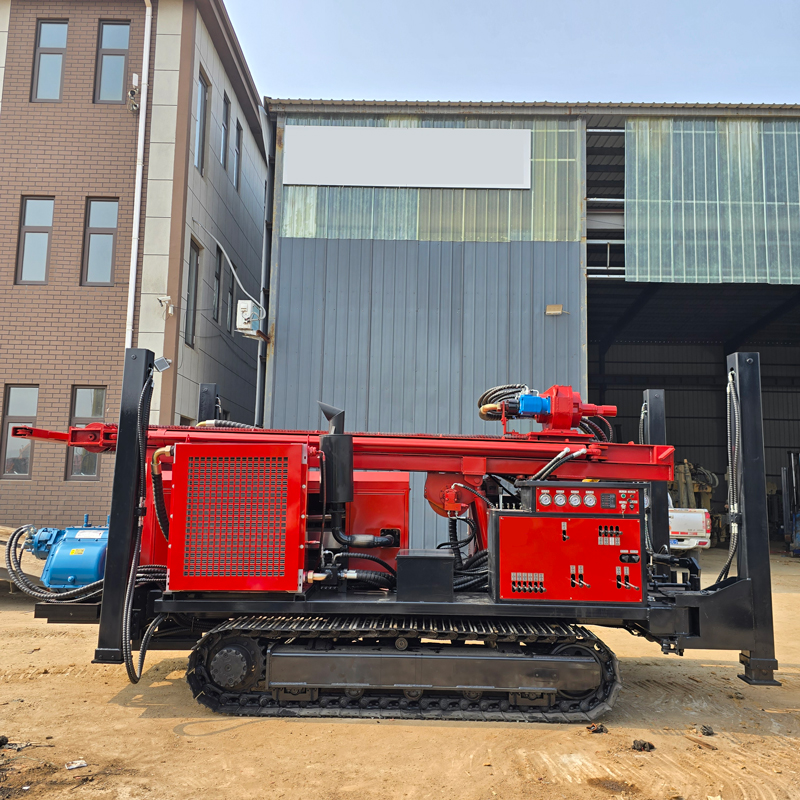
Crawler-Mounted Water Well Drilling Rig
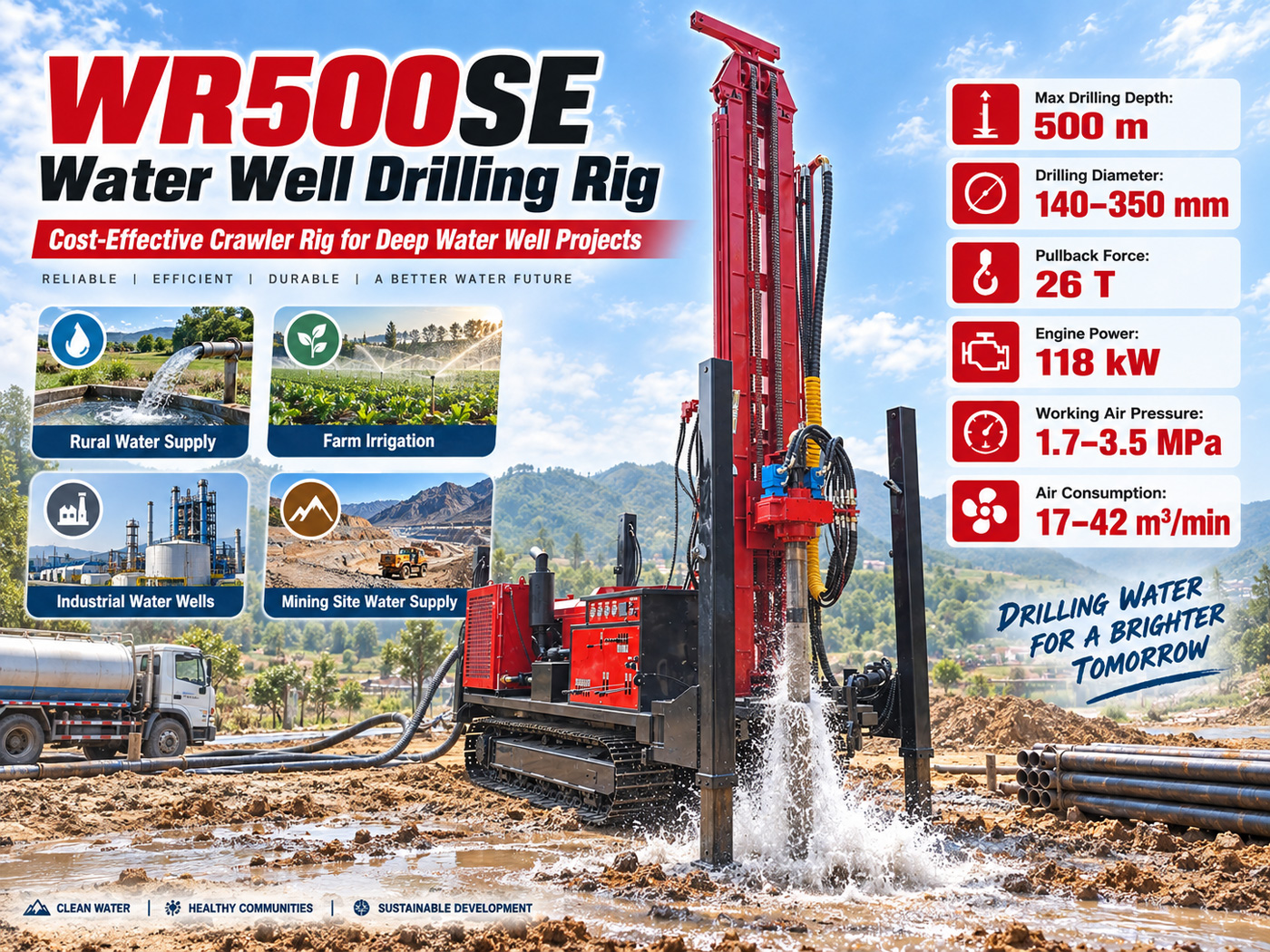
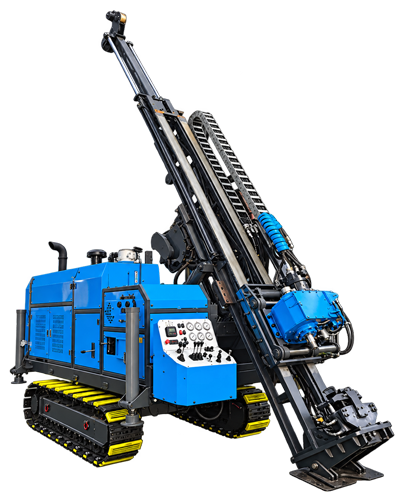
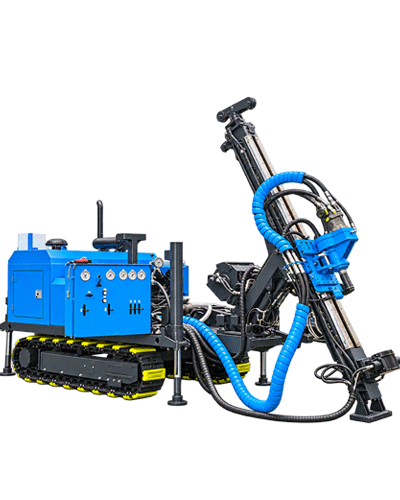
The WR500SE is a cost-effective crawler drilling rig designed for 500-meter-class medium-to-deep water well construction. Its focus differs from the WR500S: the WR500S emphasizes 500-meter heavy-duty water well capability, while the WR500SE further highlights a 6.6 m long stroke, telescopic mast, and more flexible on-site auxiliary configuration on the basis of 500-meter drilling depth. It is suitable for water well drilling teams that need relatively high continuous construction efficiency while controlling equipment investment.
500-meter-class water well projects have high requirements for lifting force, torque, air compressor, and drill pipe system. Excessively adding unnecessary configurations will significantly increase equipment investment. The WR500SE retains 26 T lifting force, 7500–10000 N·m rotary torque, 118 kW Yuchai power, and multiple drill pipe specifications, while through its cost-effective series positioning, it allows the budget to be focused more on the core capabilities truly needed for deep-hole construction.
The single-feed length is 6.6 m, which can be used directly with 6 m drill pipes. For 400–500-meter-class boreholes, the more times pipes are added, the more noticeable the accumulated auxiliary time becomes. The long-stroke structure can reduce repeated return of the power head and the frequency of drill pipe connections, offering more practical value in projects with continuous construction, fewer cooperating workers, or tight schedules.
The WR500SE supports 102 / 108 / 114 mm drill pipes, with optional lengths of 1.5 / 2 / 3 / 6 m. Larger-diameter drill pipes are more suitable for 500-meter-class deep holes and higher-torque working conditions, while different lengths can be flexibly combined according to site space, transportation conditions, and construction efficiency. 6 m drill pipes are suitable for continuous drilling, while shorter drill pipes are more suitable for space-restricted sites.
The maximum drilling depth is 500 m, and the borehole diameter is 140–350 mm. It can be used for rural deep wells, farmland irrigation wells, industrial water wells, mining area water supply, and general medium-to-deep groundwater projects. In areas where shallow aquifers are unstable, groundwater depth is relatively large, or water demand is relatively high, 500-meter-class equipment provides greater construction margin.
Large farmland, orchards, and greenhouse projects often require continuous construction of multiple water wells. The 6.6 m long stroke and 6 m drill pipes of the WR500SE can reduce the number of pipe connections and improve continuous construction efficiency for a single well. The actual well diameter and well depth should be designed according to expected water yield, irrigation area, well casing, and water pump specifications.
In areas with insufficient centralized water supply coverage or relatively deep groundwater levels, the WR500SE can be used for groundwater development for villages, schools, clinics, and small communities. A 500-meter-class drilling depth does not mean that every project needs to drill to the limit depth. The actual construction depth should be determined based on aquifer location and local hydrogeological data.
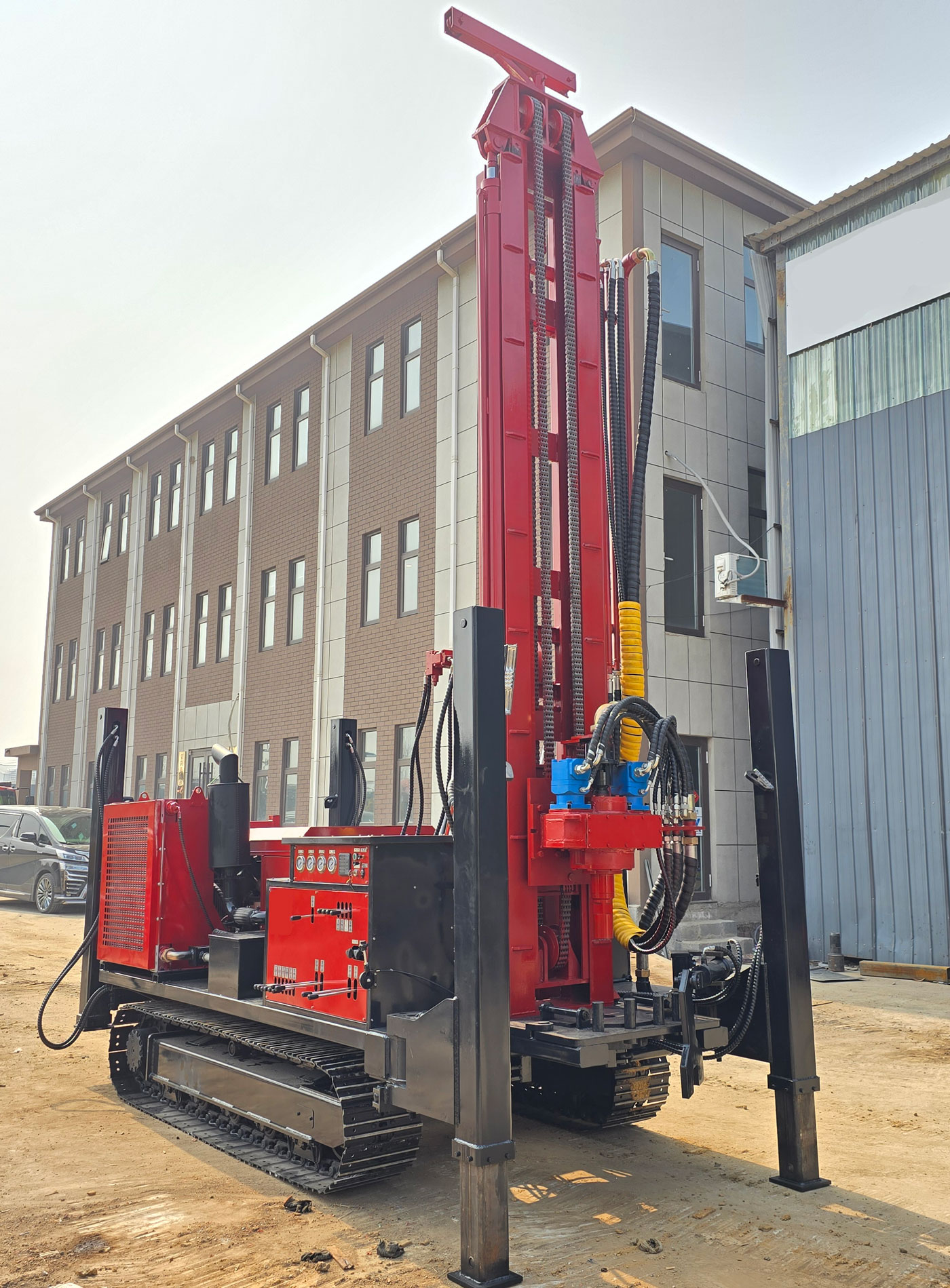
Mining areas often require domestic water, equipment cleaning, dust suppression, and auxiliary production water sources. The crawler chassis of the WR500SE is suitable for gravel ground in mining areas and general field roads. Its 118 kW power and 26 T lifting force are also more suitable for water well construction in mining areas with a relatively high proportion of hard rock and relatively large hole depths. For dewatering wells, well locations and pump rates should be determined in combination with hydrogeological design.
Industrial parks, factories, construction camps, and infrastructure projects may require independent water sources. The WR500SE can be used for auxiliary production water, equipment cleaning, and general construction water supply wells. The telescopic mast and crawler structure facilitate relocation between different sites and also make it easier to arrange equipment in areas with limited space.
The 26 T lifting force can be used for tripping 500-meter-class drill pipes, recovering DTH hammers, and some casing operations. Once hole shrinkage, falling blocks, or sediment occur in deep holes, the resistance during pulling out will increase rapidly. Therefore, lifting capacity should be regarded as normal operating margin, not as the only means to handle all downhole incidents.
The rotary torque is 7500–10000 N·m, and the rotary speed is 45–130 r/min. Harder rock formations and large boreholes usually require higher torque and lower rotation speed, while hole sections with less resistance can use higher rotary speed. Actual parameters should be adjusted in real time according to the DTH hammer, drill bit, drill pipe, and cuttings return conditions.
When using DTH drilling, the air compressor configuration directly affects impact and cuttings removal. The recommended working air pressure is 1.7–3.5 MPa, and the air consumption is 17–42 m³/min. When the borehole diameter increases, the rock formation becomes harder, the hole depth increases, or the altitude rises, more sufficient air flow is required, and rated pressure alone should not be the only consideration.
When equipped with a suitable DTH hammer and air compressor, the WR500SE can be used in relatively intact rock formations such as granite, basalt, limestone, and sandstone. During hard rock construction, DTH hammer lubrication and stable cuttings removal should be maintained. If cuttings return decreases or torque suddenly increases, the hole should be cleaned in time and the drill bit and DTH hammer condition should be checked.
Weathered rock and alternating soft and hard formations are prone to hole wall falling blocks and hole shrinkage. During construction, parameters should be adjusted according to changes in rotary torque, feed resistance, and cuttings return. When necessary, casing should be used for the upper unstable hole section to reduce hole wall problems in the deep-hole stage.
The upper soil layer, clay, sand layer, and gravel layer usually require more attention to hole stabilization. Depending on the project, casing, mud, or other wall protection methods can be used to first establish a stable collar and upper hole section, and then enter the lower rock formation for DTH drilling. For projects with thick loose layers, the mud system should be considered in advance during the equipment matching stage.
Broken zones may cause falling blocks, air leakage, sticking, and abnormal cuttings return. The WR500SE is equipped with an auxiliary foam pump function, which can improve cuttings removal in some dry, fractured, and air-leakage formations. If air leakage is severe, it should be handled comprehensively with foam, casing, and air compressor displacement, rather than simply increasing pressure.
After entering the main aquifer, groundwater will change the cuttings return in the hole and the working state of the DTH hammer. The depth of the main water-producing layer should be recorded, and air supply, hole cleaning, and casing methods should be adjusted according to the water inflow. During well completion, screen pipes and sealing sections should be set according to the aquifer location to ensure stable pumping later.
The WR500SE information includes an auxiliary foam pump function. Foam can be used in some dry holes, air-leakage layers, and working conditions where cuttings carrying capacity needs to be improved. Foam concentration and usage should be adjusted according to the formation, air compressor, and cuttings return conditions, and the same solution should not be fixed for all projects.
The dual quick coupler configuration facilitates connection and maintenance of the auxiliary hydraulic system, and is especially suitable for construction teams that frequently relocate and perform on-site disassembly and assembly. When using quick couplers, the interfaces should be kept clean to prevent mud and sand from entering the hydraulic system. At the same time, seals and locking conditions should be checked to prevent high-pressure leakage.
The long-stroke mast requires more frequent inspection of slideways, cylinders, pins, and top structures, so the equipment is equipped with a ladder for maintenance and inspection. Any high-altitude work on the mast should be carried out when the equipment is stopped and the mast is reliably secured, and fall protection measures should be taken according to site regulations.
The information provides optional welding support, which can be used for some on-site repairs and auxiliary work. Welding operations must be performed by qualified personnel and kept away from fuel, high-pressure air pipes, hydraulic hoses, and combustibles to avoid secondary risks to the equipment from sparks and high temperatures.
The equipment travel speed is about 2.5 km/h, and the reference maximum gradeability is 30°. The crawler structure is suitable for rural roads, gravel ground in mining areas, and general uneven sites. During actual climbing and relocation, the overall center of gravity, ground wetness and slipperiness, and mast transportation state should be considered. Safety should not be judged only by the maximum angle.
The high outrigger stroke is 1.6 m, which can support and level the equipment on slightly uneven sites. On soft ground, pads should be added to avoid outrigger sinking after long-term construction, which may cause mast tilting and increased hole deviation.
The overall machine weight is about 9.5 T, and the overall dimensions are about 6150 × 2200 × 2600 mm. Compared with larger drilling rigs above 500 meters, it still has certain transportation advantages. However, because it adopts a 6.6 m long-stroke configuration, vehicle length, equipment fixing points, and on-site turning space should be confirmed before transportation.
The information lists a “Loading Width 2.85 m” parameter, but it does not fully correspond to the overall machine external width of 2200 mm. In this article, it is retained in the parameter table as the “width marked in the information” and is not additionally interpreted as the actual transportation width. The final value should be confirmed with formal production technical data.
Before daily start-up, check the engine, hydraulic system, telescopic mast, crawler, outriggers, auxiliary winch, and high-pressure air pipes; during DTH drilling, check the air compressor, DTH hammer lubrication, and cuttings return; for the long-stroke mast, focus on inspecting guide rails, cylinders, pins, and locking structures; after construction, clean mud, dust, and rock powder in time.
Due to differences in actual geological conditions, downhole tools, drilling angles, and operating methods, the final drilling efficiency, drilling depth, and well completion effect should be based on on-site working conditions.
| Parameter Item | Parameter Value |
|---|---|
| Basic Parameters | |
| Product Model | WR500SE |
| Series Positioning | S-series telescopic mast + E-series cost-effective configuration |
| Equipment Type | Cost-effective telescopic mast crawler water well drilling rig |
| Maximum Drilling Depth | 500 m |
| Borehole Diameter | 140–350 mm |
| Main Drilling Method | Fully hydraulic rotary / DTH hammer drilling |
| Drill Pipe and Mast Configuration | |
| Mast Structure | Telescopic mast / long-stroke configuration |
| Single-Feed Length | 6.6 m |
| Drill Pipe Diameter | 102 / 108 / 114 mm |
| Drill Pipe Length | 1.5 / 2.0 / 3.0 / 6.0 m |
| Rotary and Feed System | |
| Lifting Force | 26 T |
| Fast Lifting Speed | 20 m/min |
| Fast Feed Speed | 40 m/min |
| Rotary Torque | 7500–10000 N·m |
| Rotary Speed | 45–130 r/min |
| High Outrigger Stroke | 1.6 m |
| Power System | |
| Engine Brand | Yuchai |
| Engine Power | 118 kW |
| Air Compressor Matching Parameters | |
| Working Air Pressure | 1.7–3.5 MPa |
| Air Consumption | 17–42 m³/min |
| Matching Description | Select the air compressor according to borehole diameter, DTH hammer specifications, target hole depth, altitude, and formation hardness |
| Auxiliary System | |
| Auxiliary Winch Lifting Force | 2 T |
| Foam Pump | Can be used for auxiliary drilling in some dry, fractured, and air-leakage formations |
| Quick Couplers | Dual quick coupler configuration |
| Ladder | Used for inspection and maintenance of the long-stroke mast |
| Welding Support | Optional welding configuration |
| Crawler Chassis | |
| Travel Speed | 2.5 km/h |
| Maximum Gradeability | 30° |
| Width Marked in Information | 2.85 m |
| Applicable Sites | Rural roads, mining areas, gravel ground, and general uneven sites |
| Overall Dimensions and Weight | |
| Overall Dimensions | 6150 × 2200 × 2600 mm |
| Overall Weight | 9.5 T |
| Typical Formation Adaptability | |
| Intact Hard Rock | DTH drilling with suitable DTH hammer and air compressor |
| Weathered Rock | Adjust feed according to hole wall stability and use casing as needed |
| Loose Overburden | May require casing, mud, or other hole stabilization measures |
| Broken Formation | Control feed, combine foam, casing, and enhanced hole cleaning |
| Aquifer | Adjust air supply, casing, and hole cleaning methods according to water inflow |
| Typical Applications | |
| Deep Water Wells | Rural, community, industrial, and general medium-to-deep groundwater development |
| Agricultural Irrigation | Water wells for farmland, orchards, greenhouses, and aquaculture |
| Industrial Water Use | Water supply for factories, industrial parks, and construction camps |
| Mining Area Water Supply | Mine domestic water, dust suppression, auxiliary production, and some dewatering wells |
| Geothermal Survey | Temperature gradient holes and some shallow geothermal survey projects |
We are a professional drilling equipment manufacturer specializing in the research and development, production and supply of water well drilling rigs, core drilling rigs, reverse circulation drilling rigs, down-the-hole drilling rigs, truck-mounted drilling rigs and mineral exploration equipment.
© 2026 Shandong Hengjianhang Construction Machinery Co., Ltd. All rights reserved.