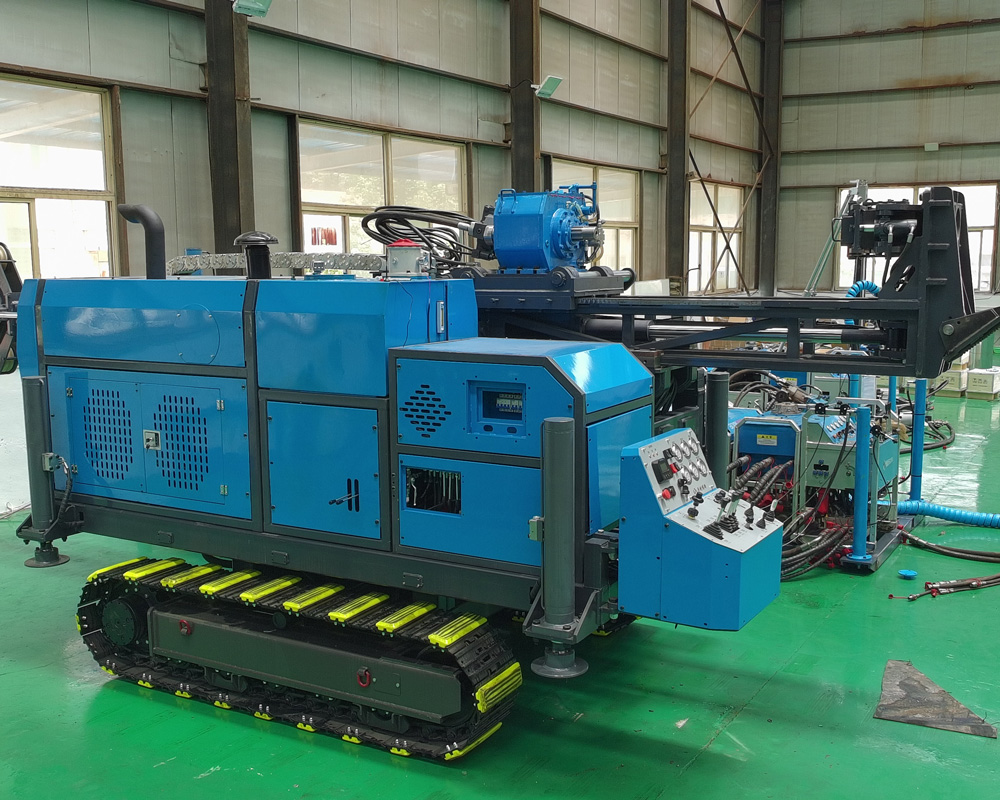
Integrated Core Drilling Rig
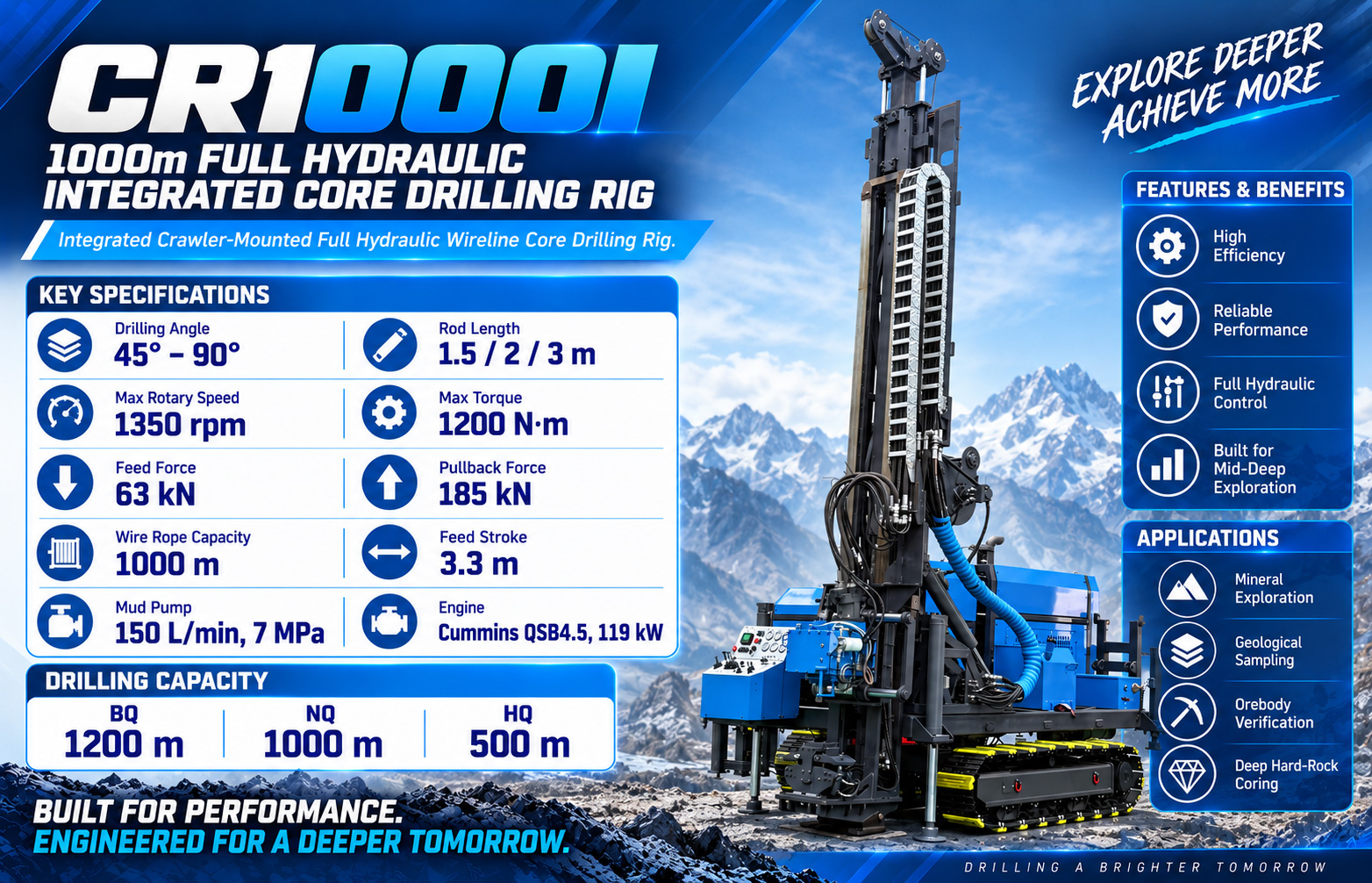
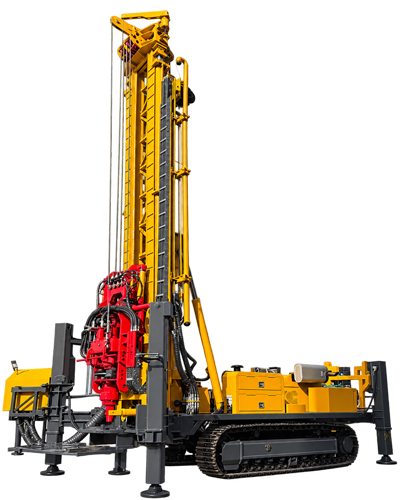
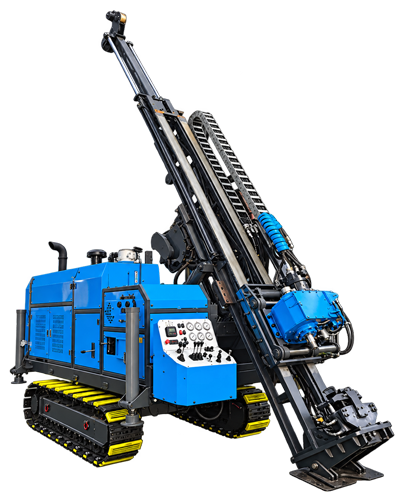
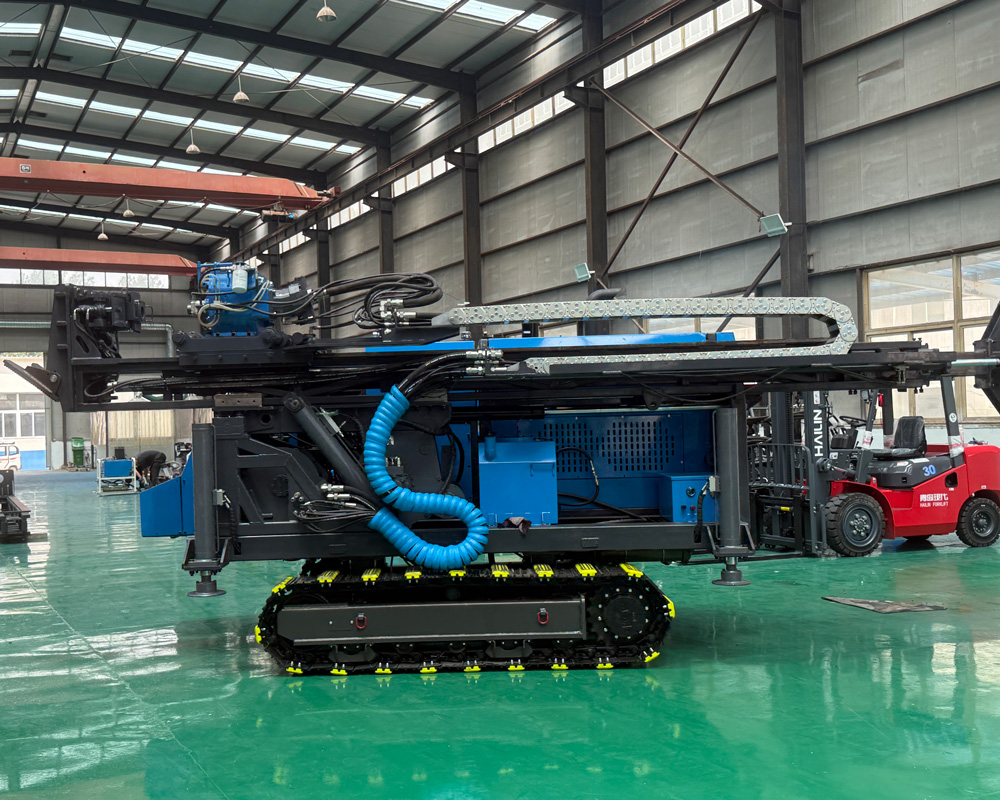
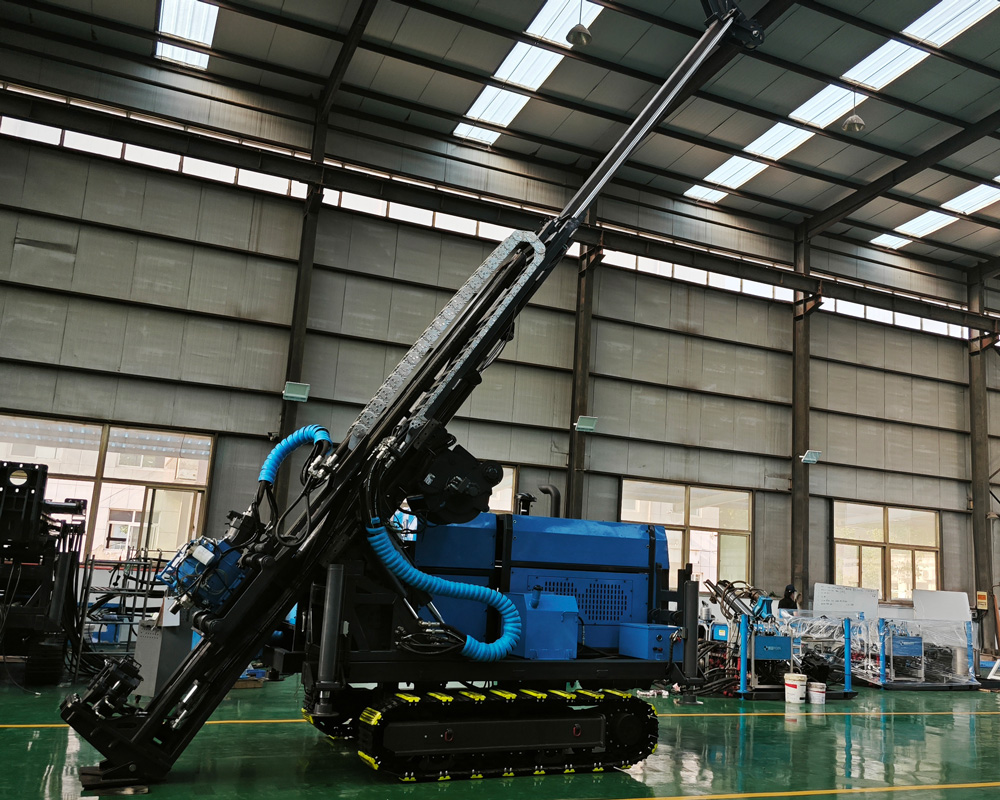
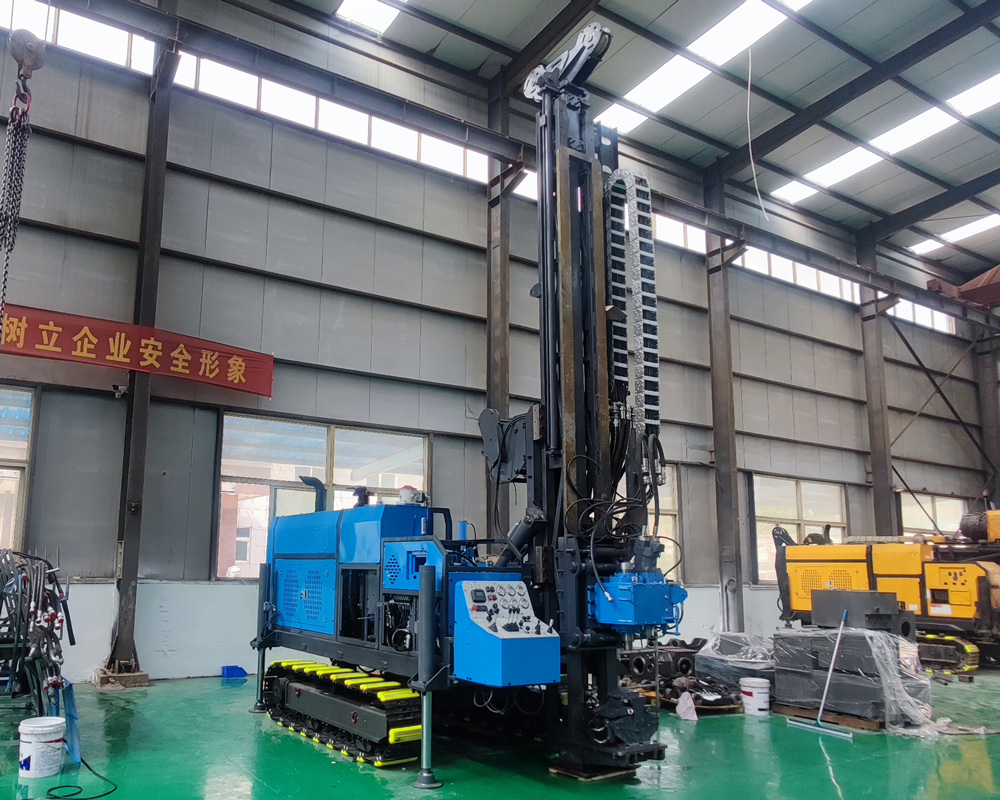
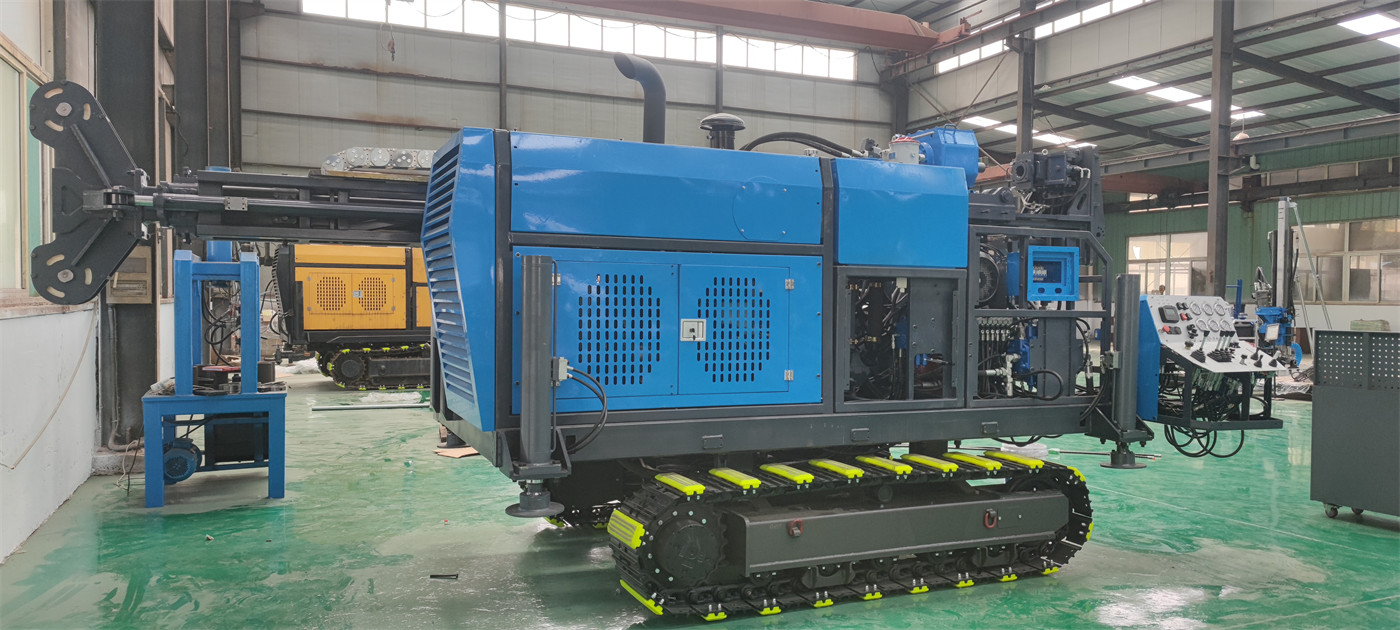
The CR1000I is an integrated crawler-mounted core drill rig designed for medium-deep mineral exploration tasks. The entire machine integrates the power unit, hydraulic system, power head, mast, winch, rod holder, and mud circulation system onto a single crawler platform, reducing on-site assembly and module connection work. This makes it more suitable for exploration projects that require frequent hole repositioning, continuous operation, and multi-area advancement.
For projects that have completed surface reconnaissance, geophysical and geochemical anomaly delineation, or shallow drilling verification, subsequent work often requires deeper boreholes to confirm ore body extension, thickness variations, and structural relationships. The CR1000I has a reference drilling depth of 1000 m in N-size, covering most medium-deep resource verification, ore body tracing, and infill drilling tasks, balancing depth, mobility, and operational efficiency.
In the exploration of quartz-vein gold deposits, structurally altered gold deposits, and concealed ore bodies, inclined or near-vertical holes can be arranged within a 45°–90° drilling angle range to intersect mineralization zones at a more favorable angle. The recovered core can be used for geological logging, structural analysis, sampling and assaying, and mineralization continuity assessment, providing a basis for subsequent resource estimation.
For porphyry copper deposits, skarn deposits, lead-zinc deposits, and polymetallic ore bodies, boreholes typically need to continuously pass through host rock, alteration zones, fault zones, and mineralized sections. The CR1000I's fully hydraulic feed and adjustable rotation speed allow drilling parameters to be adjusted according to rock changes, helping to maintain stable downhole tool operation and improve core recovery control in different lithological sections.
In the exploration of spodumene pegmatites, rare metal deposits, and other vein-type ore bodies, the focus of drilling is often to verify vein thickness, dip direction, dip angle, and deep extension. This rig can arrange holes at various angles and, combined with N- and H-size core barrel systems, conduct continuous core collection, facilitating further judgment of ore body boundaries and internal structures.
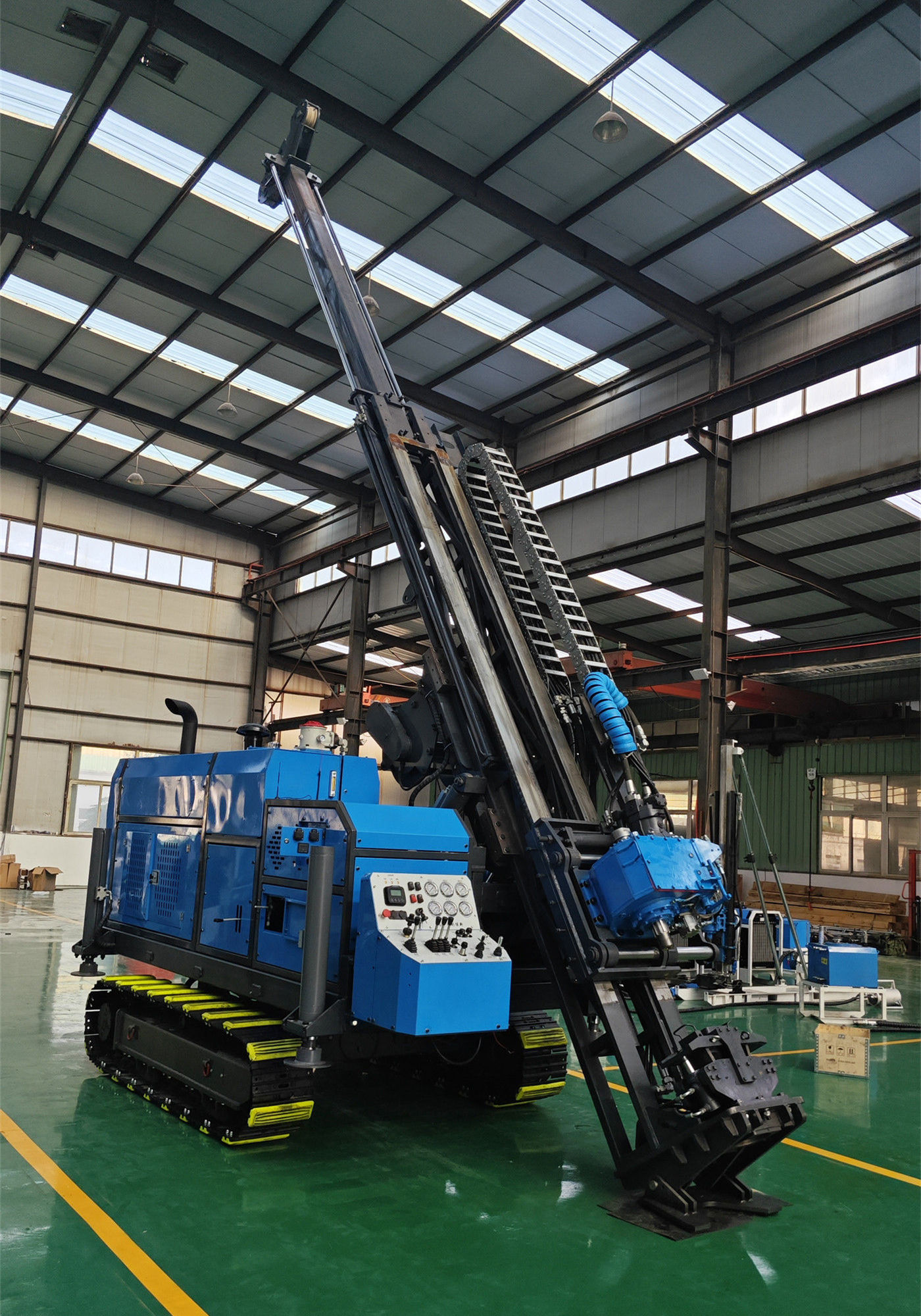
The crawler chassis provides good traction and ground adaptability, making it easier to move on mine roads, gravel surfaces, mountain platforms, and partially hardened sites. For projects with scattered drill points and frequent short-distance moves, the integrated structure reduces time loss from auxiliary lifting and repeated assembly.
Not all boreholes in geological exploration are suitable for vertical drilling. For inclined ore bodies, faults, veins, and layered mineralization zones, a reasonable inclined hole angle is often more important than simply drilling deeper. The CR1000I supports drilling in the 45°–90° range, allowing hole direction to be adjusted based on geological cross-sections and target body attitudes, improving the effectiveness of boreholes intersecting target bodies.
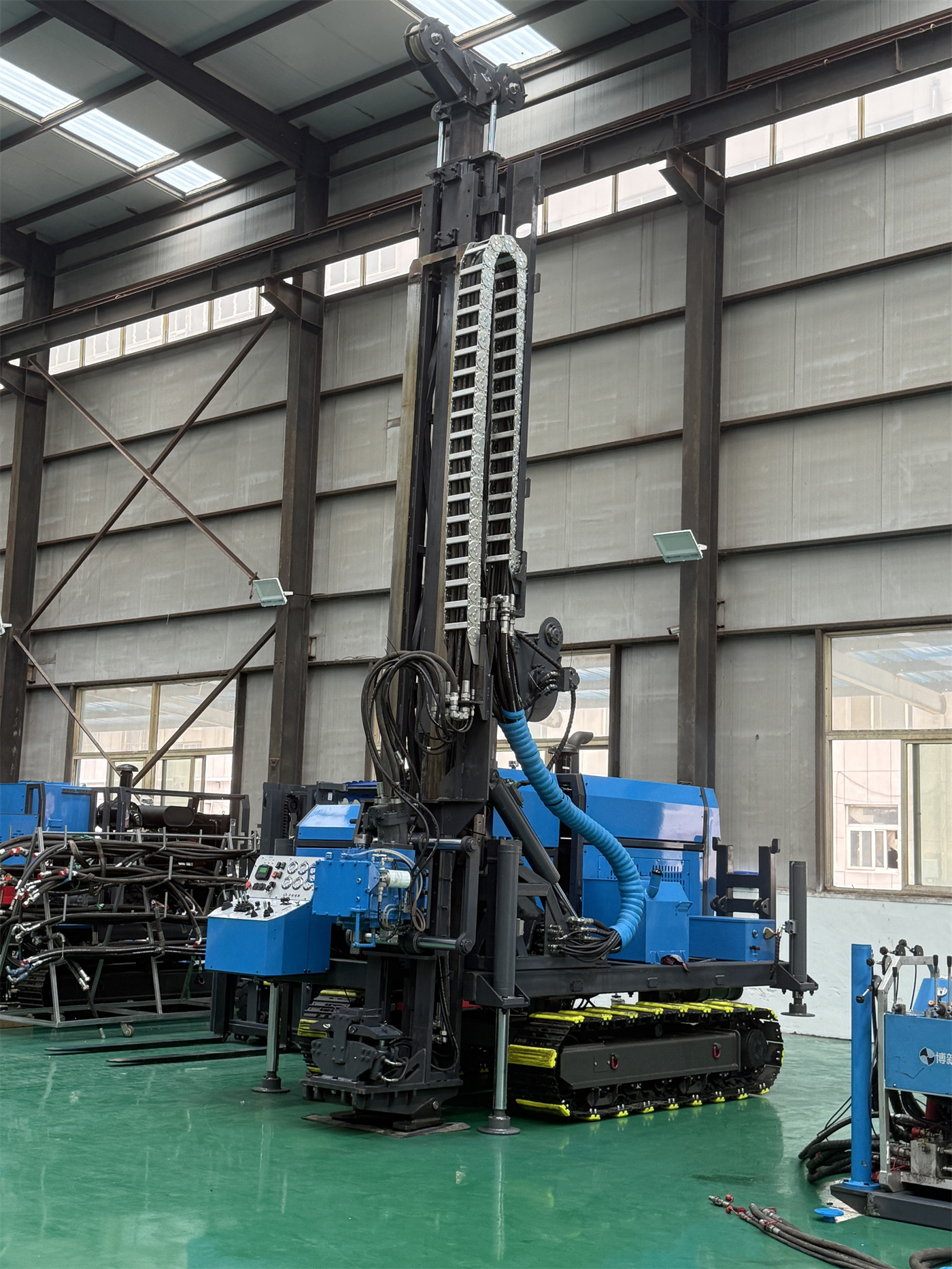
The power head uses gear transmission, with a maximum torque of 1200 N·m, a maximum speed of 1350 rpm, and hydraulic side-shift capability. For medium-deep diamond core drilling, this configuration meets high-speed requirements while retaining torque reserve to handle downhole resistance changes. After side-shifting the power head, more direct operational space is provided for hole mouth operations, drill rod handling, and maintenance.
As hole depth increases, the weight of the drill string, wall friction, and the risk of sticking due to complex formations all rise. The CR1000I provides 63 kN feed force and 185 kN lifting force, offering ample capacity reserve for normal drilling as well as deep hole tripping, handling downhole obstructions, and tool recovery.
The winch system uses a 6 mm wire rope with a capacity of 1000 m and a hoisting speed of 98 m/min. Combined with the wireline coring process, it reduces the time required to pull the entire drill string for each core run, making it suitable for continuous core collection, deep geological recording, and projects requiring improved single-hole operational efficiency.
The 150 L/min, 7 MPa mud system can be used for bit cooling, cuttings transport, borehole wall stabilization, and improving circulation conditions in complex formations. When encountering highly weathered, fractured, leaking, or locally water-bearing zones, mud properties, circulation rate, and wall protection measures should be adjusted based on formation conditions rather than using fixed parameters.
The main pump delivers 250 L/min at 25 MPa, the auxiliary pump delivers 80 L/min, and cooling is provided by a combination of air and water cooling. For long-duration drilling tasks, temperature control, filtration status, and oil cleanliness of the hydraulic system directly affect the stability of the power head, actuators, and control valves. Therefore, on-site maintenance should focus on hydraulic oil contamination and heat dissipation conditions.
The CR1000I is suitable for mineral exploration of gold, copper, lithium, lead-zinc, polymetallic, and iron deposits, as well as regional geological surveys, deep structural verification, infill drilling in mining areas, resource upgrading, mine boundary expansion and reserve increase, and engineering geological investigations requiring continuous core data.
In intact hard rock, emphasis should be placed on matching bit type, rotation speed, and weight on bit; in highly weathered layers and loose overburden, attention should be paid to borehole wall stability and casing advancement; in fault fracture zones, the length of each run should be appropriately shortened and mechanical impact reduced; when significant loss, fracture water, or aquifers are encountered, the flushing fluid system and wall protection plan should be adjusted promptly.
Before equipment enters the site, verify road width, slope, site bearing capacity, and drill platform dimensions; before formal construction, confirm drill rods, core barrels, bits, and mud system configuration based on target hole depth, diameter, drilling angle, and formation conditions; for deep hole operations, continuously inspect the wire rope, rod holder, power head, hydraulic filters, and high-pressure hoses.
Due to differences in actual geological conditions, downhole tools, drilling angles, and operating methods, final drilling efficiency, depth, and core recovery results should be based on site conditions.
| Parameter | Value |
|---|---|
| Drilling Capacity | |
| B-size reference drilling depth | 1200 m |
| N-size reference drilling depth | 1000 m |
| H-size reference drilling depth | 500 m |
| Drilling angle | 45°–90° |
| Handling rod length | 1.5 / 2 / 3 m |
| Power Head | |
| Transmission | Gear drive |
| Maximum torque | 1200 N·m |
| Maximum speed | 1350 rpm |
| Gear ratio | 1:3 |
| Movement | Hydraulic side shift |
| Mast and Feed System | |
| Feed stroke | 3.3 m |
| Feed speed | Fast + slow adjustable |
| Mast installation | Hydraulic telescopic |
| Feed force | 63 kN |
| Lifting force | 185 kN |
| Winch | |
| Wire rope diameter | 6 mm |
| Rope capacity | 1000 m |
| Lifting force | 13 kN |
| Lifting speed | 98 m/min |
| Rod Holder | |
| Through-hole diameter | 127 mm |
| Applicable drill rods | NQ, HQ, PQ, NTW, HTW |
| Clamping method | Hydraulic clamping + self-weight anti-slip wedge |
| Hydraulic System | |
| Main pump flow | 250 L/min |
| Main pump pressure | 25 MPa |
| Auxiliary pump flow | 80 L/min |
| Auxiliary pump pressure | 17 MPa |
| Cooling method | Air cooling + water cooling |
| Mud System | |
| Flow rate | 150 L/min |
| Pressure | 7 MPa |
| Speed | 295 rpm |
| Power | 21 kW |
| Power Unit | |
| Engine manufacturer | Cummins |
| Engine model | QSB4.5 |
| Displacement | 4.5 L |
| Rated power | 119 kW |
| Rated speed | 2200 rpm |
| Engine type | 4-cylinder turbocharged direct injection engine |
| Cooling method | Water cooling |
| Electrical system | 24 V |
We are a professional drilling equipment manufacturer specializing in the research and development, production and supply of water well drilling rigs, core drilling rigs, reverse circulation drilling rigs, down-the-hole drilling rigs, truck-mounted drilling rigs and mineral exploration equipment.
© 2026 Shandong Hengjianhang Construction Machinery Co., Ltd. All rights reserved.