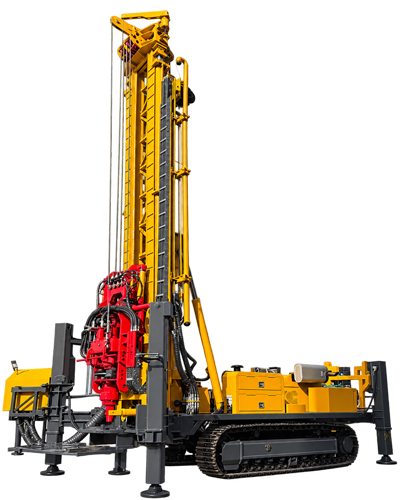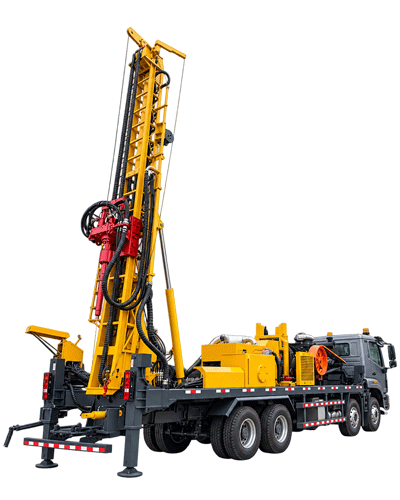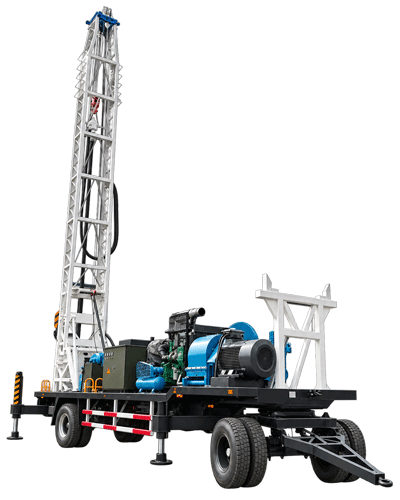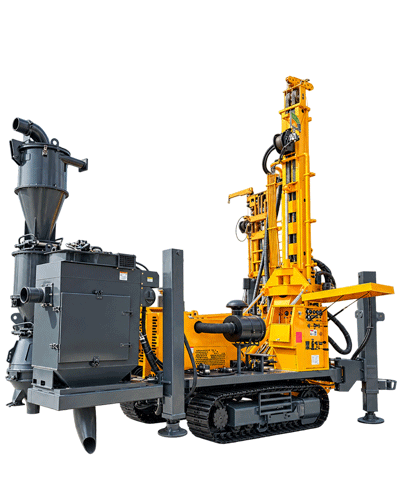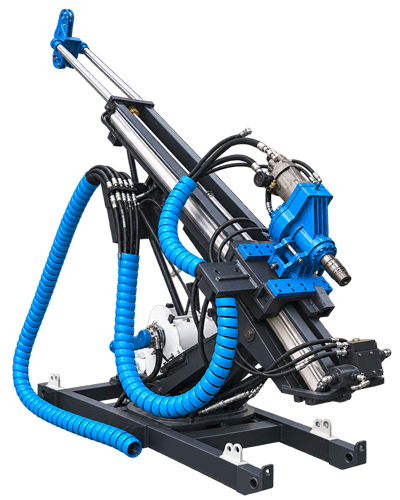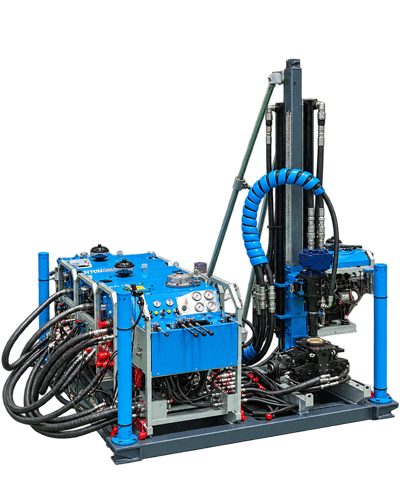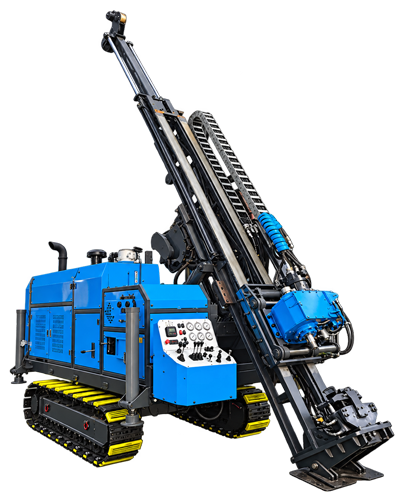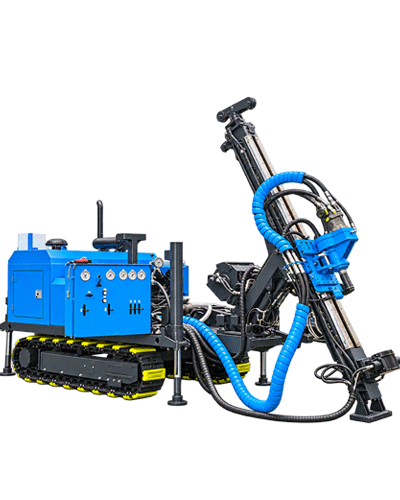
Integrated Core Drilling Rig
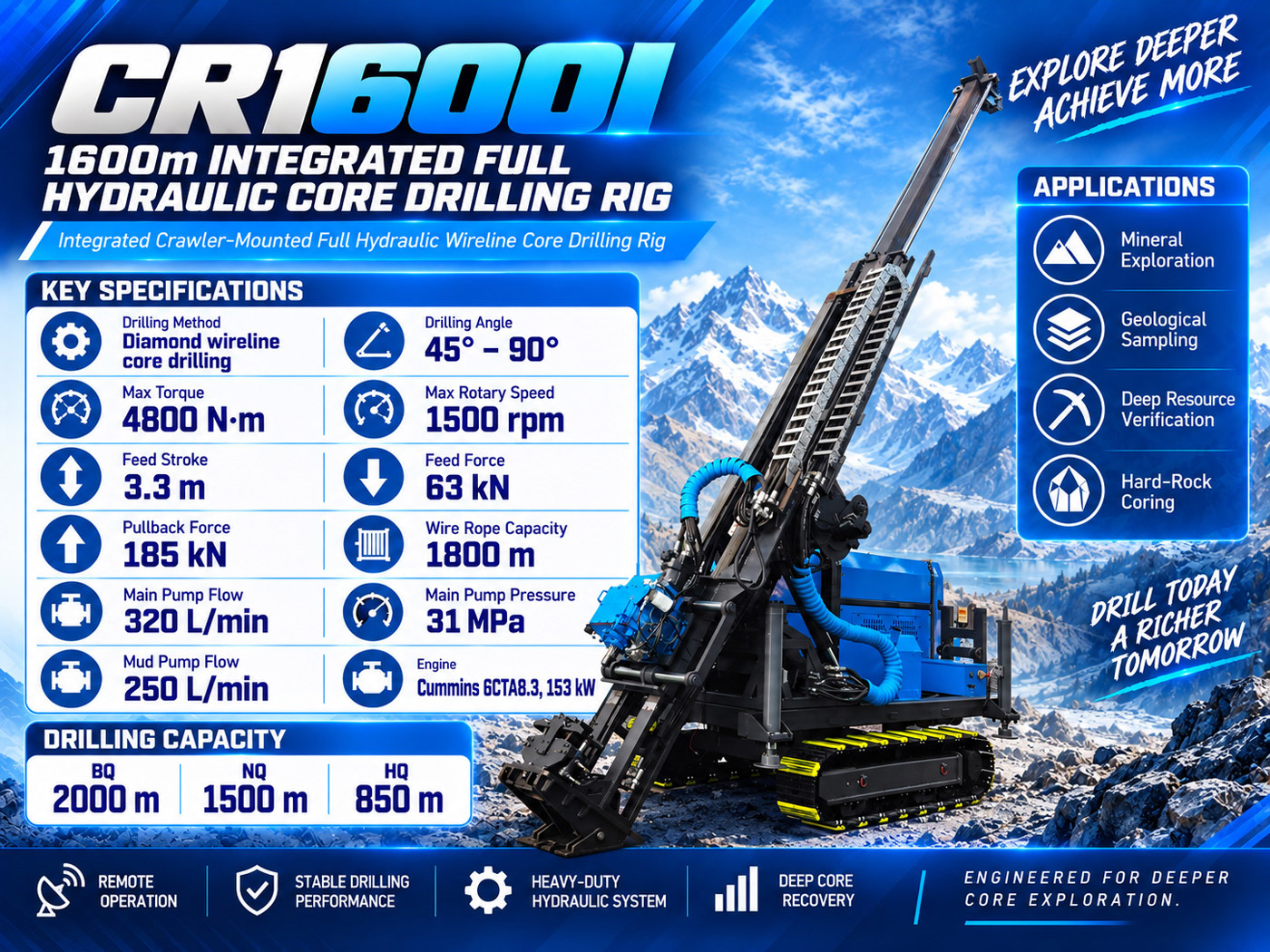
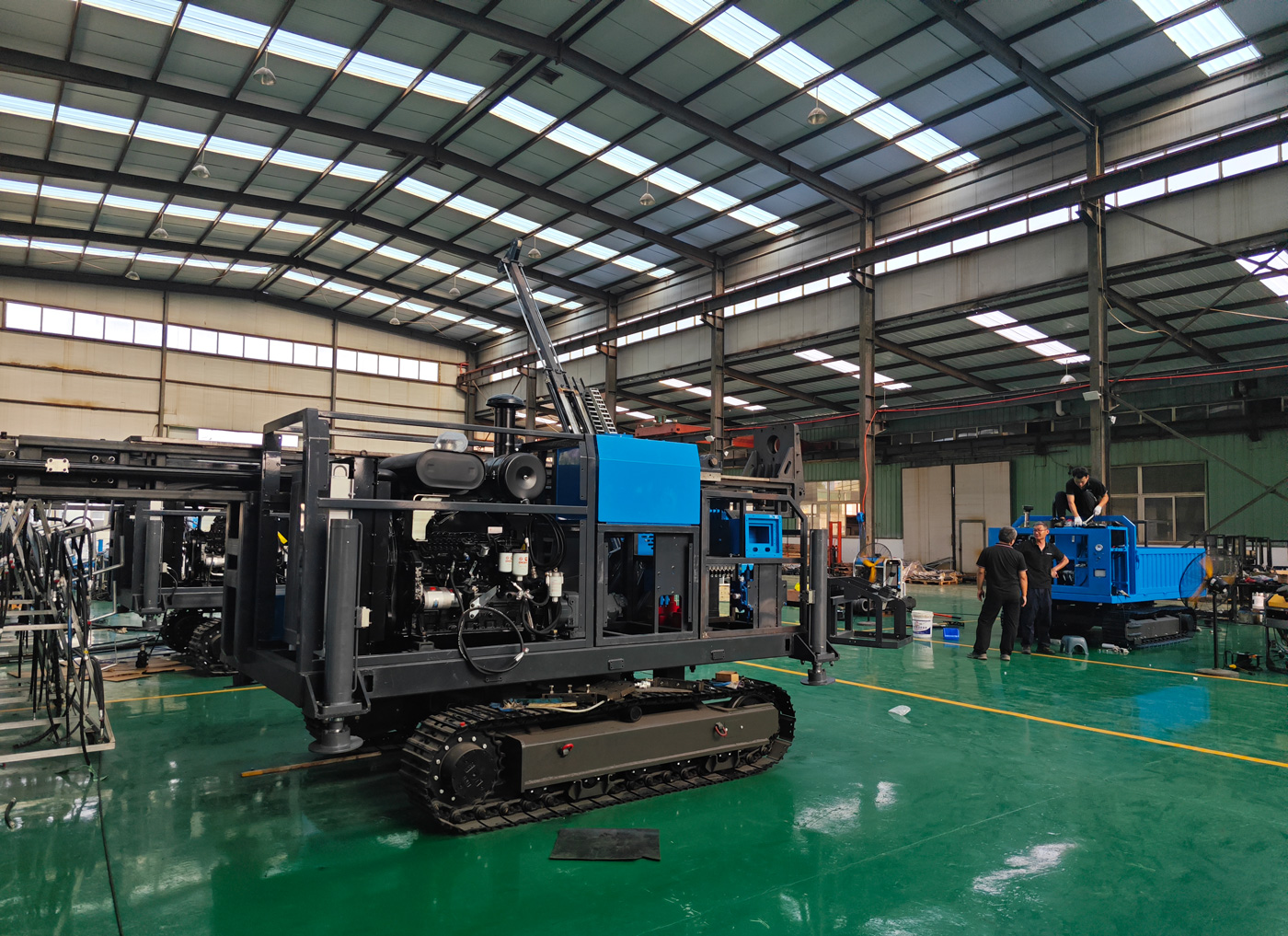
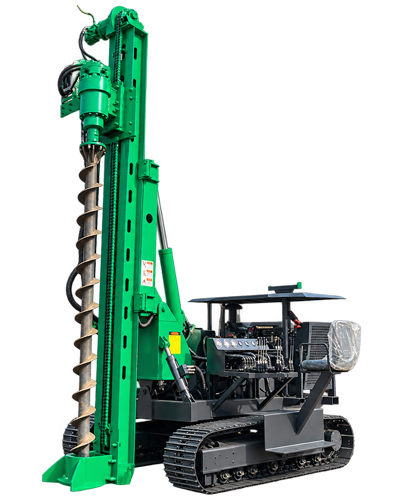
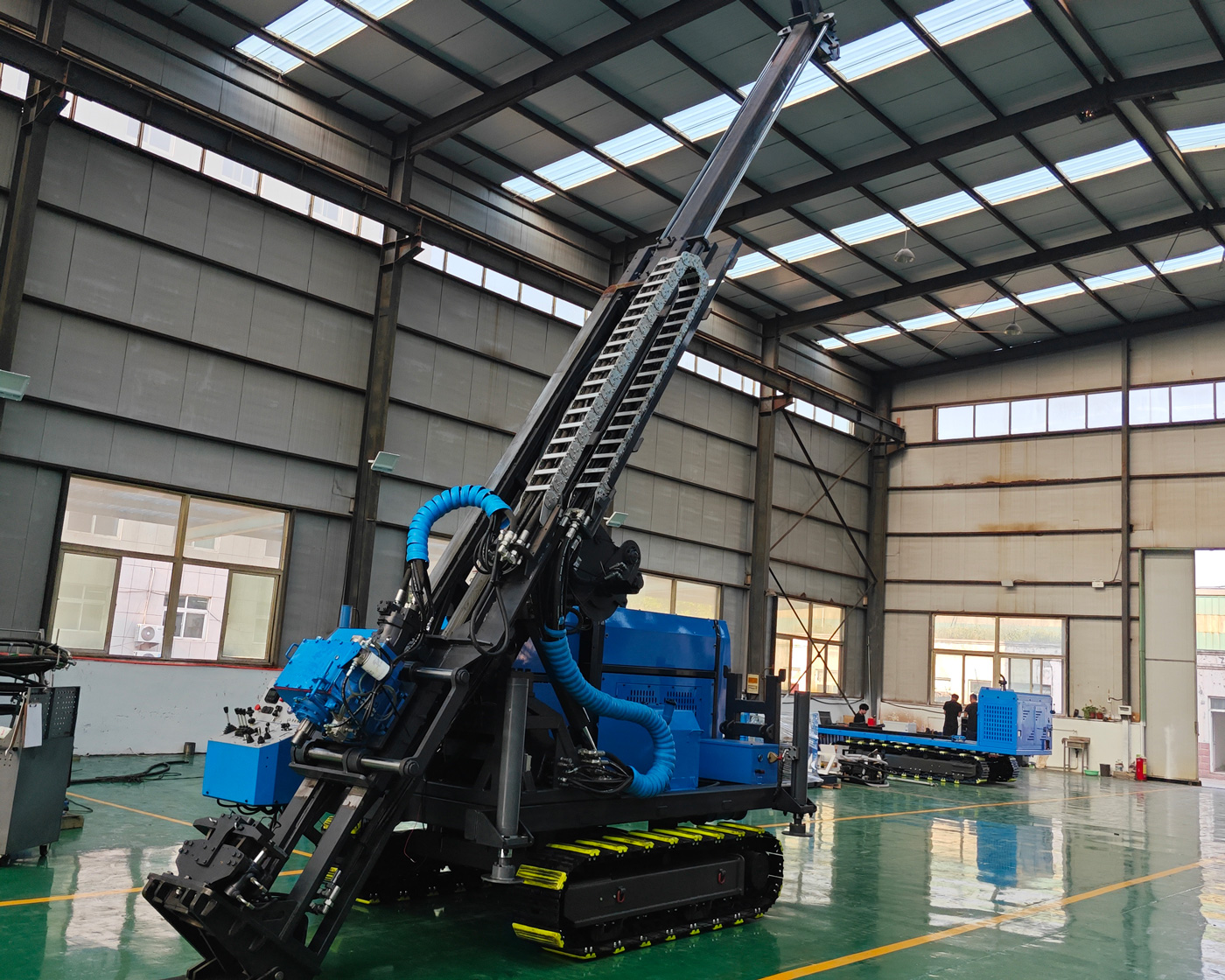
The CR1600I is designed for deep core drilling tasks that demand higher loads and longer cycles. It is not simply about achieving greater depth; it simultaneously enhances power head torque, hydraulic system flow, winch rope capacity, mud circulation capability, and overall power reserve. This makes it suitable for large-scale mineral exploration projects, deep strategic resource surveys, and high-intensity construction scenarios requiring continuous core sampling over extended periods.
As shallow resources are gradually discovered and developed, exploration focus often shifts to deeper ore bodies, peripheral zones, and concealed targets beneath overburden. The CR1600I's B specification offers a reference drilling depth of 2000 m, N specification 1500 m, and H specification 850 m, making it more suitable for deep verification holes, ultra-deep control holes, and sustained resource replacement tasks in large mining areas.
In projects targeting deep gold deposits, concealed ore bodies, and structurally controlled mineralization, boreholes often need to traverse thick overburden, fault zones, wall rock alteration zones, and multi-phase vein systems. Deep core samples provide continuous stratigraphic, structural, and mineralization information, helping determine whether mineralization extends to depth, whether different structures are interconnected, and whether high-grade zones are continuous.
Porphyry copper, copper-gold, and large polymetallic systems are often extensive, deeply buried, and characterized by complex alteration zoning, demanding higher continuous operational capability from the drill rig. The CR1600I's 4800 N·m maximum torque and 1500 rpm maximum speed provide a wider working range for different drilling stages, facilitating parameter adjustments in hard rock, fractured zones, and varying borehole diameters.
For spodumene pegmatite, nickel, rare metals, and strategic minerals, the value of deep holes extends beyond simply drilling deeper; it lies in obtaining complete core for lithological correlation, structural interpretation, and deep boundary modeling. The CR1600I is well suited for deep verification holes and control holes targeting key anomalies in large-scale projects.
As drilling depth increases, drill string weight and downhole friction rise continuously, along with higher risks of sticking, hole shrinkage, and deviation in complex formations. The 4800 N·m maximum torque provides greater load adaptability for the power head, ensuring core recovery speed while better managing sections with significant resistance variations in deep holes.
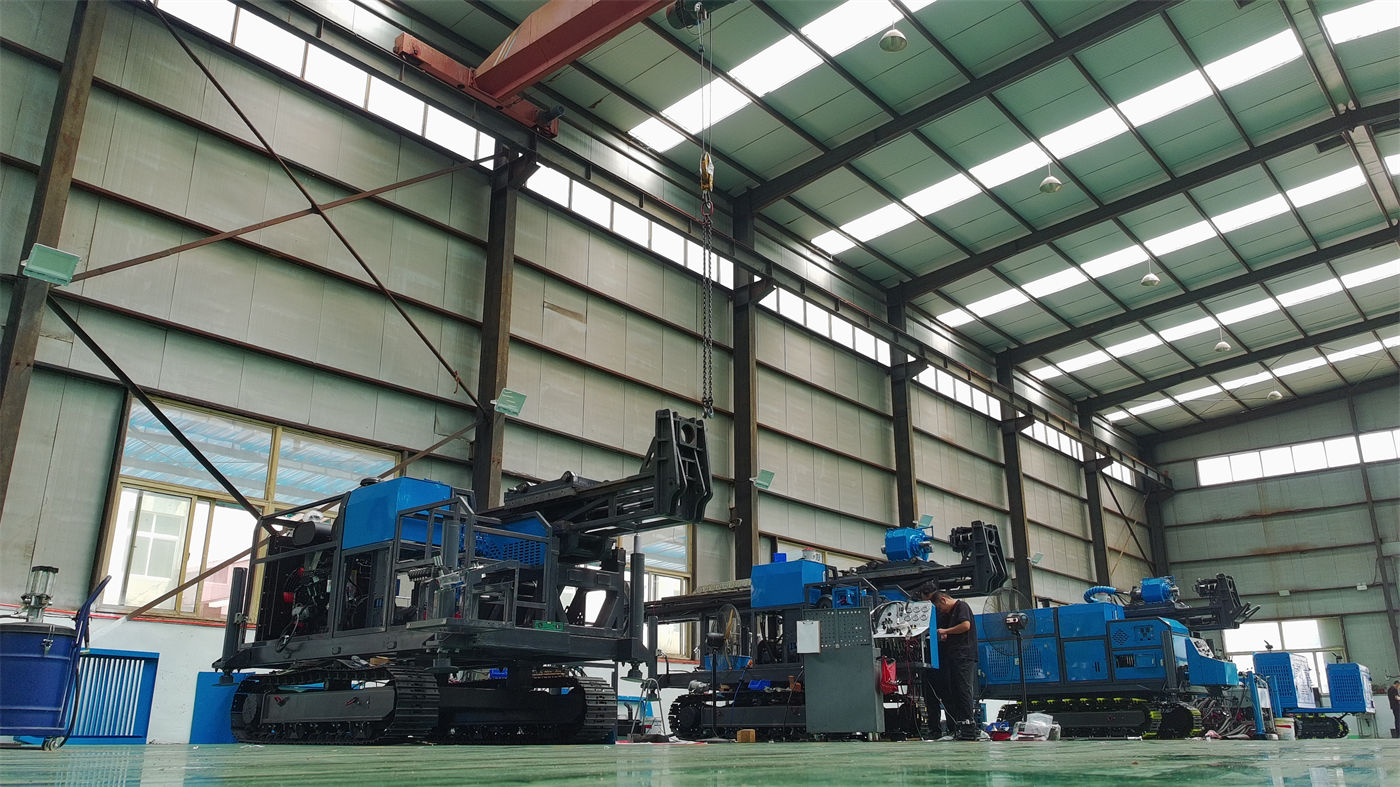
The main pump delivers a flow rate of 320 L/min at 31 MPa, while the auxiliary pump provides 160 L/min at 23 MPa. The high-flow hydraulic system supports coordinated operation of the power head, feed, side shift, and other actuators under heavy loads. During prolonged operations, strict control of hydraulic oil cleanliness, filter differential pressure, and system temperature rise is essential to prevent performance degradation.
In deep holes, cuttings transport distances are longer, and downhole temperature rise, friction, and return water stability all affect drilling performance. The CR1600I's mud system delivers 250 L/min at 7 MPa, providing greater circulation capacity for bit cooling, cuttings removal, and borehole wall stability. In response to deep loss zones and fractured aquifers, the mud system should be adjusted promptly based on return water changes.
The winch system uses 6 mm wire rope with a capacity of 1800 m and a hoisting speed of 118 m/min. For 1500 m class N-specification deep holes, the retrieval distance for the wireline inner tube is substantial, and winch capacity and speed significantly impact auxiliary time per run. Therefore, this configuration is oriented toward continuous deep hole core drilling operations.
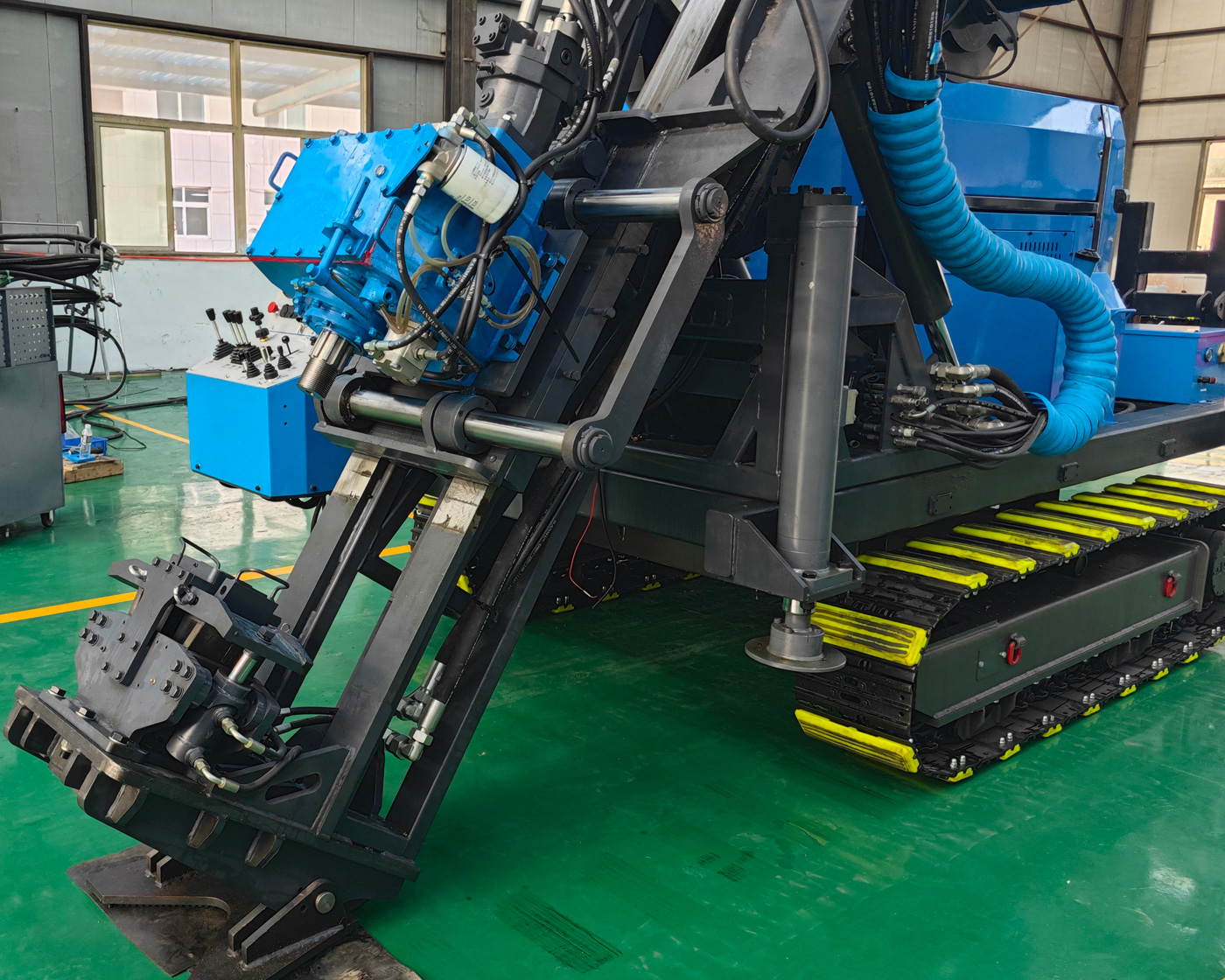
The 63 kN feed force and 185 kN pullback force provide ample margin for drill string control and tool recovery in deep holes; the 150 mm clamp through-hole accommodates NQ, HQ, PQ, NTW, and HTW drill rod systems. For deep projects, stable clamping and sufficient pullback capability directly affect the ability to handle downhole incidents.
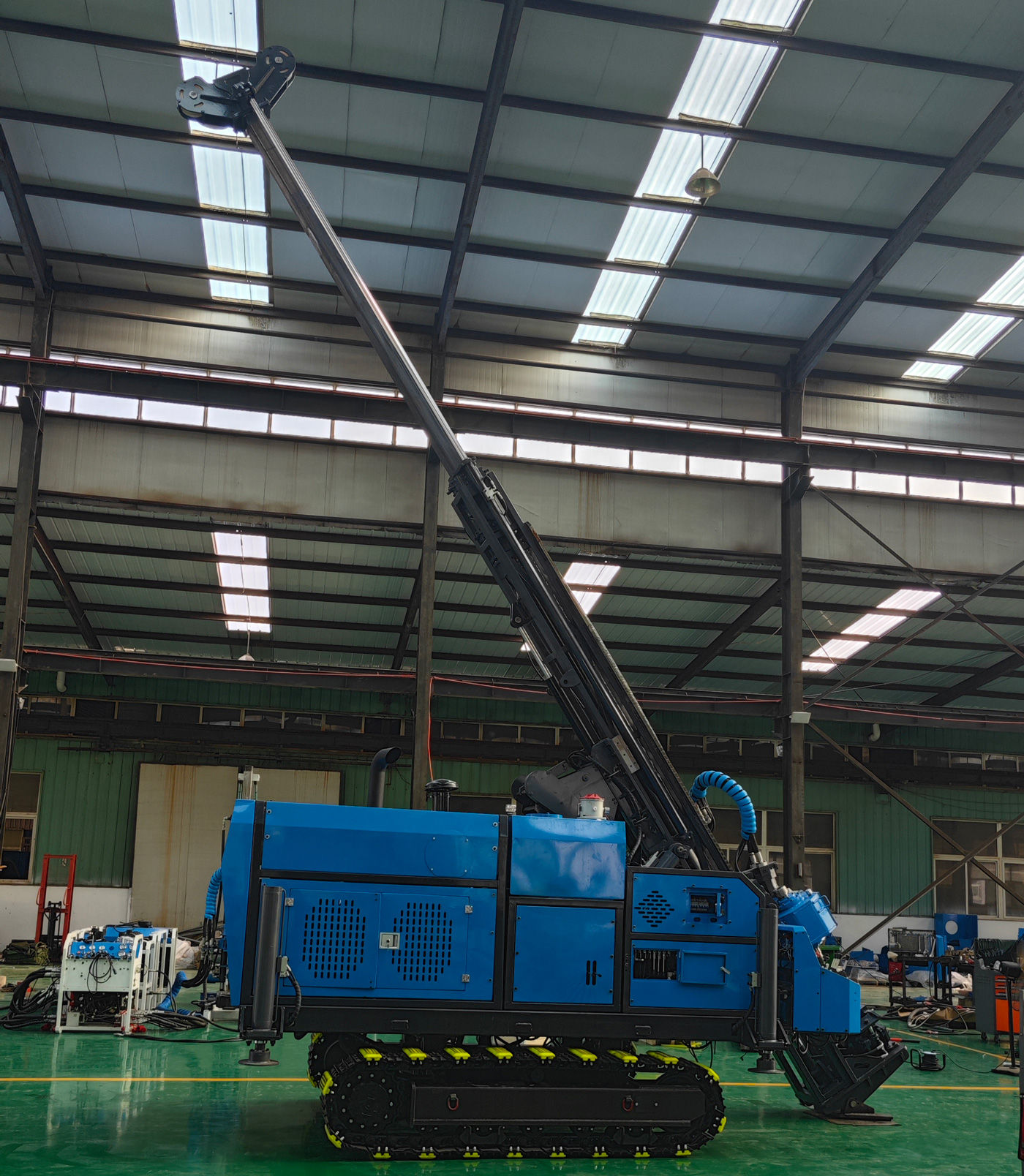
The CR1600I supports drilling angles from 45° to 90°, allowing deep holes to be oriented at various inclinations based on ore body attitude, fault directions, and existing drilling results. Multi-directional drilling provides spatial control, reducing uncertainty in interpreting inclined ore bodies from vertical holes alone and enhancing the constraints of three-dimensional geological models.
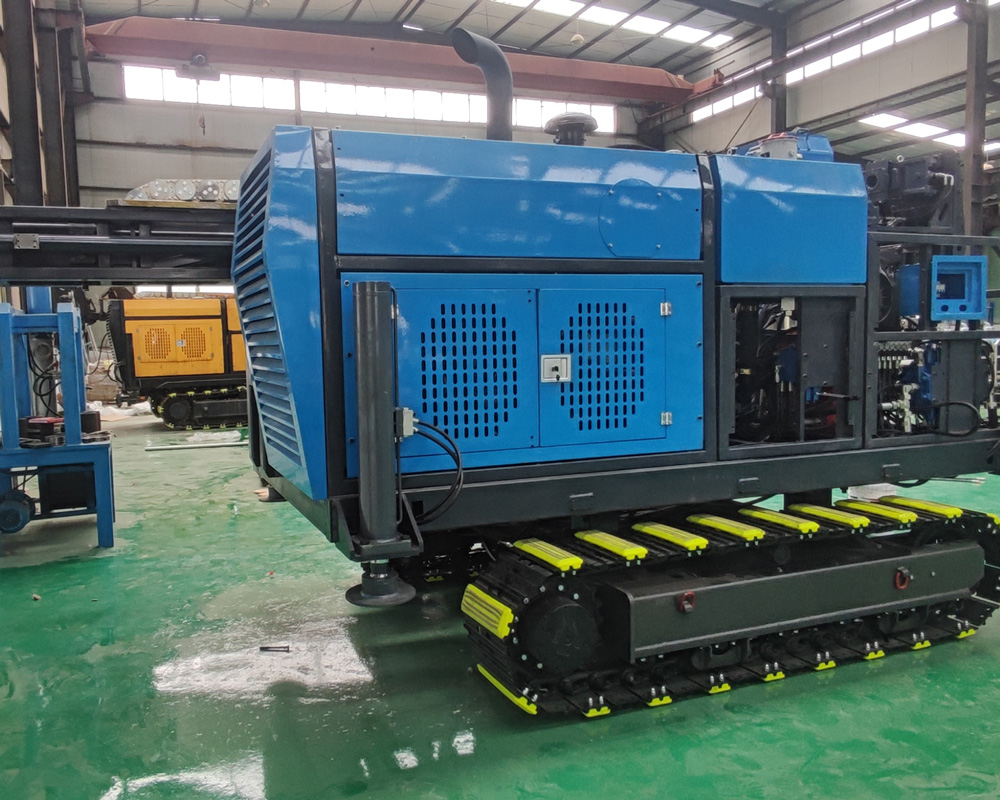
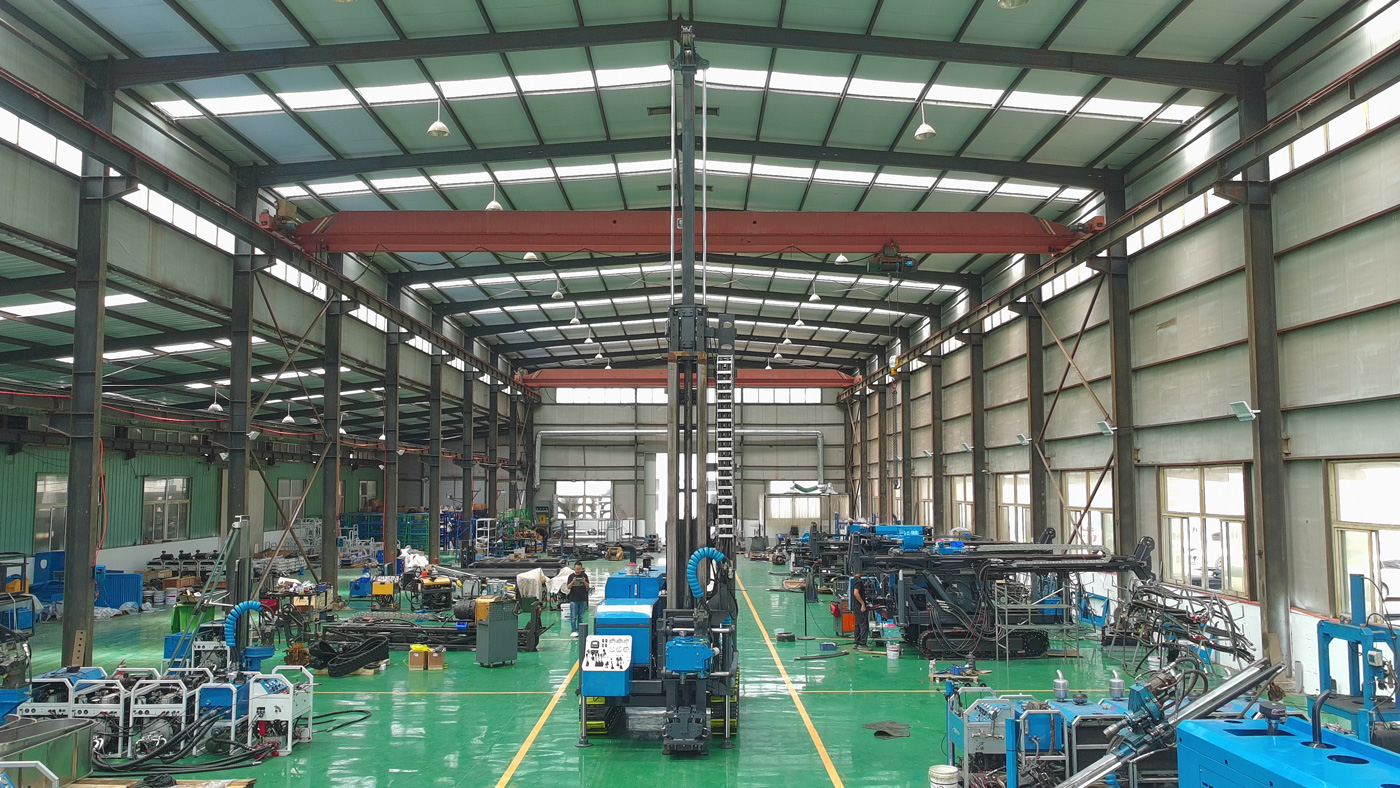
Large deep exploration projects typically involve long single-hole cycles, extensive supporting materials, and complex operational organization. The integrated crawler design centralizes major systems on a single platform, reducing redundant connections between equipment modules and facilitating short-distance repositioning within the mining area, making it ideal for long-term site operations.
The CR1600I is applicable for deep exploration of large gold, copper, nickel, lithium, iron, and polymetallic deposits, as well as national regional geological surveys, deep structural verification, mine replacement resource exploration, concealed ore body evaluation, and scientific and engineering geological projects requiring continuous deep core data.
Competent hard rock sections typically require stable rotation speed and appropriate weight on bit; fractured zones demand greater attention to run control and hole wall protection through flushing; water-bearing fractured sections require monitoring of return water volume and pressure changes; severe loss zones should be addressed promptly with plugging, casing, or staged measures. Deep hole operations cannot rely on a single fixed parameter set; adjustments must be made dynamically based on hole depth and formation changes.
High-intensity operations should establish a regular inspection schedule for hydraulic oil, filters, cooling systems, wire rope, clamps, drill rod threads, and power head bearings. Especially in the later stages of deep holes, minor wear or contamination can escalate into downtime risks, making preventive maintenance more critical than reactive repairs.
In the PDF power train table, the model title in the last column appears as "BX1500T," while other parameter tables on the same page correspond to BX1600T; this page only compiles the power parameters provided in that column (6CTA8.3, 153 kW, 8.3 L, etc.) and does not make additional inferences about the model title discrepancy in the original document.
Due to variations in actual geological conditions, downhole tools, drilling angles, and operational methods, final drilling efficiency, depth, and core recovery results should be based on site conditions.
| Parameter | Value |
|---|---|
| Drilling Capability | |
| B Specification Reference Drilling Depth | 2000 m |
| N Specification Reference Drilling Depth | 1500 m |
| H Specification Reference Drilling Depth | 850 m |
| Drilling Angle | 45°–90° |
| Handling Rod Length | 1.5 / 2 / 3 m |
| Power Head | |
| Drive Type | Gear Drive |
| Maximum Torque | 4800 N·m |
| Maximum Speed | 1500 rpm |
| Gear Ratio | 1:3 / 1:3 |
| Travel Method | Hydraulic Side Shift |
| Mast and Feed System | |
| Feed Stroke | 3.3 m |
| Feed Speed | Fast + Slow Adjustable |
| Mast Installation | Hydraulic Telescopic |
| Feed Force | 63 kN |
| Pullback Force | 185 kN |
| Winch | |
| Wire Rope Diameter | 6 mm |
| Rope Capacity | 1800 m |
| Hoisting Force | 13.5 kN |
| Hoisting Speed | 118 m/min |
| Clamp | |
| Through-Hole Diameter | 150 mm |
| Applicable Drill Rods | NQ, HQ, PQ, NTW, HTW |
| Clamping Method | Hydraulic Clamping + Self-Locking Wedge Anti-Drop |
| Hydraulic System | |
| Main Pump Flow | 320 L/min |
| Main Pump Pressure | 31 MPa |
| Auxiliary Pump Flow | 160 L/min |
| Auxiliary Pump Pressure | 23 MPa |
| Cooling Method | Air Cooling + Water Cooling |
| Mud System | |
| Flow Rate | 250 L/min |
| Pressure | 7 MPa |
| Speed | 727 rpm |
| Power | 15 kW |
| Power Train | |
| Engine Manufacturer | Cummins |
| Engine Model | 6CTA8.3 |
| Displacement | 8.3 L |
| Rated Power | 153 kW |
| Rated Speed | 2000 rpm |
| Engine Type | 6-Cylinder Inline Turbocharged Engine |
| Cooling Method | Water Cooling |
| Electrical System | 24 V |
We are a professional drilling equipment manufacturer specializing in the research and development, production and supply of water well drilling rigs, core drilling rigs, reverse circulation drilling rigs, down-the-hole drilling rigs, truck-mounted drilling rigs and mineral exploration equipment.
© 2026 Shandong Hengjianhang Construction Machinery Co., Ltd. All rights reserved.