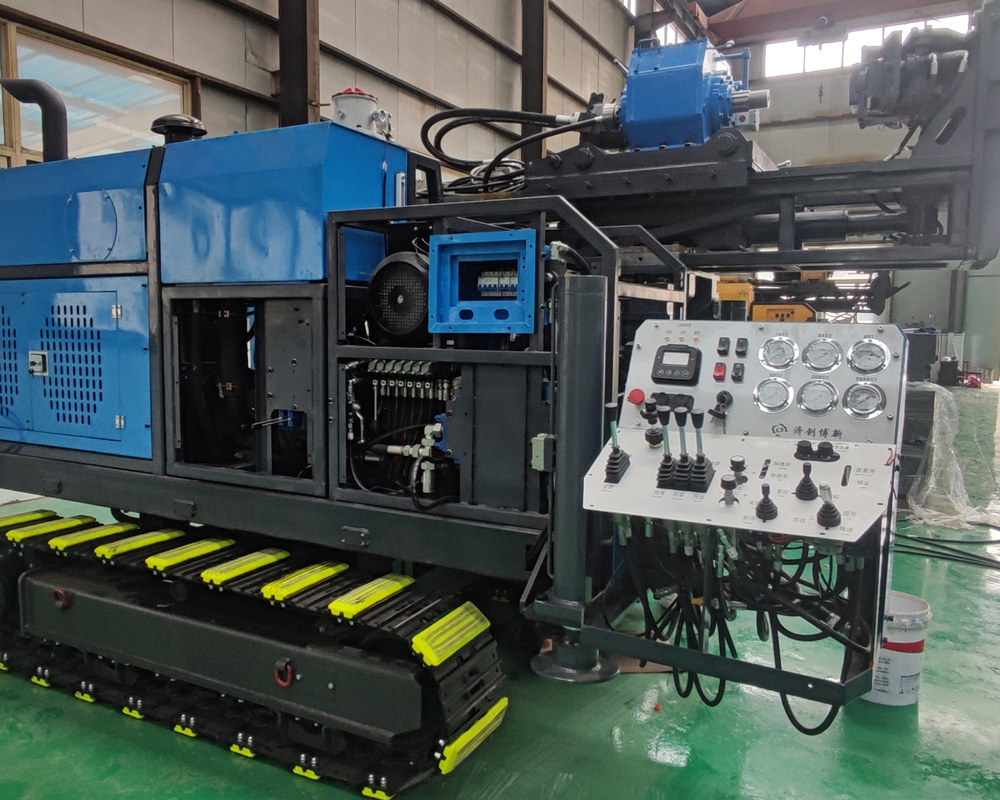
Integrated Core Drilling Rig
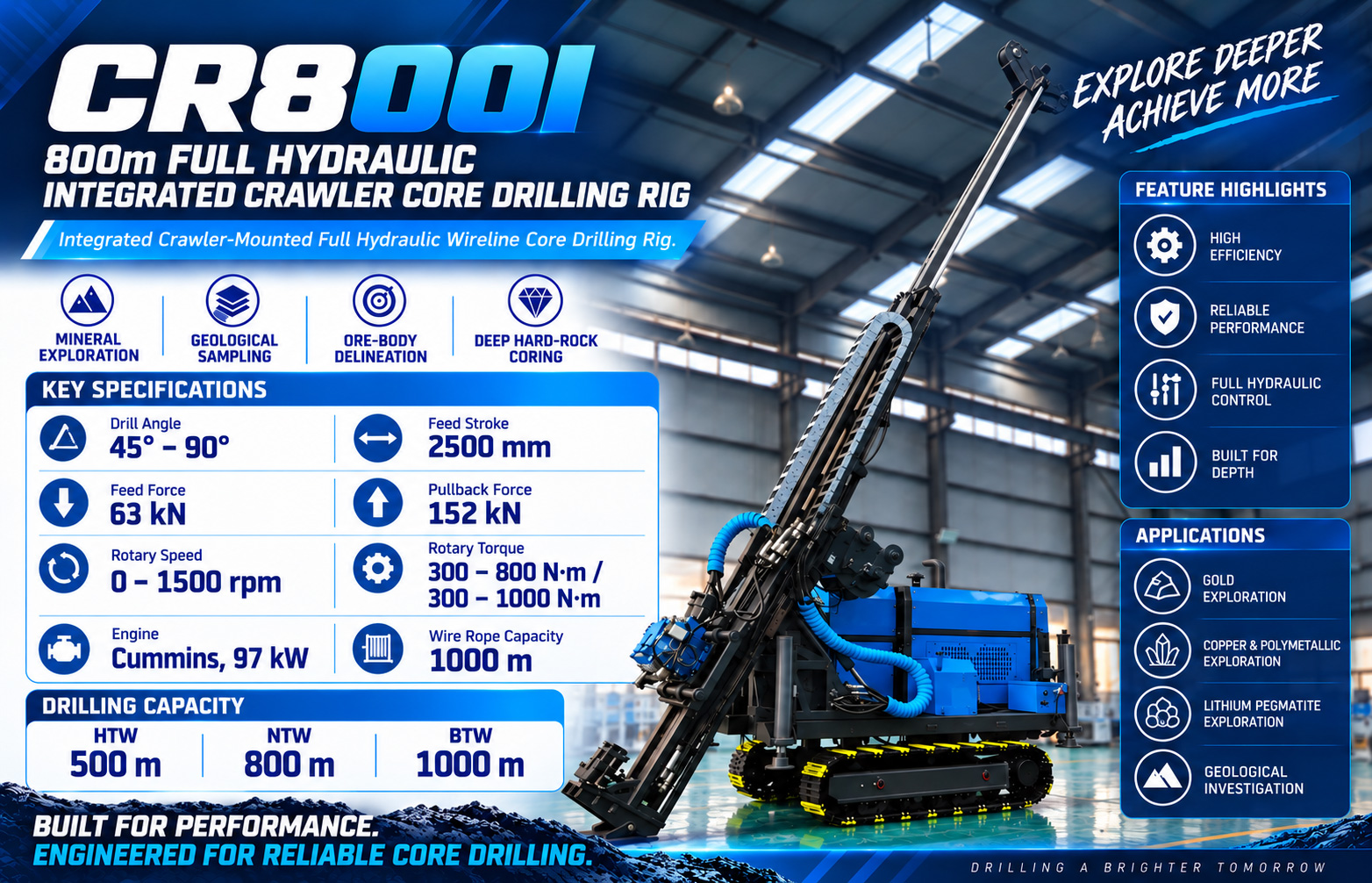
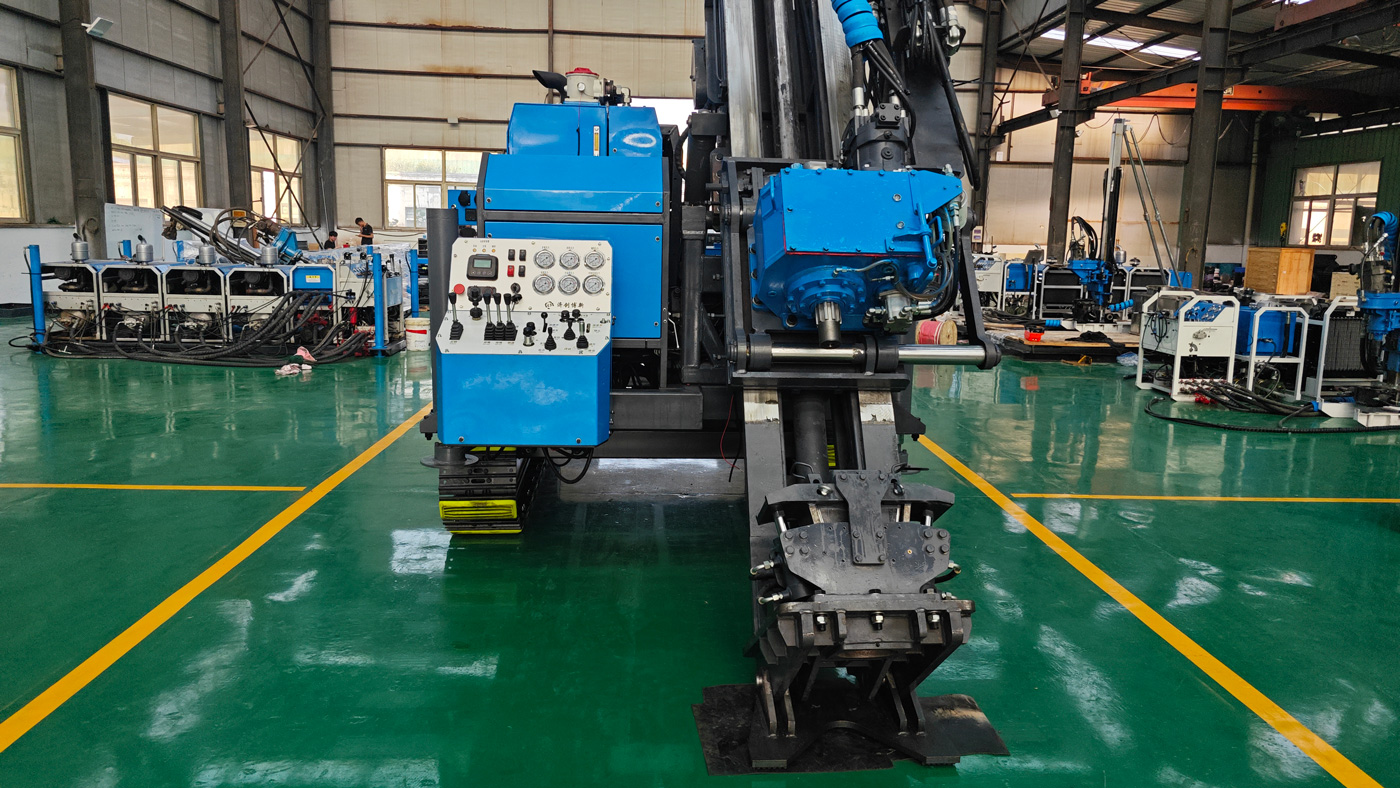
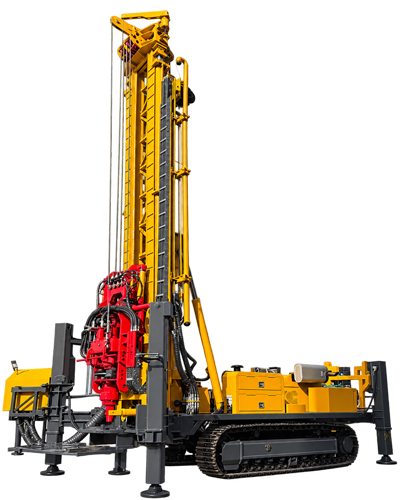
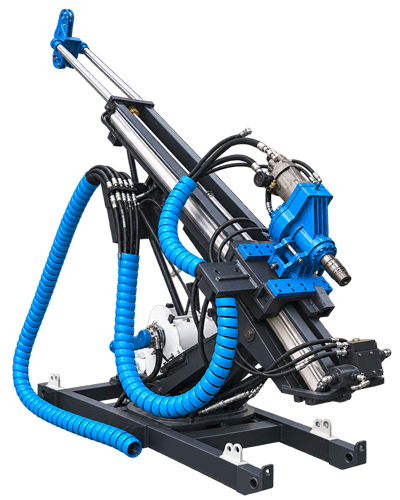
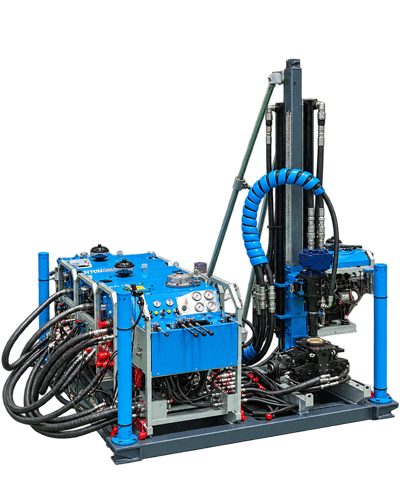
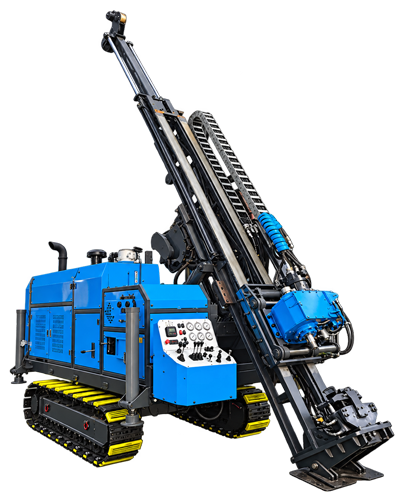
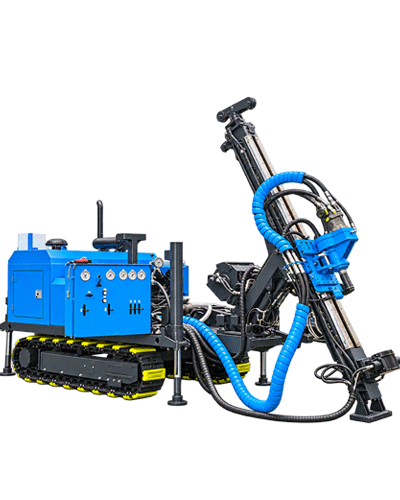
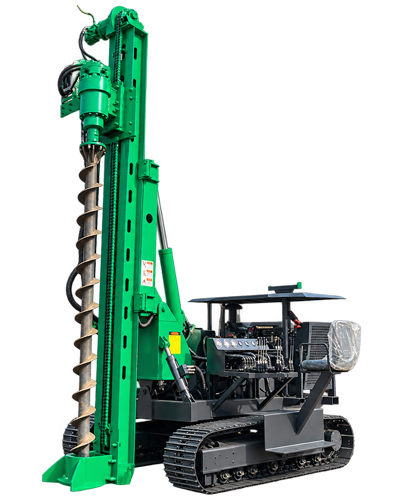
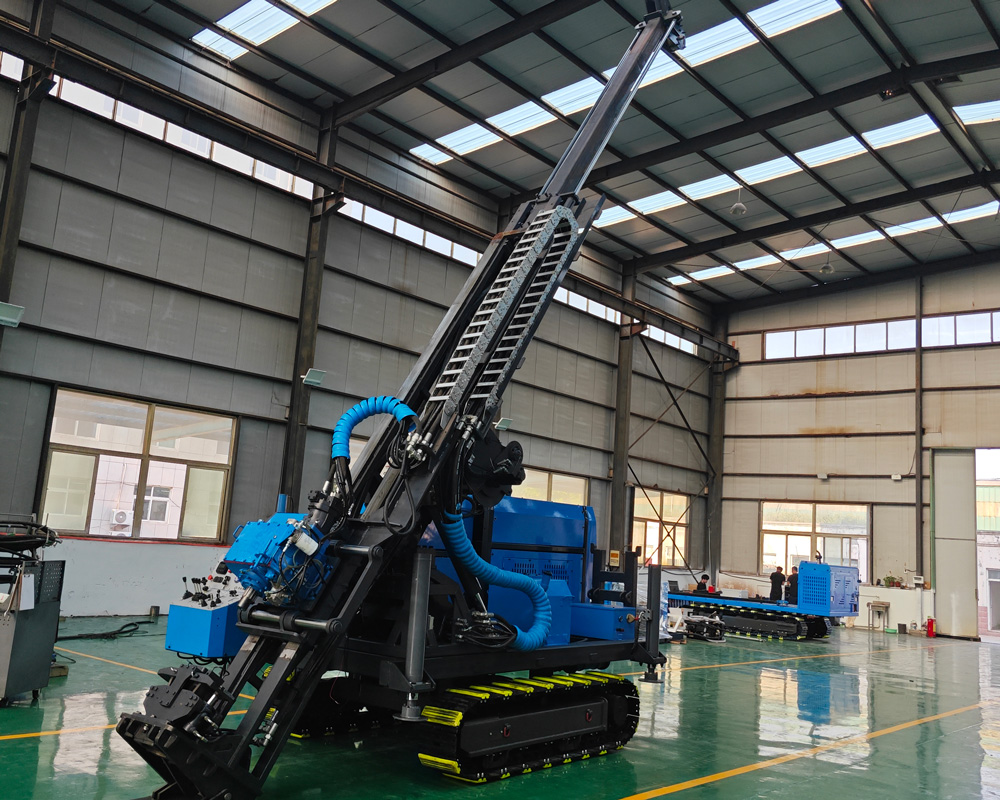
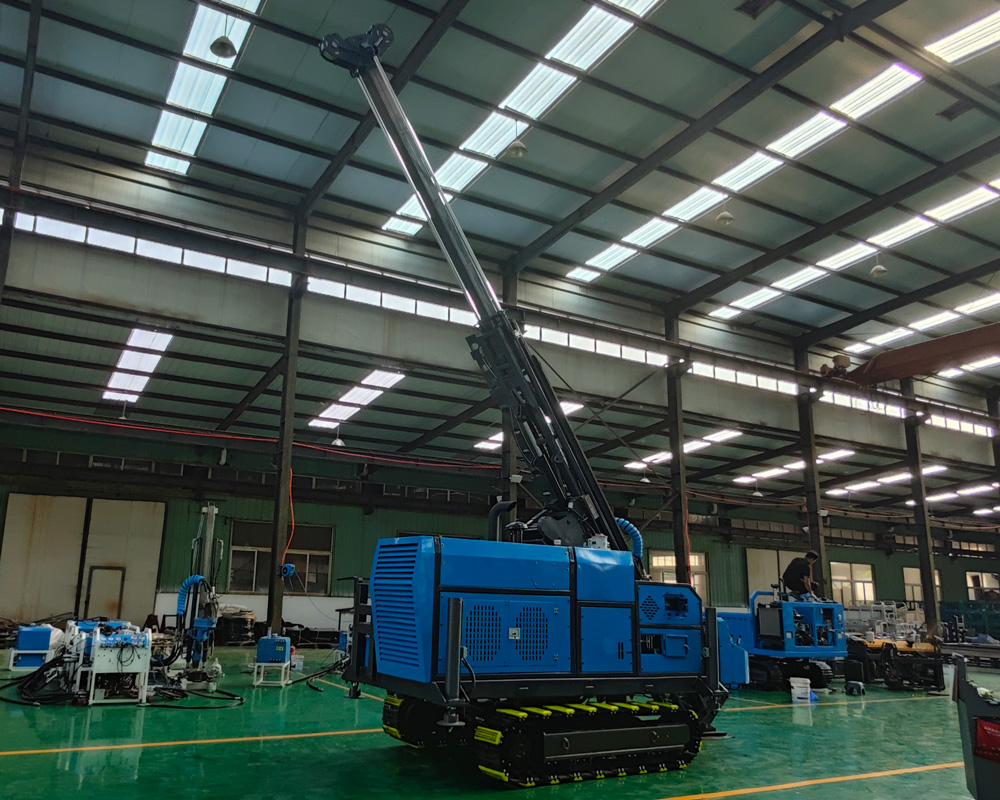
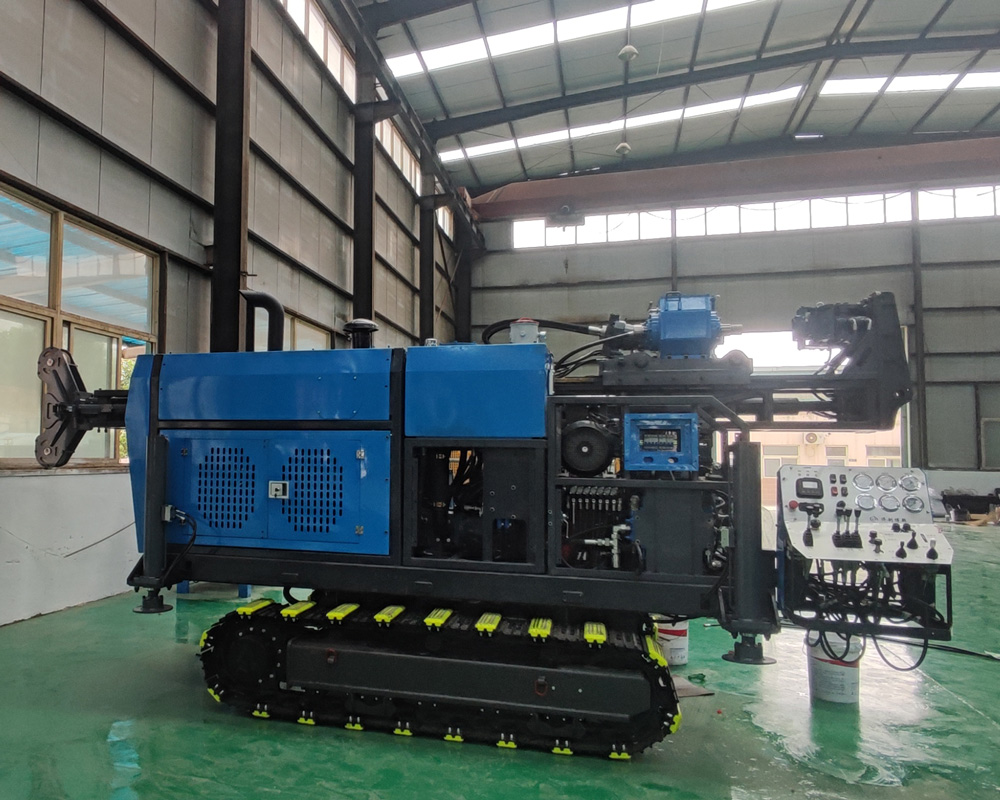
The CR800I is a crawler-mounted, fully hydraulic integrated core drill rig designed for medium-depth mineral exploration tasks. Its integrated design consolidates the power, hydraulic, mast, power head, winch, and mud circulation systems onto a single platform, reducing on-site module assembly work. This makes it particularly suitable for mining areas and geological exploration projects where drill sites are dispersed and frequent short-distance relocation is required.
This model is rated for a reference drilling depth of 800 m in NTW specification, with HTW reference depth of 500 m and BTW reference depth of 1000 m. Different specifications can be selected based on target hole diameter, core size, formation conditions, and project depth. For mining areas that have completed surface surveys, anomaly verification, or shallow hole reconnaissance, the CR800I can undertake further ore body tracing, infill control, and medium-depth resource verification tasks.
In quartz vein-type gold deposits, shear zone-type gold deposits, and structurally altered deposits, ore bodies often exhibit inclined extensions and local pinch-out and reappearance. The CR800I supports drilling angles from 45° to 90°, allowing inclined holes to be arranged according to ore body attitude and exploration line direction, enabling the drill hole to intersect the mineralized zone at a more reasonable angle, providing core data for determining ore body thickness, strike, dip, and deep continuity.
In copper, lead-zinc, and polymetallic ore exploration, a single drill hole often continuously passes through overburden, surrounding rock, alteration zones, fractured zones, and mineralized sections. The fully hydraulic feed system can adjust the feed state according to formation changes. The power head offers a speed range of 0–1500 rpm and provides two transmission options: high-speed and torque gears, facilitating the selection of more appropriate drilling parameters when switching between different rock types.
Spodumene pegmatite and other rare metal ore bodies typically require continuous core to determine vein thickness, boundaries, mineral assemblages, and deep extensions. The CR800I is suitable for inclined or near-vertical drilling within medium depths, and the recovered core can be used for geological logging, lithological classification, structural measurements, and assay sampling, providing foundational data for subsequent ore body modeling.
The fully hydraulic crawler travel speed is approximately 2.5 km/h, with a reference gradeability of 30°. On mine site gravel roads, mountainous exploration platforms, temporary access roads, and unpaved sites, the crawler chassis is easier to reposition than stationary equipment. The overall transport dimensions are approximately 5000 × 1800 × 2550 mm, with a weight of about 5800 kg, balancing structural stability with transport and on-site mobility.
The mast adopts a ground-contact integrated structure, with drilling angles of 45°–90° and a feed stroke of 2500 mm. During operation, the mast can directly form a stable drilling support, helping to reduce vibration and deviation during drilling. For inclined hole construction, site leveling and machine anchoring should be completed in advance to avoid platform settlement affecting hole inclination control.
As the hole deepens, drill string weight, borehole wall friction, and local diameter reduction gradually increase. The CR800I provides a pullback force of 152 kN and a feed force of 63 kN, not only for normal drilling but also to provide capacity margin for tripping out, tool handling, and recovery of tools in some complex hole sections. In practice, avoid relying solely on high pullback force to forcibly handle stuck pipe; instead, comprehensively assess downhole resistance, mud circulation, and formation changes.
The power head has a torque range of approximately 300–800 N·m in high-speed gear and 300–1000 N·m in torque gear, with speeds from 0 to 1500 rpm. The high-speed gear ratio is 1:2.2, and the low-speed gear is 1:3. For complete hard rock formations, stable speed and bit matching are usually more critical, while for fractured, high-resistance, or high-torque sections, it is advisable to reduce speed and increase the proportion of torque operation.
The main pump uses an A11 series piston variable displacement pump with a maximum pressure of 30 MPa; the auxiliary pump uses an A10 series piston variable displacement pump with a maximum pressure of 20 MPa. The main valve, auxiliary valve, and travel valve all adopt load-sensing control concepts, distributing hydraulic flow according to actuator requirements. For prolonged continuous drilling, hydraulic oil cleanliness, filter condition, and system temperature directly affect equipment responsiveness and component life.
The equipment uses integrated air-cooled heat dissipation and is equipped with high-power water-cooled heat exchangers. During high-temperature seasons, low-wind mine sites, or long-duration high-load operations, special attention should be paid to hydraulic oil temperature, engine coolant, and radiator cleanliness. If the cooling fins become clogged with dust, mud, or plant debris, system temperature will rise noticeably, affecting hydraulic efficiency and engine stability.
The winch uses 6 mm wire rope with a capacity of 1000 m, a lifting force of 13 kN, and a lifting speed of 120 m/min. Wireline coring allows core recovery via the inner tube, reducing the auxiliary time of repeatedly tripping the entire drill rod string. As hole depth increases, regularly inspect the wire rope for wear, crushing, broken wires, and drum spooling condition.
The hydraulic mud pump has a reference flow rate of 100 L/min and pressure of 70 bar, providing circulation conditions for bit cooling, cuttings transport, and borehole wall stability. Mud parameters in weathered rock, fractured rock, and fractured zones cannot be directly copied from intact hard rock conditions; they should be adjusted promptly based on return water volume, cuttings concentration, loss conditions, and borehole wall stability.
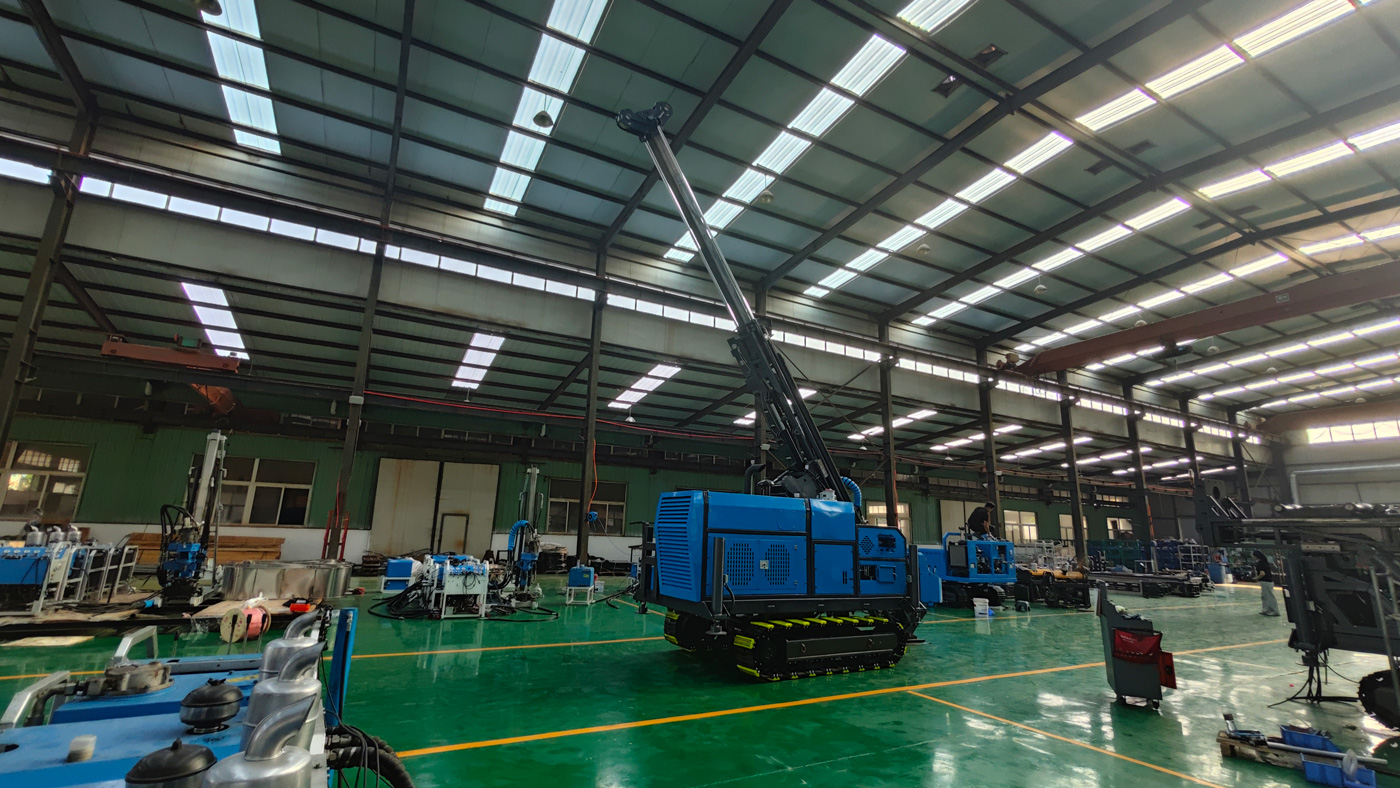
The power system is standardly equipped with a Cummins engine, with an optional domestic engine available. Rated power is 132 hp (97 kW) at a rated speed of 2200 rpm, featuring turbocharging and air-to-air intercooling. For high-altitude or high-temperature regions, consider air density, cooling conditions, and engine power derating; do not judge actual output solely based on plain terrain conditions.
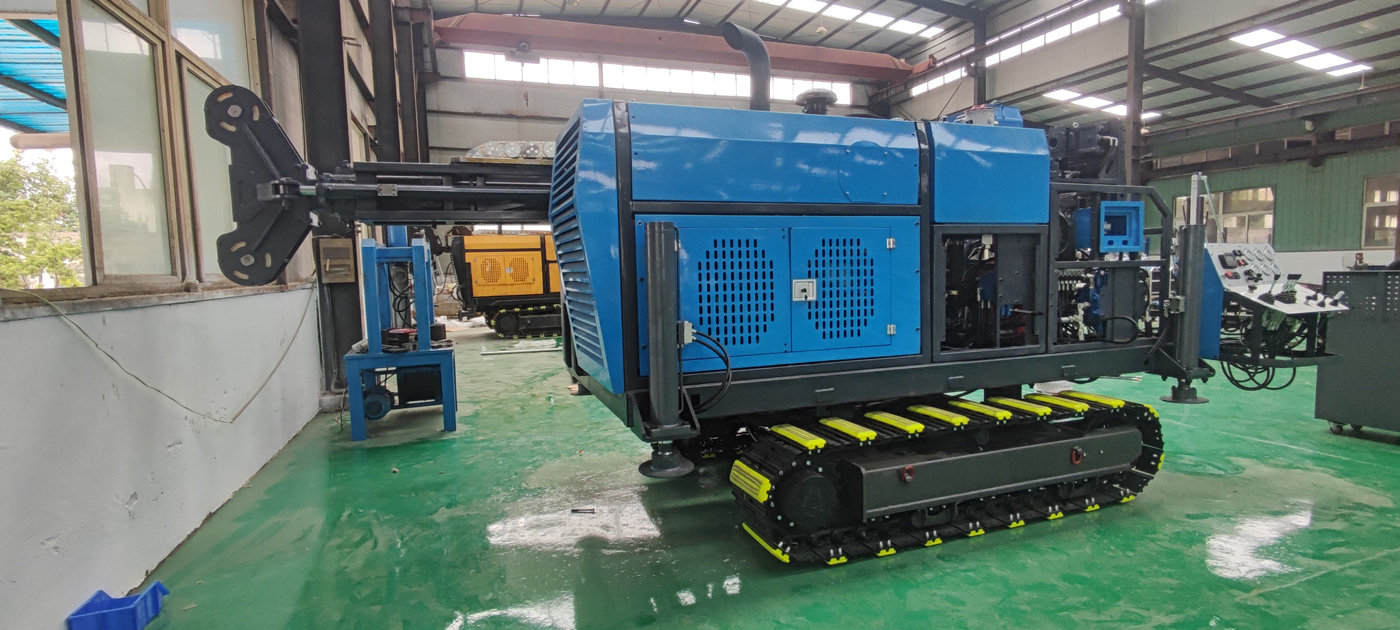
The CR800I can be used for exploration of gold, copper, lithium, lead-zinc, nickel, iron, and polymetallic mines, as well as for regional geological surveys, supplementary mine exploration, ore body boundary verification, resource upgrade, engineering geological coring, and deep structural surveys. It is more suitable for projects requiring continuous core data rather than ordinary DTH drilling primarily aimed at rapid cuttings removal.
In relatively intact hard rocks such as granite, basalt, and quartzite, set speed and weight on bit appropriately based on bit matrix, rock abrasiveness, and core size. Excessive weight on bit may cause abnormal bit wear, while insufficient speed may reduce cutting efficiency. Stable mud circulation and timely removal of cuttings are equally important for extending bit life.
When encountering fault gouge, breccia, highly weathered layers, or densely fractured sections, shorten runs, reduce mechanical impact, and observe return water and core integrity changes. If necessary, use casing, adjust flushing fluid properties, or perform staged wall support. The goal in such formations is not merely to achieve fast penetration but to maintain borehole wall stability and improve effective core recovery.
When drilling enters fractured aquifers or obvious lost circulation zones, sudden changes in return water volume, pump pressure fluctuations, or increased mud consumption may occur. Crews should promptly record hole depth and formation changes, and determine whether to adjust circulation rate, use lost circulation materials, or implement casing isolation to prevent continued loss that could affect subsequent deep drilling.
Before equipment mobilization, verify transport roads, platform dimensions, ground bearing capacity, and slope safety conditions; before spudding, confirm drill tool specifications, hole angle, mud system, and winch wire rope condition; during continuous operations, regularly inspect hydraulic oil, filters, radiators, power head connections, drill rod threads, and high-pressure hoses. If abnormal temperature rise, vibration, or leakage is detected, stop the machine promptly for troubleshooting.
The main pump "200L" in the original parameter table did not specify a time unit; this article interprets it as 200 L/min based on common engineering expression for hydraulic pump flow, preserving the original parameter meaning. Final production configuration should be based on equipment technical confirmation documents.
Due to variations in actual geological conditions, downhole tools, hole angles, and operating methods, final drilling efficiency, depth, and core recovery results should be based on site conditions.
| Parameter | Value |
|---|---|
| Drilling Capacity | |
| Applicable Specifications | HTW / NTW / BTW |
| HTW Reference Depth | 500 m |
| NTW Reference Depth | 800 m |
| BTW Reference Depth | 1000 m |
| Main Pump | |
| Pump Type | A11 series piston variable displacement pump |
| Control Method | Pressure control + Flow control + Constant power |
| Maximum Flow | 200 L/min (original parameter table marked 200L) |
| Maximum Pressure | 30 MPa |
| Auxiliary Pump | |
| Pump Type | A10 series piston variable displacement pump |
| Control Method | Pressure control + Constant power |
| Maximum Flow | 120 L/min |
| Maximum Pressure | 20 MPa |
| Hydraulic Control | |
| Main Valve | Load-sensing manual proportional valve |
| Auxiliary Valve | Load-sensing pilot proportional valve |
| Travel Valve | Load-sensing manual + electric proportional valve |
| Cooling System | |
| Air Cooling | Integrated air-cooled radiator, covering engine cooling, hydraulic oil cooling, and engine intercooling |
| Water Cooling | High-power water-cooled heat exchangers × 2 |
| Power System | |
| Engine Brand | Standard Cummins, optional domestic engine |
| Engine Type | Turbocharged + Air-to-air intercooled |
| Rated Speed | 2200 rpm |
| Rated Power | 132 hp (97 kW) |
| Mast and Feed System | |
| Mast Type | Ground-contact integrated mast |
| Drilling Angle | 45°–90° |
| Pullback Force | 152 kN |
| Feed Force | 63 kN |
| Feed Stroke | 2500 mm |
| Power Head | |
| Torque | 300–800 N·m (high-speed gear) / 300–1000 N·m (torque gear) |
| Speed | 0–1500 rpm |
| High/Low Speed Gears | High speed 1:2.2 / Low speed 1:3 |
| Winch | |
| Lifting Force | 13 kN |
| Lifting Speed | 120 m/min |
| Rope Capacity | 6 mm wire rope, 1000 m |
| Travel System | |
| Type | Full hydraulic travel |
| Travel Speed | 2.5 km/h |
| Gradeability | 30° |
| Hydraulic Mud Pump | |
| Flow Rate | 100 L/min |
| Pressure | 70 bar |
| Overall Machine Parameters | |
| Total Weight | 5800 kg |
| Transport Dimensions | 5000 × 1800 × 2550 mm (L × W × H) |
We are a professional drilling equipment manufacturer specializing in the research and development, production and supply of water well drilling rigs, core drilling rigs, reverse circulation drilling rigs, down-the-hole drilling rigs, truck-mounted drilling rigs and mineral exploration equipment.
© 2026 Shandong Hengjianhang Construction Machinery Co., Ltd. All rights reserved.