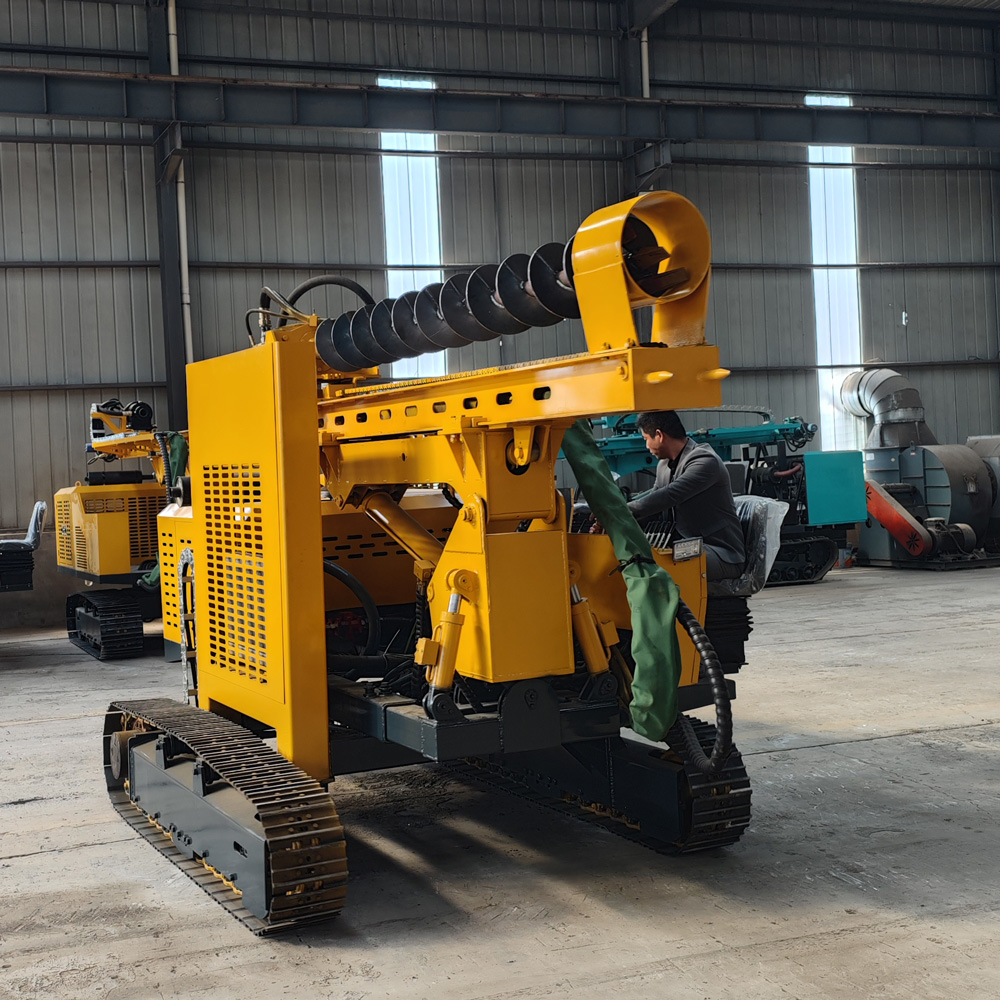
Photovoltaic Pile Driver
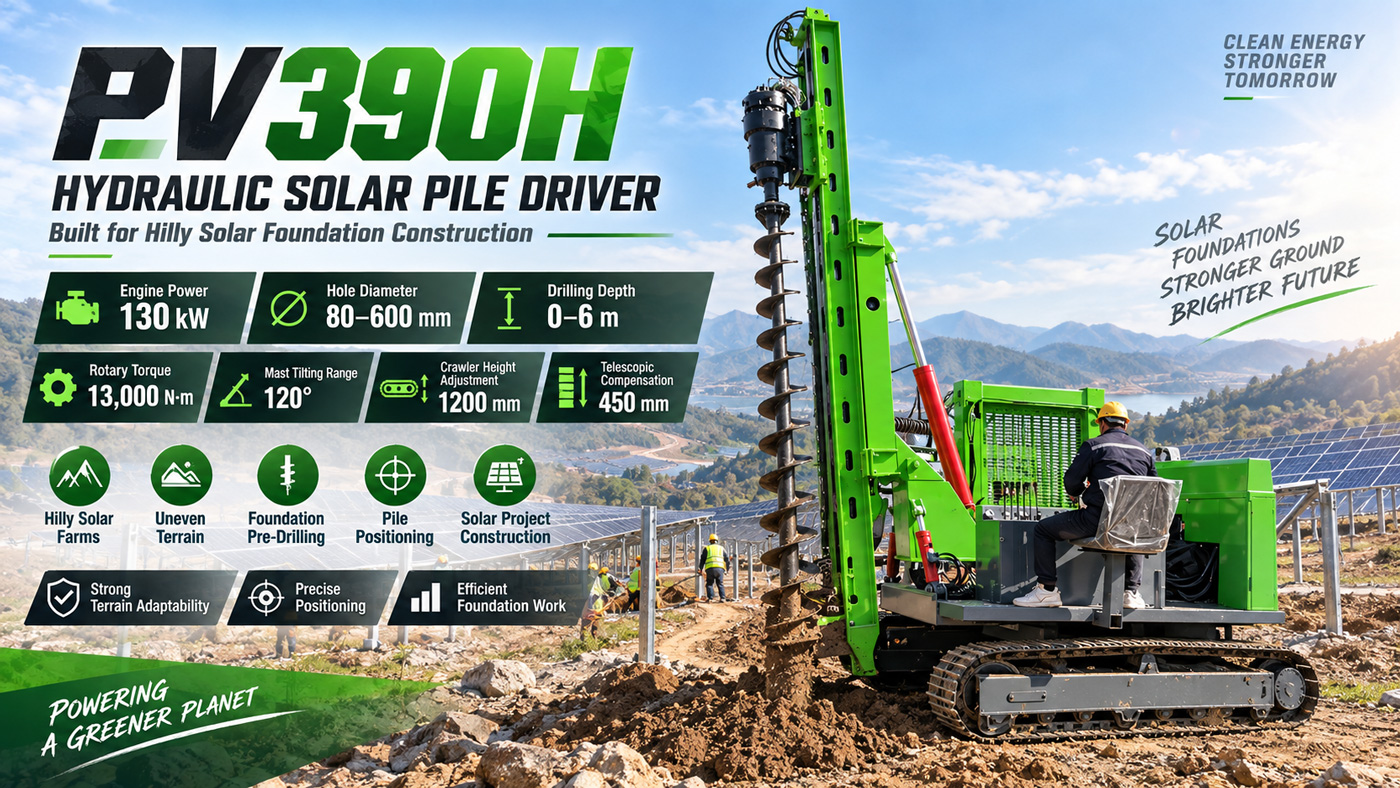
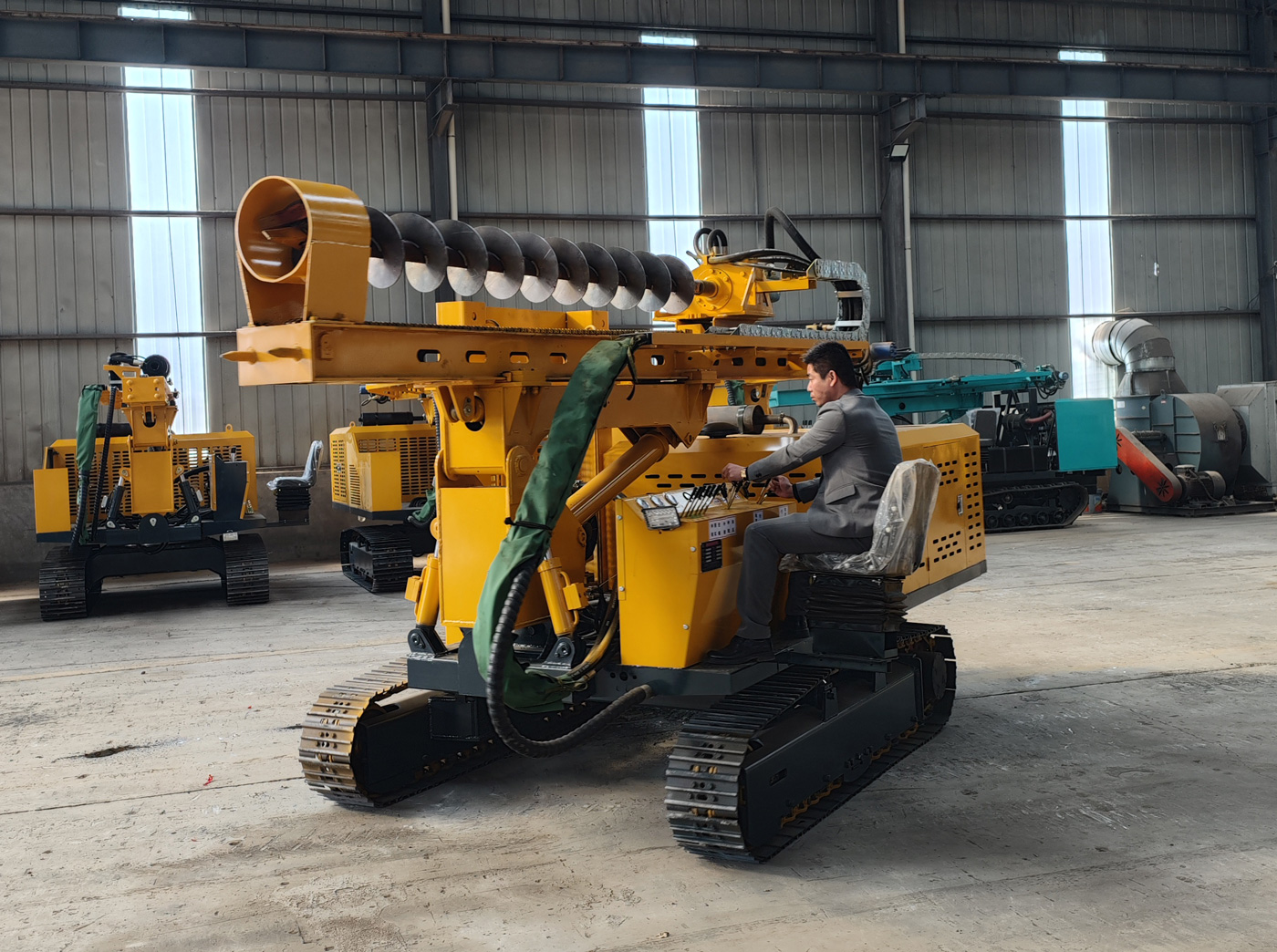
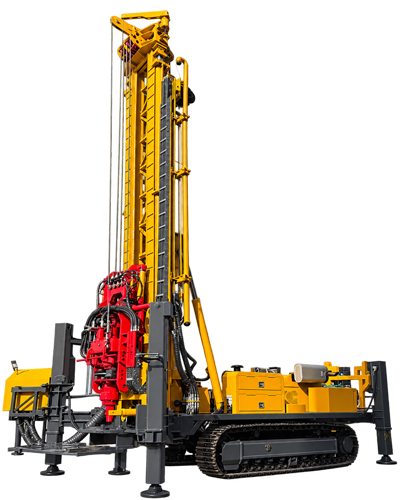
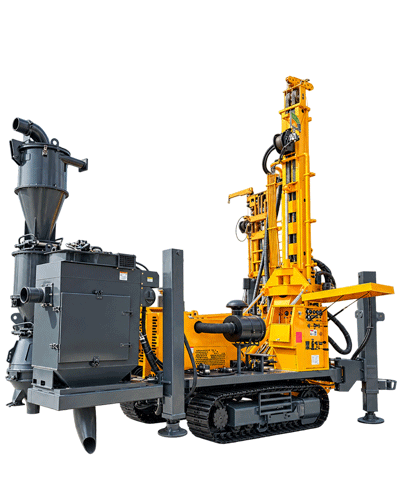
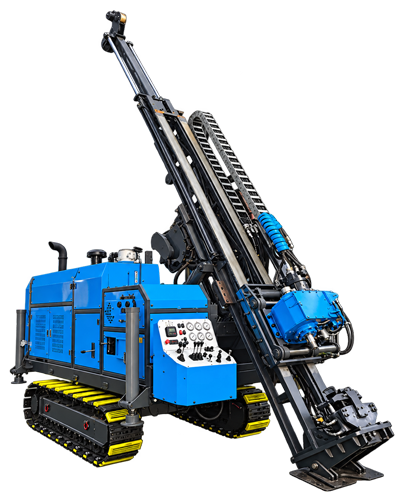
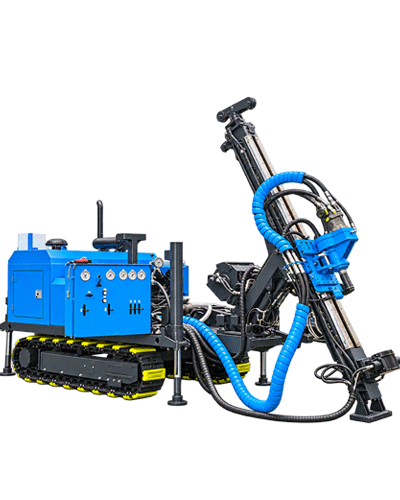
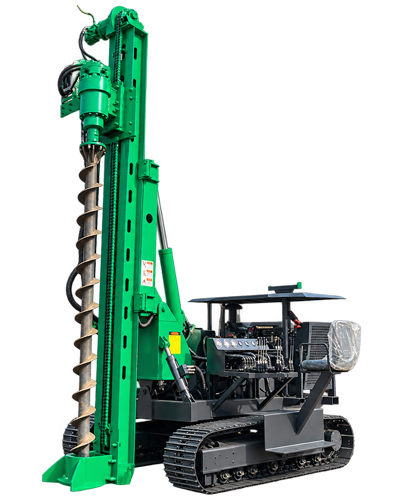
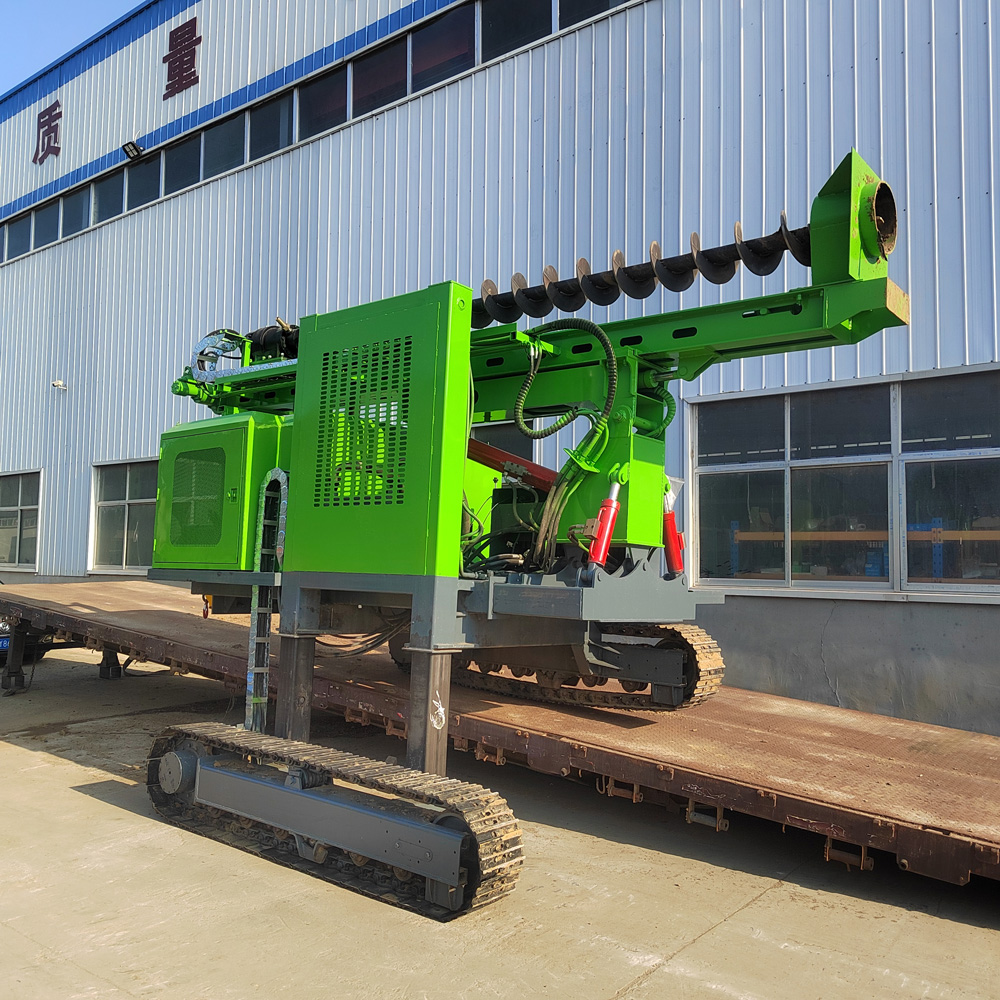
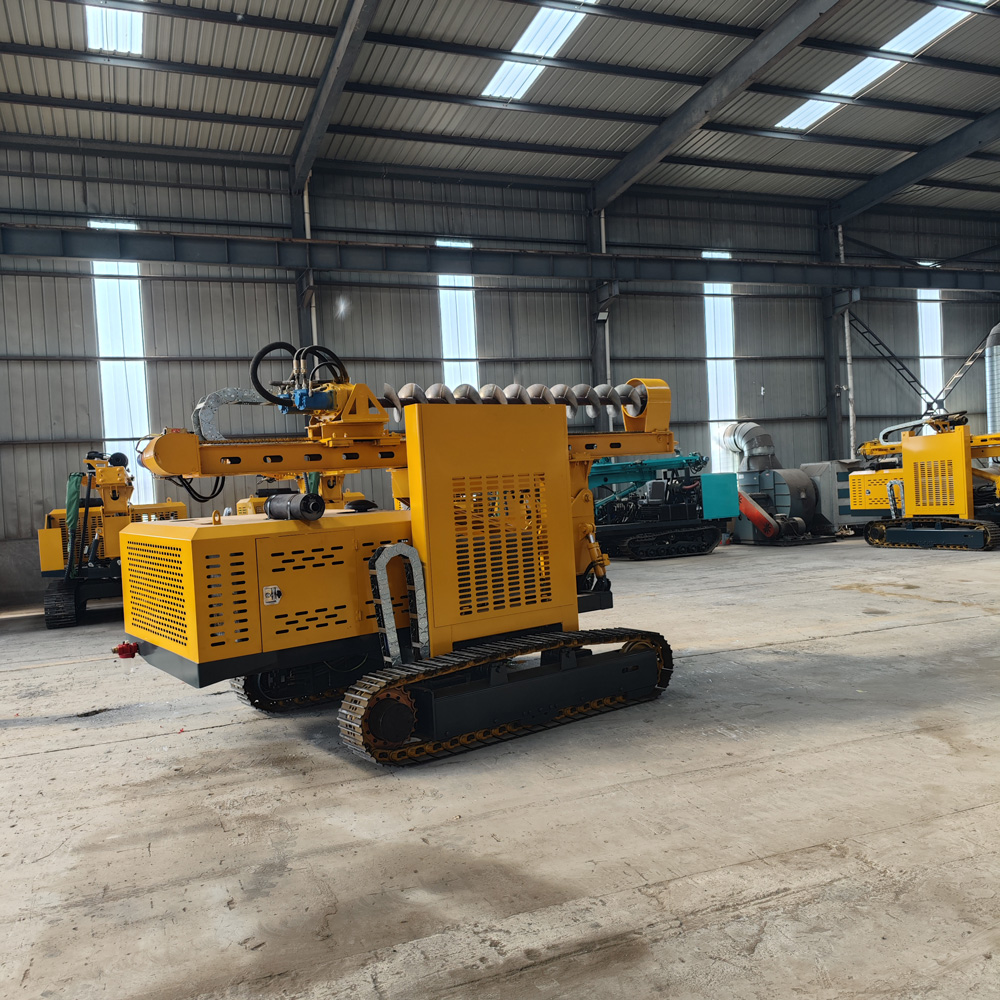
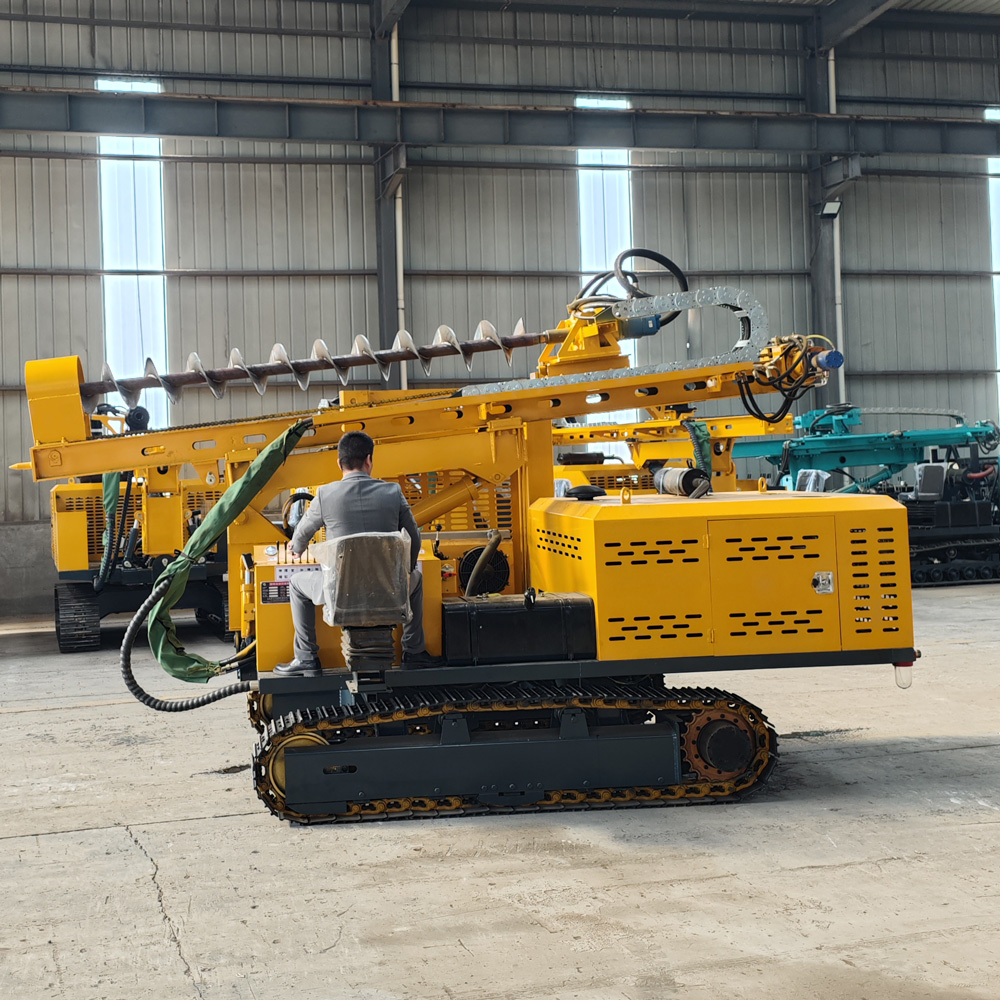
PV390H is a crawler-type hydraulic photovoltaic pile driver designed for mountain photovoltaic, hilly site areas and uneven slope foundation construction. The equipment is equipped with a 130 kW Yuchai six-cylinder turbocharged engine, 13000 N·m reducer torque, drilling diameter 80–600 mm, drilling depth 0–6 m, and features 1200 mm track height telescopic adjustment, 120° mast pitch, dual-cylinder left-right swing arm and 450 mm telescopic compensation. Compared with ordinary flat-ground photovoltaic pile drivers, it emphasizes slope posture adjustment, complex terrain passage and rapid pile position alignment.
Mountain photovoltaic site areas often have left-right height differences, uneven slopes and continuous undulations. Ordinary fixed-height crawler equipment often requires repeated ground leveling. The track height of PV390H can be adjusted according to slope height, enabling the equipment to obtain a better construction posture on uneven ground, making it more suitable for hillsides, hills and photovoltaic projects with obvious height undulations.
The track height telescopic dimension is 1200 mm, which can be used to handle more obvious left-right height differences. During construction, the tracks on both sides should be adjusted gradually according to slope conditions to keep the equipment under stable stress. The high-low leg function can improve slope adaptability, but it cannot replace safe construction platforms and foundation bearing capacity assessment.
The equipment adopts a 130 kW Yuchai six-cylinder turbocharged engine, providing power for crawler travel, drill pipe rotation, chain pressurization, mast swing and high-low leg adjustment. For mountain projects, larger hole diameters and complex strata, higher power reserve is conducive to maintaining continuous construction capability.
The reducer torque is 13000 N·m, and the drill pipe speed is 100 r/min, covering the 80–600 mm drilling range. Larger hole diameters, dense soil layers and working conditions mixed with crushed stone require higher rotary torque, but during construction the advancement should still be adjusted according to drilling tool load and slag discharge status to avoid excessive pressure causing hole deviation, sticking or drilling tool impact.
The maximum drilling depth is 6 m, suitable for photovoltaic bracket pre-drilling, pile position pilot holes and other shallow foundation projects. The core value of PV390H is not deep-hole capability, but high-frequency pile position construction, complex slope adaptability and rapid hole alignment, so it is more suitable for photovoltaic foundations rather than water well drilling.
The drilling diameter is 80–600 mm, and different drilling tools can be selected according to photovoltaic bracket foundation design, pile type and stratum conditions. Smaller hole diameters are suitable for conventional pilot holes, while larger hole diameters can be used for special foundation holes. The final hole diameter should be based on project design drawings and construction technology.
The equipment adopts chain pressurization, which can continuously provide advancement force to the drilling tool. When encountering pebbles, backfill layers and strongly weathered rock, the advancement speed should be controlled according to rotary load to avoid excessive downward pressure causing drill bit bouncing, hole deviation or sticking.
The mast pitch range is 120°, and the drilling posture can be adjusted according to terrain and pile position requirements. For mountain photovoltaic and uneven site areas, greater pitch adjustment capability can reduce the time the whole machine spends repeatedly finding angles.
The mast adopts a dual-cylinder left-right swing arm, which can perform lateral fine adjustment after the chassis is stabilized. For array-type photovoltaic stations, left-right adjustment can reduce frequent small-range movement of the chassis and improve continuous pile position construction efficiency.
The equipment has 450 mm telescopic compensation, which can be used for fine adjustment of the drilling rig working mechanism in the front-back direction. With the coordination of high-low legs, mast swing arm, pitch and telescopic compensation, it is more suitable for photovoltaic foundation projects with dense pile positions and frequently changing ground height differences.
The track shoe width is 300 mm, suitable for dirt roads, grassland, gravel ground and general slopes. Compared with wheeled equipment, crawler chassis is more suitable for short-distance transfer within photovoltaic site areas, but in wet and slippery slopes, soft soil and areas with large cross slopes, speed should still be reduced and rollover risk should be monitored.
The original data states that after adding a winch, it can be used for steeper slope working conditions. The winch can provide auxiliary traction for equipment movement on special slopes, but before use, the anchor point, wire rope and traction direction must be confirmed to be reliable. The winch cannot replace necessary construction roads and safety platforms.
Soil and loess are usually more suitable for photovoltaic foundation drilling, but their moisture content and density will affect hole wall stability. Slope loess may experience reduced adhesion and equipment sliding risk after rain, so attention should be paid to both hole forming quality and track ground contact status.
High-plasticity clay easily adheres to the drill bit, causing bit balling and poor slag discharge. During construction, rotation and advancement should be adjusted according to drill bit load, and the drilling tool should be lifted in time for cleaning to maintain effective cutting.
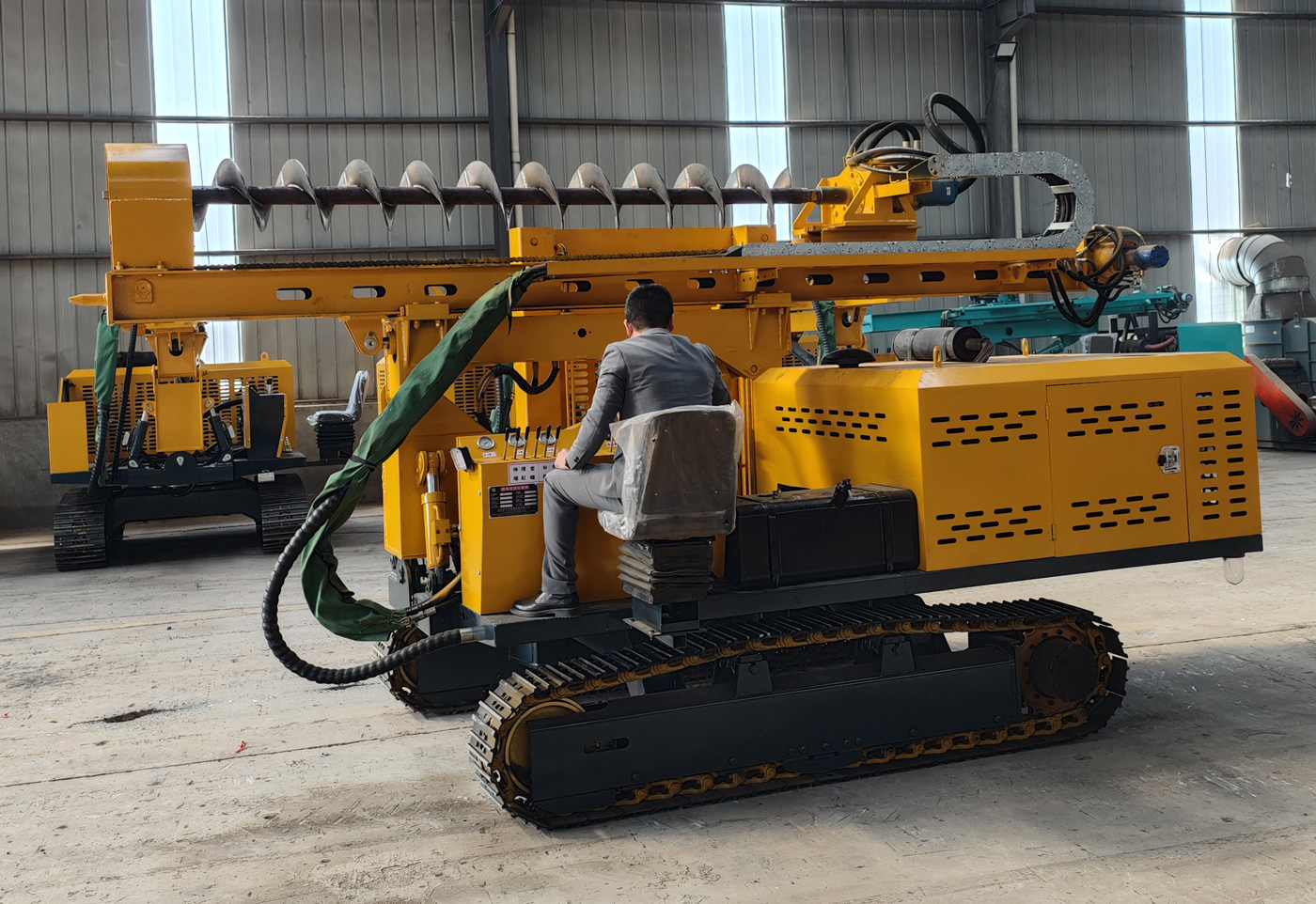
Pebble sand, gravel and mixed overburden have obvious particle size variations, easily causing drill bit bouncing, hole deviation and local sticking. During construction, drilling tools should be selected according to particle size, density and moisture conditions, and stable advancement should be maintained.
Backfill waste layers may contain bricks, concrete blocks, rebar, wood and voids, and stratum uniformity is poor. If abnormal impact, rotary sticking or sudden pressure loss occurs during drilling, the machine should be stopped in time for inspection to avoid damaging drilling tools and the reducer.
The original data clearly states that after replacing with impact drilling tools, it can be used for strongly weathered rock and rock strata. For rock projects, matching drilling tools should be selected according to rock hardness, integrity and target hole diameter. Since the data does not provide impact hammer model and impact energy, this article does not make additional commitments on specific hard rock efficiency.
Mountain photovoltaic projects commonly have problems such as large slope variations, obvious pile position height differences and general construction access road conditions. The high-low leg tracks, 120° mast pitch, dual-cylinder left-right swing arm and 450 mm telescopic compensation of PV390H focus on solving "how to stably position and complete pile position hole alignment on slopes."
Although local slopes in hilly photovoltaic site areas may not be very large, left-right height differences and ground undulations between pile positions are frequent. High-low leg adjustment can reduce the need for excavator leveling or manual soil padding at each pile position, improving the continuous construction rhythm of the station.
Even in relatively flat large-scale ground photovoltaic projects, PV390H can also undertake bracket foundation pre-drilling and hole forming. Higher power and multi-directional adjustment capability are suitable for stations with many pile positions, tight schedules and frequent geological changes.
When using the high-low leg function, avoid excessive single-side adjustment causing the whole machine's center of gravity to shift; cross-slope construction should be more cautious; before adjusting track height, ensure the equipment is at low speed or stopped, and observe surrounding personnel and obstacles. Any slope capability cannot replace on-site safety judgment.
The original data name is "High-Low Leg Hydraulic Photovoltaic Pile Driver." To maintain consistency with the PV390 and PV390R series, this article names this version PV390H, where H is used to distinguish the high-low leg/track height adjustable version. Technical parameters are retained according to the original data, without modifying values such as engine, hole diameter, drilling depth, torque and adjustment dimensions.
Due to differences in actual geological conditions, slope, drilling tool form, pile type, hole diameter and operation method, the final drilling efficiency, hole forming quality, equipment passability and piling effect should be based on on-site working conditions and project foundation design.
| Parameter Item | Parameter Value |
|---|---|
| Basic Parameters | |
| Product Model | PV390H |
| Equipment Type | High-low leg hydraulic crawler photovoltaic pile driver |
| Overall Dimensions | 5200 × 2300 × 2800 mm |
| Track Shoe Width | 300 mm |
| Power System | |
| Engine | Yuchai six-cylinder turbocharged |
| Engine Power | 130 kW |
| Main Pump | Triple pump 50 / 50 / 40 |
| Travel Motor | TM09 |
| Drilling and Rotary System | |
| Drilling Diameter | 80–600 mm |
| Drilling Depth | 0–6 m |
| Reducer | Internal five-star |
| Reducer Torque | 13000 N·m |
| Drill Pipe Speed | 100 r/min |
| Drilling Rig Pressurization | Chain pressurization |
| Mast and Posture Adjustment | |
| Mast Pitch | 120° |
| Mast Swing | Dual-cylinder left-right swing arm |
| Track Height Telescopic Dimension | 1200 mm |
| Telescopic Compensation | 450 mm |
| Terrain and Geological Adaptability | |
| Terrain | Tracks can be adjusted according to slope height, suitable for uneven slopes and steep mountain construction |
| Steep Slope Assistance | After adding a winch, it can be used for steeper slope working conditions |
| Applicable Geology | Soil, loess, clay, pebble sand, backfill waste layers, etc. |
| Rock Adaptability | After replacing with impact drilling tools, it can be used for strongly weathered rock and rock strata |
We are a professional drilling equipment manufacturer specializing in the research and development, production and supply of water well drilling rigs, core drilling rigs, reverse circulation drilling rigs, down-the-hole drilling rigs, truck-mounted drilling rigs and mineral exploration equipment.
© 2026 Shandong Hengjianhang Construction Machinery Co., Ltd. All rights reserved.