Photovoltaic Pile Driver
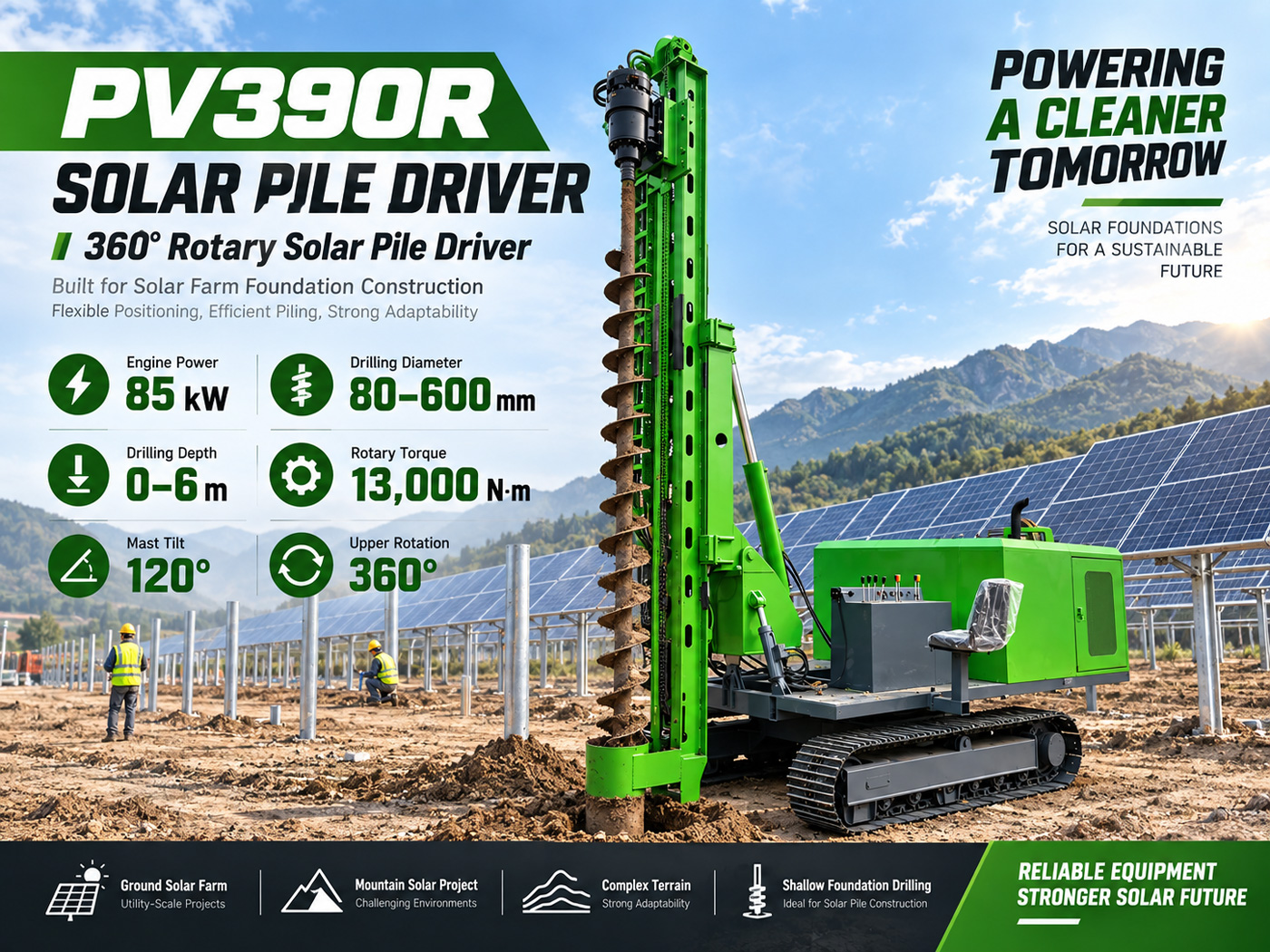
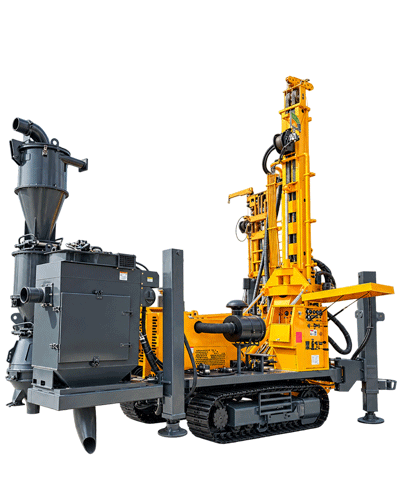
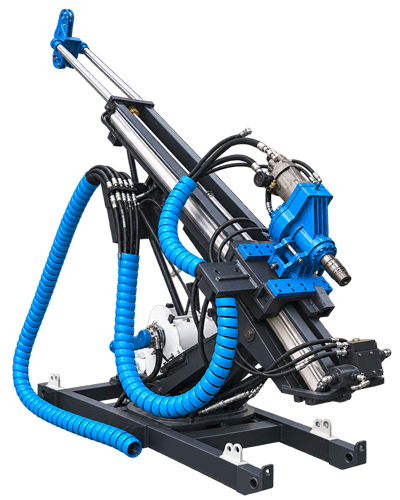
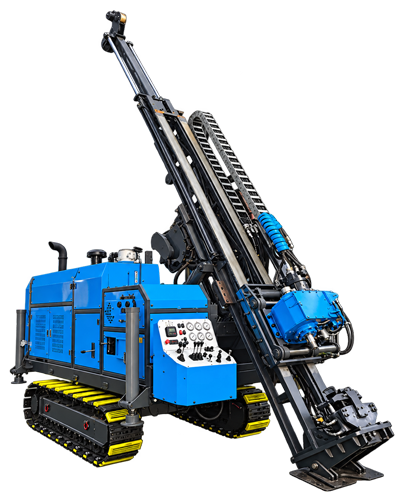
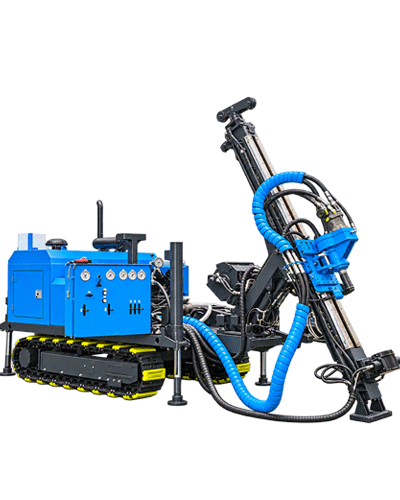
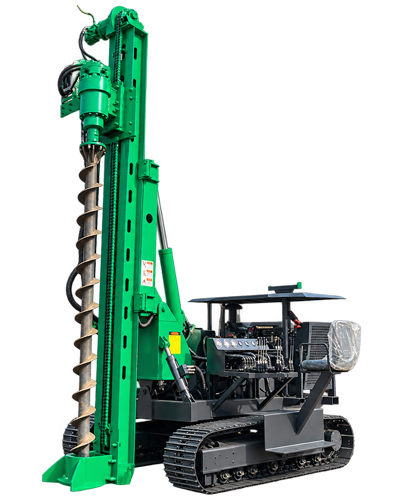
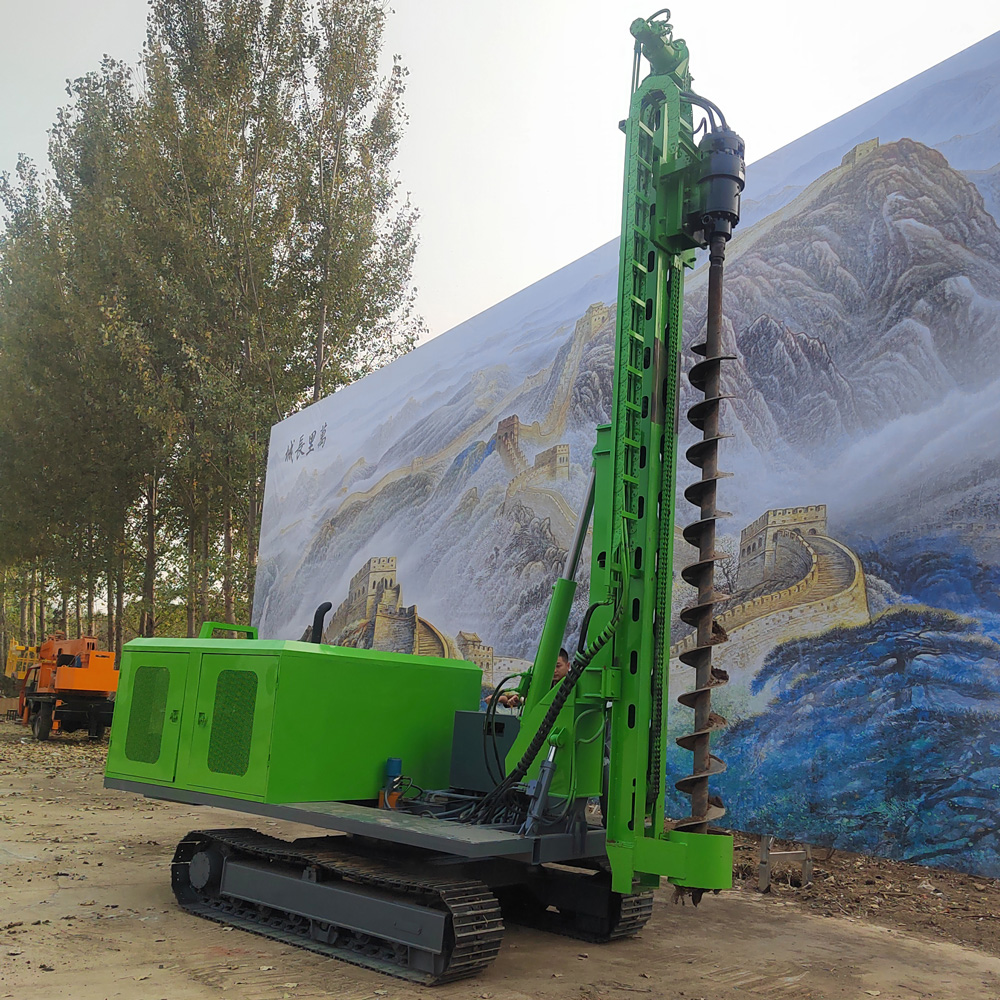
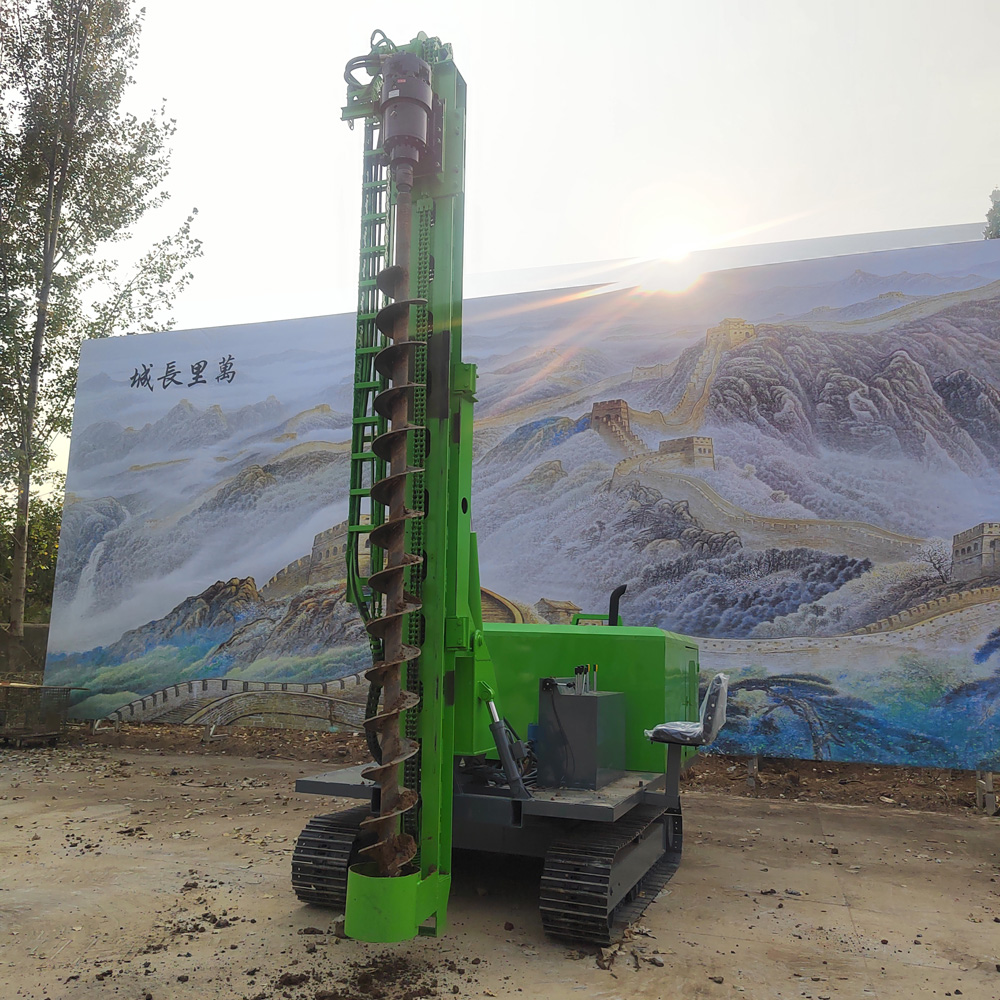
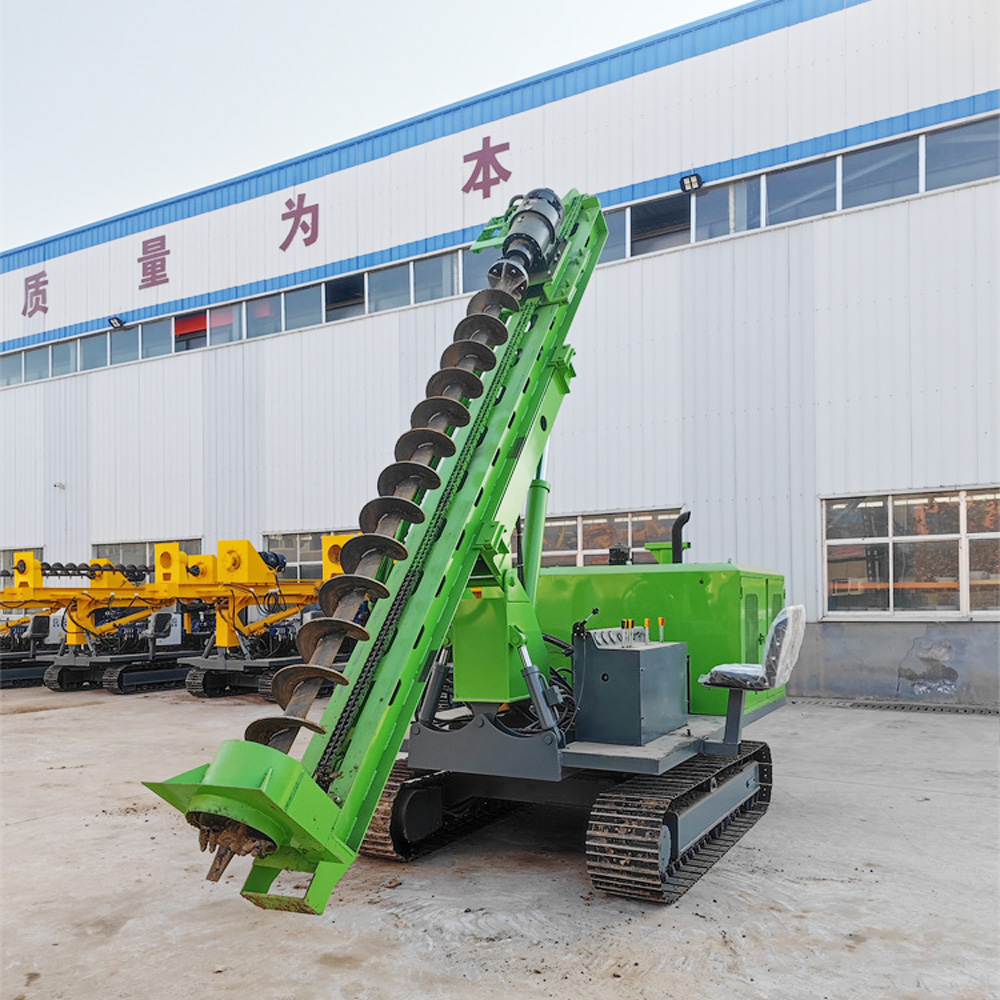
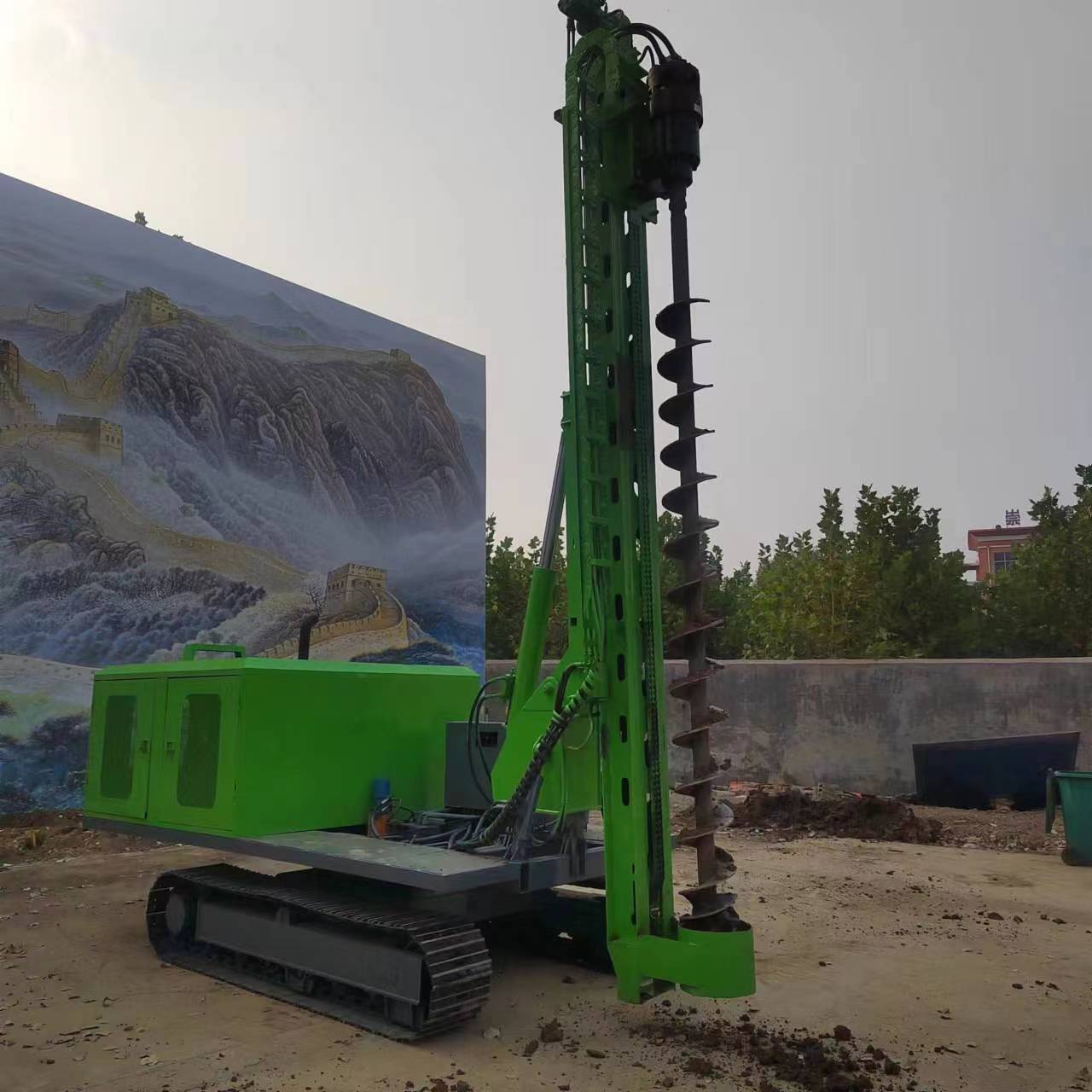
The PV390R is a crawler-type hydraulic photovoltaic pile driver designed for ground-mounted PV power stations, mountainous PV sites, and complex-site foundation construction. The machine is equipped with an 85 kW Yuchai four-cylinder engine and 13000 N·m reducer torque, with a drilling diameter of 80–600 mm and drilling depth of 0–6 m. It also features 120° mast pitch, dual-cylinder left-right swing arm, 500 mm telescopic compensation, and 360° rotation. Compared with standard photovoltaic pile drivers, the PV390R emphasizes rapid multi-directional hole alignment and reduced repeated movement of the entire machine.
The PV390R adds 360° rotation, enabling the upper working mechanism to adjust direction over a wider range around the chassis. For PV projects with dense pile positions, narrow working surfaces, or the need to continuously handle multiple pile points in different directions, this reduces repeated turning and repositioning of the entire machine and improves continuous operation efficiency within the site.
Large photovoltaic stations usually have a large number of regularly arranged pile positions. The crawler chassis handles site movement, while 360° rotation, left-right swing arm, and front-rear telescopic compensation handle fine positioning, allowing the equipment to adjust pile positions in more directions from a single stop and reducing the time needed to move the entire machine for each pile point.
The machine uses an 85 kW Yuchai four-cylinder engine to power travel, slewing, chain pressurization, mast posture adjustment, and 360° rotation. Photovoltaic sites are often located in the field, mountains, or working surfaces lacking a fixed power supply, so diesel power facilitates independent construction. During continuous high-load operation, attention should be paid to cooling, air filtration, and fuel system maintenance.
The reducer has a maximum torque of 13000 N·m and a drill rod speed of 90 r/min, and can be used for foundation drilling within the 80–600 mm range. Large diameters, dense soil layers, and formations containing crushed stone require higher torque. During construction, advancement should be adjusted according to drill bit load, drilling diameter, and cuttings discharge status to avoid forced downward pressure.
The maximum drilling depth is 6 m, suitable for photovoltaic support foundation pre-drilling, pilot hole drilling, and other shallow foundation projects. This equipment belongs to photovoltaic and engineering pile driving and drilling equipment, not a water well drilling rig. Its core value is shallow-layer high-frequency pile position construction, multi-angle operation, and adaptability to complex sites.
The drilling diameter is 80–600 mm, and drilling tools can be selected according to the photovoltaic support foundation design, pile type, formation, and whether pilot hole drilling is required. Smaller diameters are suitable for conventional pile position pre-drilling, while larger diameters can be used for special foundation holes. The final hole diameter should be based on project design and construction technology.
The PV390R uses chain pressurization, which can continuously provide advancement force to the drilling tool. Photovoltaic site construction has a fast pace, but in pebbles, backfill layers, and strongly weathered rock, excessively fast pressurization may increase hole deviation, drill sticking, and drilling tool impact. Therefore, advancement should be adjusted according to slewing load and formation changes.
The mast pitch range is 120°, which helps mountainous photovoltaic and uneven sites adjust drilling posture according to terrain and pile position requirements. Compared with equipment that can only make limited angle adjustments, a larger posture adjustment range can reduce the time needed for the entire machine to find a working angle.
The mast uses a dual-cylinder left-right swing arm, which can laterally correct the drilling position after the chassis is stabilized. Combined with 360° rotation, the equipment can first complete major directional adjustment and then use the mast swing arm for fine hole alignment, making it more suitable for dense array photovoltaic projects.
The equipment provides 500 mm telescopic compensation, which can be used for fine adjustment of the pile position in the front-rear direction. The combination of 360° rotation, left-right swing arm, mast pitch, and telescopic compensation can reduce repeated small-range movement of the chassis and make the hole alignment process more flexible.
The track shoe width is 400 mm, providing good traction on dirt roads, grass, gravel ground, and general slopes. Roads in photovoltaic sites are often not fully hardened, so a crawler chassis is more suitable than wheeled equipment for short-distance high-frequency movement within the site.
The data indicates a climbing angle of 35°. Actual mountainous construction should also consider cross slope, ground wetness, soil quality, and the center of gravity of the entire machine. In particular, after the working mechanism rotates, the center of gravity state of the equipment changes, so safety cannot be judged solely by the maximum gradeability parameter.
Soil layers and loess are common geologies in photovoltaic foundation construction. Such formations are usually easy to drill, but moisture content and density affect hole wall stability. During construction, drilling tools and advancement should be adjusted according to hole formation status to avoid excessive reaming or hole mouth collapse.
Highly plastic clay easily adheres to the drill bit, causing bit balling and poor cuttings discharge. During construction, slewing and advancement speed can be appropriately adjusted according to drill bit load, and drilling tools should be cleaned promptly to maintain effective cutting.
Pebble sand, gravel, and backfill waste layers have uneven particle composition and are prone to drill bit jumping, hole deviation, sticking, and local voids. When slewing load suddenly increases or abnormal impact occurs, the drill should be lifted promptly for inspection, and continuous forced advancement is not recommended.
The original data clearly states that after replacing with impact drilling tools, it can be used for strongly weathered rock and rock layers. For such formations, actual construction capability should be determined according to rock hardness, integrity, target hole diameter, and impact drilling tool configuration. The original data does not provide impact hammer model and impact energy, so no additional commitment is made regarding specific hard rock efficiency.
Ground-mounted photovoltaic projects have many pile positions, regular arrangement, and tight construction schedules. The PV390R uses crawler travel to move around the site, then uses 360° rotation and mast adjustment to align multiple pile positions, making it more suitable for continuous construction rhythm.
Mountainous photovoltaic projects place greater emphasis on equipment passability, construction posture, and pile position alignment. The PV390R's crawler chassis, 120° mast pitch, 360° rotation, and multi-directional compensation help adjust working posture on undulating sites, but before formal operation, the equipment parking platform must still be ensured stable.
For factory, park, and commercial and industrial photovoltaic projects, the equipment can also be used for support foundation pre-drilling, fence post holes, and other shallow foundation construction. The more flexible 360° rotation function helps reduce chassis turning in sites with limited space between buildings, roads, and equipment.
Before rotating the upper structure, confirm that there are no people, vehicles, overhead lines, or other mechanical interference around; when working on slopes, pay even more attention to center of gravity changes after rotation; during drilling, personnel must not enter the rotating drill rod, chain pressurization mechanism, mast swing, or upper rotation range.
The original data name is "4-cylinder hydraulic photovoltaic pile driver," and the latest model confirmed by the user is PV390R, where R is used to distinguish the 360° rotation version. Technical parameters are organized based on the original data, including 85 kW Yuchai four-cylinder engine, 80–600 mm drilling diameter, 0–6 m drilling depth, 13000 N·m torque, 90 r/min drill rod speed, 120° mast pitch, 500 mm telescopic compensation, and 360° rotation function.
Due to differences in actual geological conditions, drilling tool forms, pile types, hole diameters, construction angles, and operating methods, the final drilling efficiency, hole quality, and pile driving effect should be based on on-site working conditions and project foundation design.
| Parameter Item | Parameter Value |
|---|---|
| Basic Parameters | |
| Product Model | PV390R |
| Equipment Type | Four-cylinder 360° rotary hydraulic photovoltaic pile driver |
| Overall Dimensions | 5200 × 2300 × 2800 mm |
| Track Shoe Width | 400 mm |
| Power System | |
| Engine | Yuchai four-cylinder |
| Engine Power | 85 kW |
| Main Pump | Triple pump 40 / 40 / 32 |
| Drilling and Slewing System | |
| Drilling Diameter | 80–600 mm |
| Drilling Depth | 0–6 m |
| Reducer | Internal five-star |
| Reducer Torque | 13000 N·m |
| Drill Rod Speed | 90 r/min |
| Drill Pressurization | Chain pressurization |
| Posture Adjustment System | |
| Mast Pitch | 120° |
| Mast Swing | Dual-cylinder left-right swing arm |
| Telescopic Compensation | 500 mm |
| Upper Rotation | 360° |
| Travel and Passability | |
| Chassis Type | Crawler type |
| Climbing Angle | 35° |
| Applicable Sites | Photovoltaic sites, dirt roads, slopes, gravel ground, and general unpaved working surfaces |
| Applicable Geology | |
| Soil Layer | Suitable for conventional photovoltaic foundation pre-drilling and pile position construction |
| Loess | Adjust advancement and drilling tools according to density and moisture content |
| Clay | Pay attention to drill bit balling and cuttings discharge |
| Pebble Sand | Select drilling tools and construction parameters according to particle size and density |
| Backfill Waste Layer | Focus on preventing foreign objects, voids, and local sticking |
| Strongly Weathered Rock | Construction can be carried out after replacing with impact drilling tools |
| Rock Layer | Applicability must be confirmed according to rock hardness and impact drilling tool configuration |
| Typical Applications | |
| Ground-Mounted Photovoltaic Power Stations | Photovoltaic support pile position pre-drilling, hole forming, and foundation construction |
| Mountainous Photovoltaic | Slope, multi-angle pile position, and complex terrain foundation construction |
| Commercial and Industrial Photovoltaic Sites | Factory, park, and centralized photovoltaic foundation operations |
| Engineering Foundation Pre-Drilling | Fence, support, and other shallow foundation hole construction |
We are a professional drilling equipment manufacturer specializing in the research and development, production and supply of water well drilling rigs, core drilling rigs, reverse circulation drilling rigs, down-the-hole drilling rigs, truck-mounted drilling rigs and mineral exploration equipment.
© 2026 Shandong Hengjianhang Construction Machinery Co., Ltd. All rights reserved.