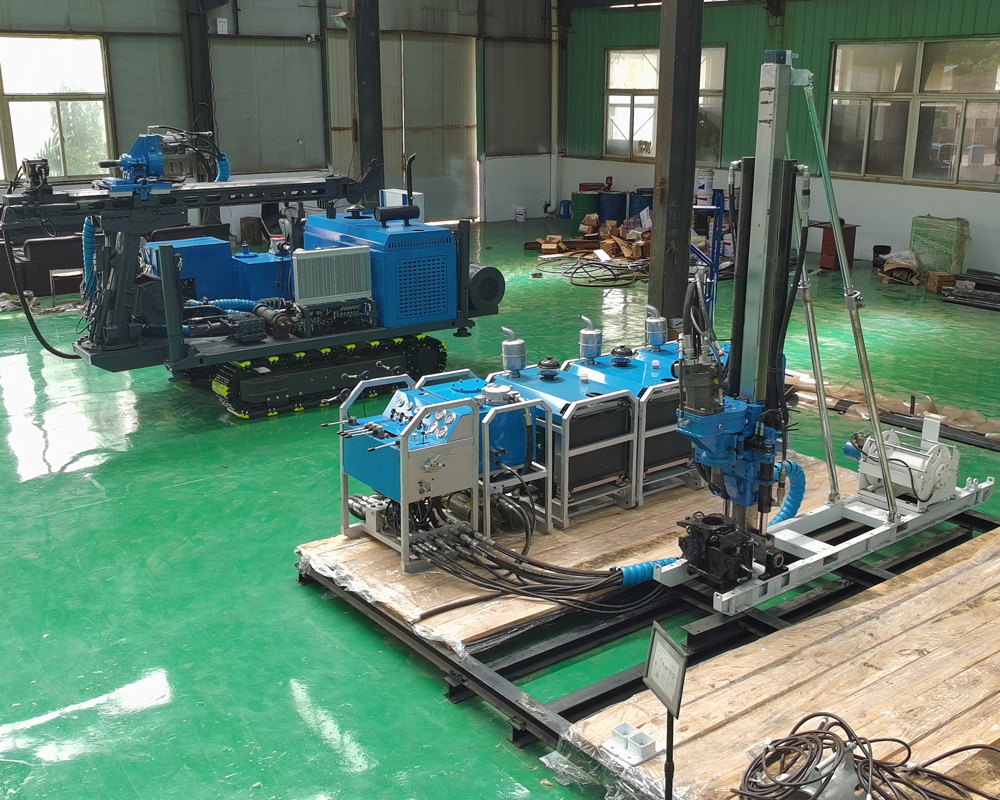
Split-Type Core Drilling Rig
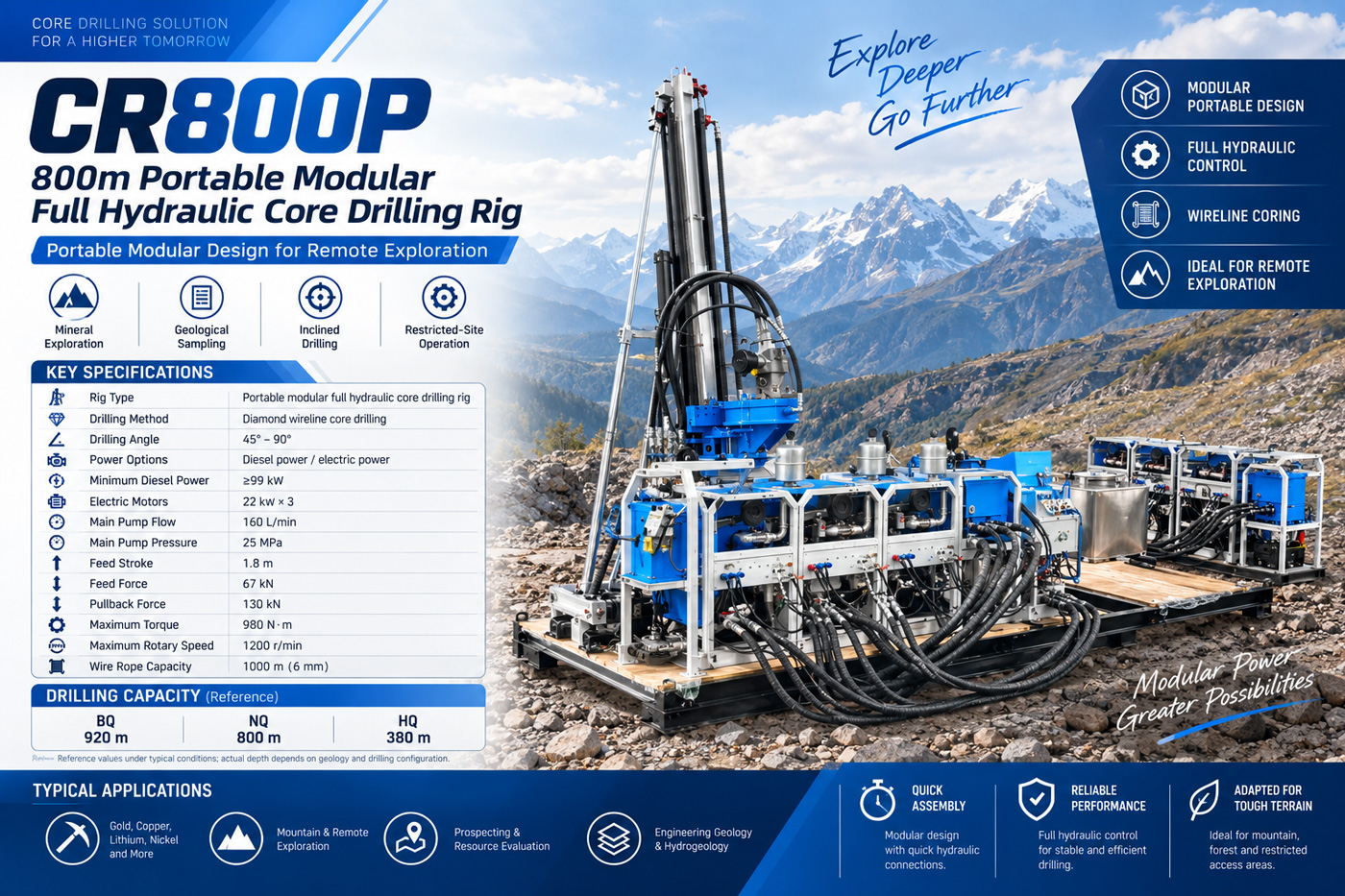
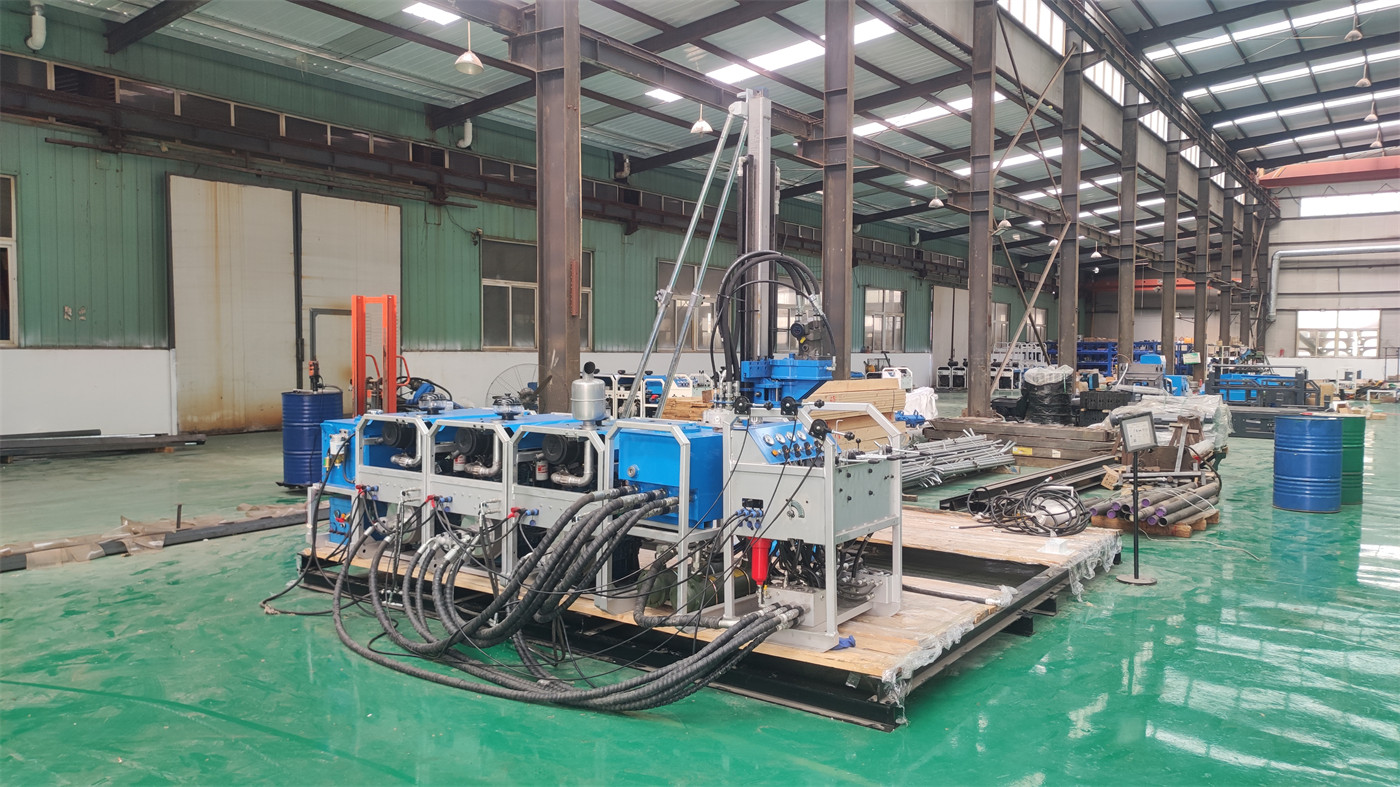
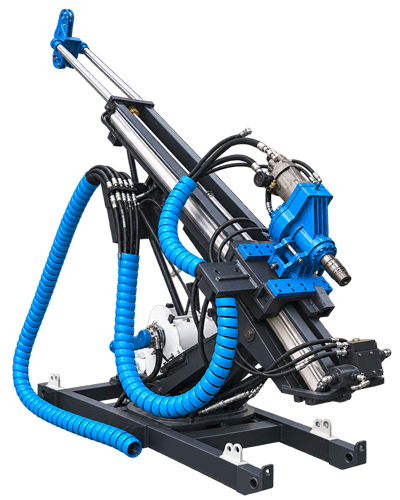
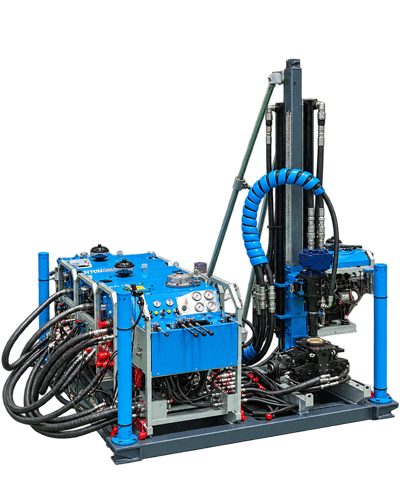
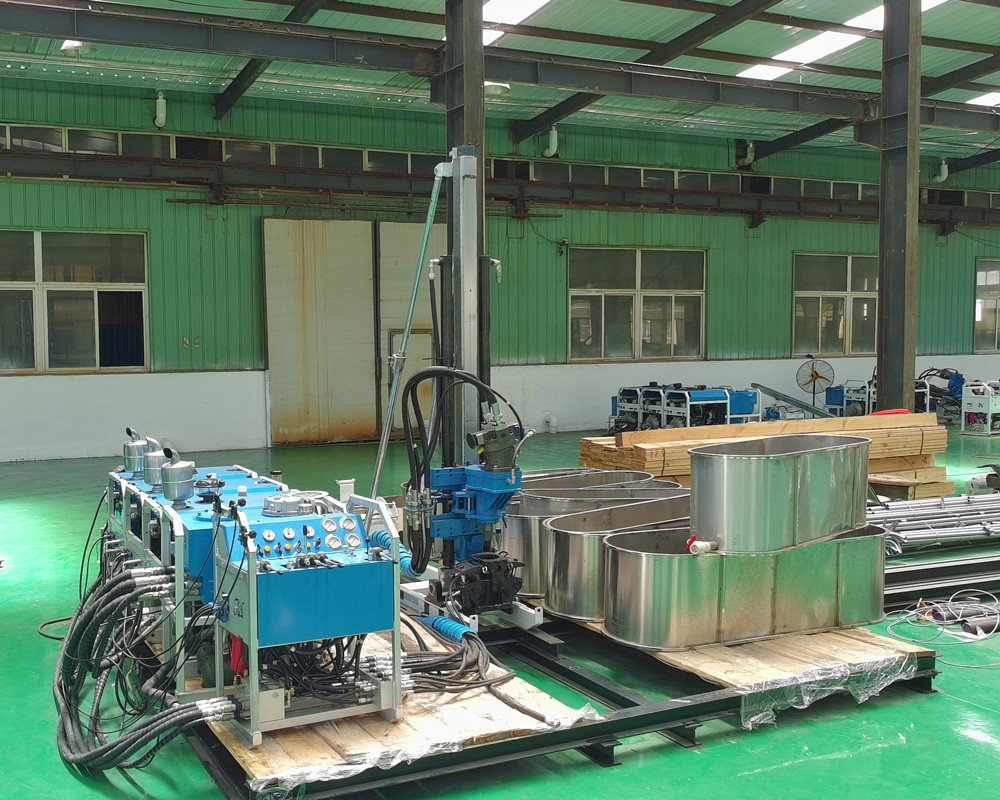
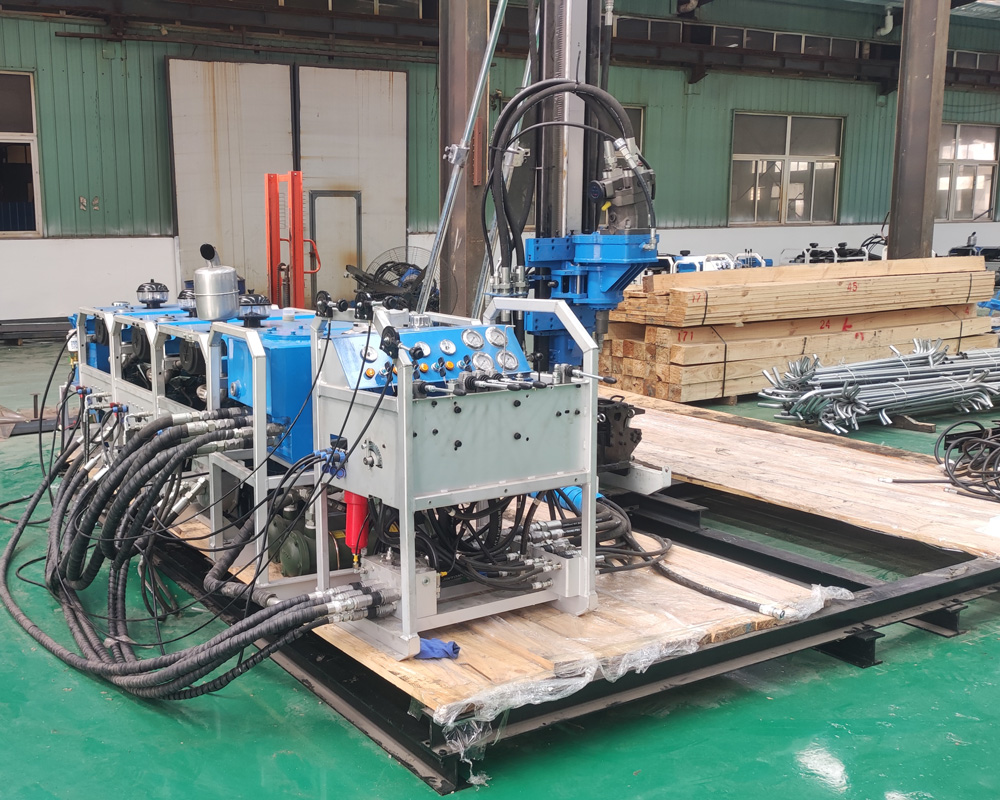
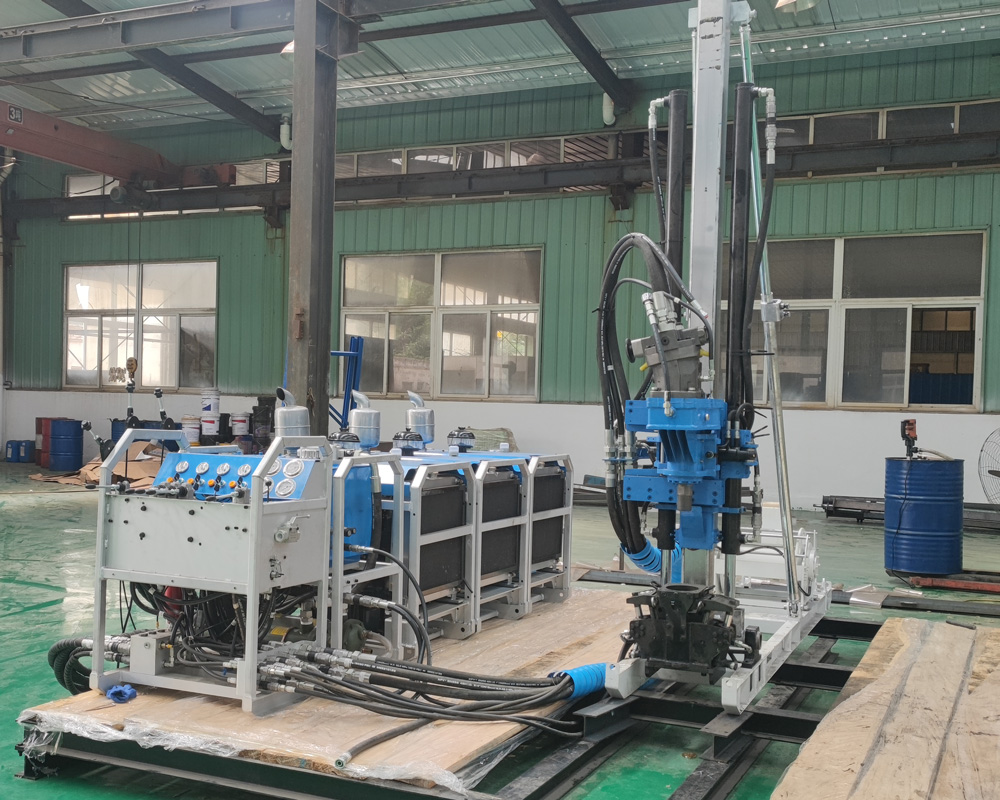
The CR800P emphasizes a balance between medium-depth drilling and accessibility in complex terrain. It retains the split-type design for easy disassembly and transport, while increasing the reference NQ drilling depth to 800m, making it suitable for mountain exploration projects where shallow anomalies have been verified and further tracking of the deep extension of ore bodies is required.
With reference drilling depths of 920m for BQ, 800m for NQ, and 380m for HQ, the CR800P can undertake deeper control holes than 600m-class equipment. This level is more practical for projects where mineralized outcrops or shallow ore bodies have been discovered and need verification of down-dip direction, thickness variation, and continuity.
Many gold vein systems are controlled by faults and shear zones, with ore bodies exhibiting significant dip angles. The CR800P supports drilling at 45°–90°, allowing adjustment of hole angle on limited mountain platforms to improve intersection of mineralization. Continuous core samples can be used to identify mineralized zones, structural surfaces, alteration types, and grade variations.
Pegmatite dikes often exhibit branching, pinching out, and variations in attitude, and a single vertical hole may not accurately reflect true thickness. Through continuous coring in inclined holes, the width, mineral assemblage, and deep strike of the dike can be more directly assessed, making the CR800P also suitable for medium-depth lithium and rare metal exploration.
When exploration lines span multiple ridges, valleys, or forested areas, large integrated rigs may require road construction and heavy transport for each hole change. The CR800P allows the power, operation, mud, and drilling units to be transported separately, reducing the complexity of short-distance moves and improving continuity for multi-hole projects.
The CR800P provides 67 kN of feed force and 130 kN of pullback force. As hole depth increases, the weight of drill rods and wall friction gradually rise, so pullback capacity is not only used for normal tripping but also provides a margin for handling tools in deeper sections. If abnormal resistance occurs, the hole wall and circulation conditions should be checked first rather than continuously pulling hard.
The power head delivers a maximum torque of 980 N·m and a maximum speed of 1200 rpm. In intact hard rock, reasonable rotation speed and weight on bit should be maintained to sustain diamond bit cutting efficiency; when entering broken, highly weathered, or high-friction sections, rotation speed and feed should be appropriately reduced to prevent bit blockage or downhole sticking.
The wireline winch uses a 6mm wire rope with a capacity of 1000m and a hoisting speed of 116 m/min. For 800m-class wireline coring, the rope length provides a certain margin, reducing limitations during inner tube hoisting in deep holes. Before daily operations, the rope end connection and wire rope damage should be inspected.
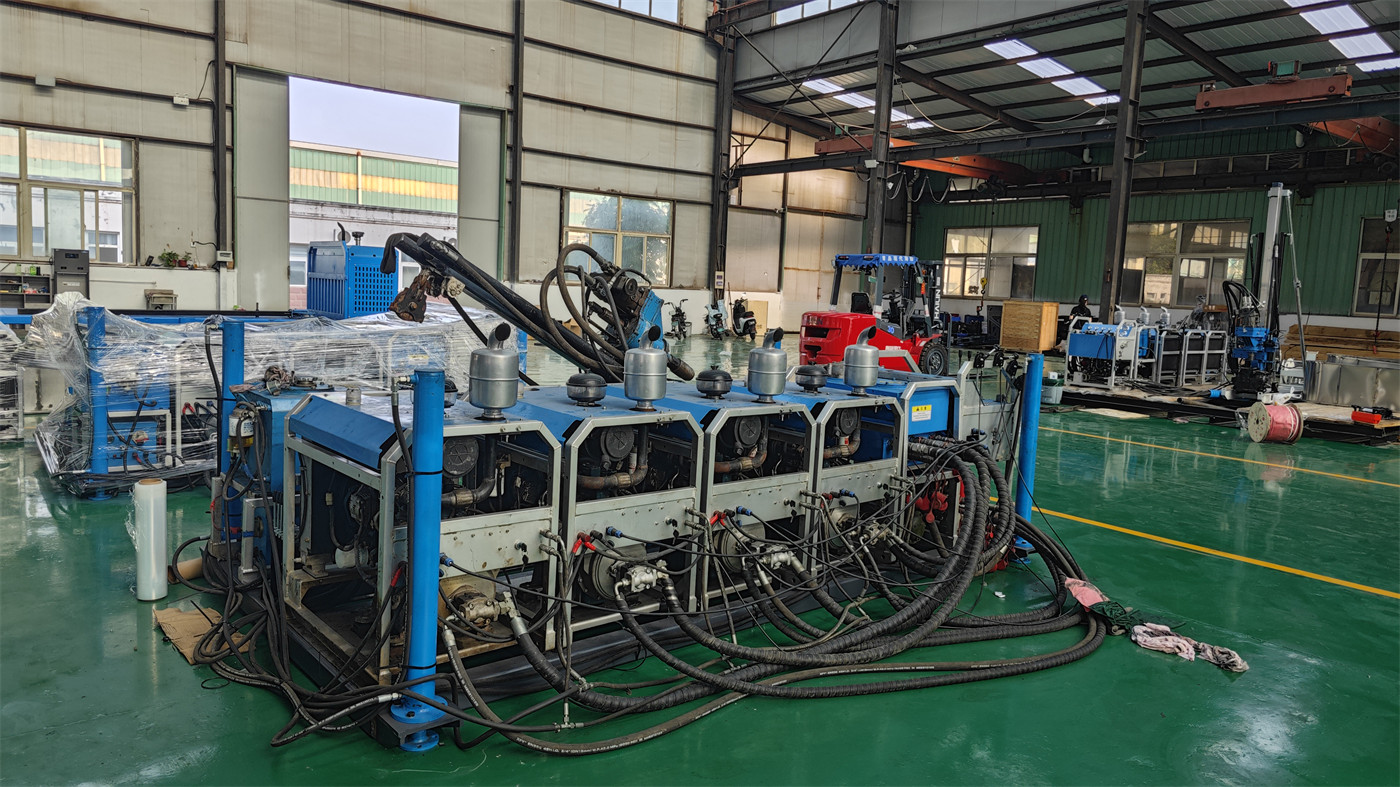
The mud flow rate is 100 L/min and pressure is 7 MPa. For conditions with developed fractures, unstable water return, or long transport distances for cuttings in mid-deep holes, higher mud pressure helps maintain circulation. In practice, adjustments should still be made based on hole diameter, lithology, and loss conditions, avoiding simply pursuing high pump pressure.
The diesel engine power requirement is ≥99 kW, and a 22 kW × 3 electric motor configuration is also available. In remote mountainous areas, fuel transport, power generation conditions, and maintenance resources should be considered; if power supply is stable on fixed mine platforms, electric solutions can be evaluated to reduce engine maintenance and fuel storage pressure.
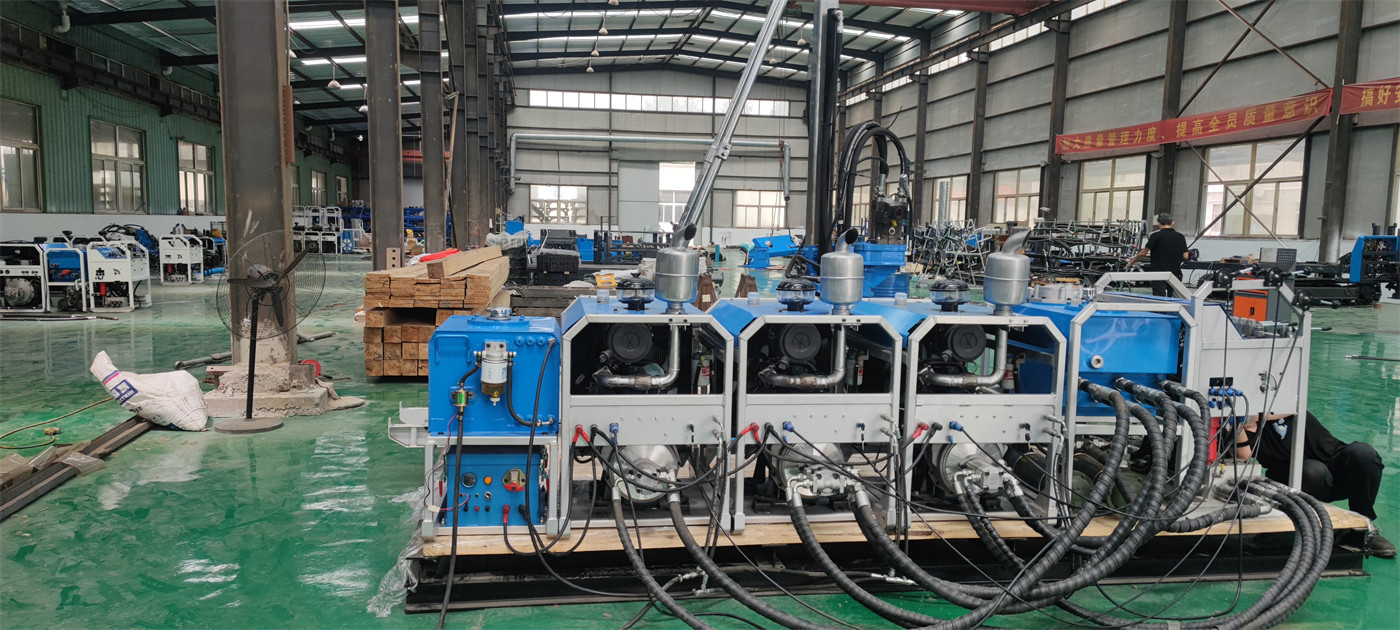
For complex terrain projects, the rainy season trafficability, slope stability, personnel transport routes, and platform drainage should be assessed in advance. The split-type structure improves equipment accessibility, but mud water sources, drill rod storage, core box placement, and personnel safety access still need to be planned before commencement.
In highly weathered layers, the focus is on hole stability; in intact hard rock, the focus is on bit matching; in fault and fracture zones, the focus is on shortening runs; and in water-bearing or loss zones, the focus is on circulation control. For mid-deep holes, continuously recording pump pressure, torque, water return, and core condition is more important than using a fixed set of drilling parameters.
After each module assembly, check hydraulic quick couplings and connectors; the clamp must maintain sufficient clamping pressure; the winch wire rope should avoid tangling and local crushing; during prolonged operation, monitor hydraulic oil temperature and cooling system, and clean the radiator promptly according to site dust conditions.
Since actual geological conditions, downhole tools, drilling angles, and operating methods vary, final drilling efficiency, depth, and core recovery should be based on site conditions.
| Parameter | Value |
|---|---|
| Drilling Capacity | |
| Reference BQ drilling depth | 920 m |
| Reference NQ drilling depth | 800 m |
| Reference HQ drilling depth | 380 m |
| Drilling angle | 45°–90° |
| Applicable rod length | 1 / 1.5 m |
| Power System | |
| Power type | Diesel / Electric |
| Diesel engine power | ≥99 kW |
| Diesel engine brand | Kubota / Cummins / Yunnei / Yuchai (optional) |
| Electric motor configuration | 22 kW × 3 |
| Motor speed | 3000 / 1450 rpm |
| Hydraulic System | |
| Main pump flow | 160 L/min |
| Main pump pressure | 25 MPa |
| Auxiliary pump flow | 10 L/min |
| Auxiliary pump pressure | 17 MPa |
| Main oil tank capacity | 180 L |
| Control method | Manual direct control |
| Cooling method | Water / Air cooling |
| Feed System | |
| Feed stroke | 1.8 m |
| Feed force | 67 kN |
| Pullback force | 130 kN |
| Drilling angle | 45°–90° |
| Hoisting speed | 115 m/min |
| Applicable rod length | 1 / 1.5 m |
| Rotary Power Head | |
| Drive type | Gear hydraulic motor |
| Transmission type | Direct spindle drive |
| Maximum speed | 1200 rpm |
| Maximum torque | 980 N·m |
| Maximum applicable rod diameter | 114 mm |
| Power head movement | Swing |
| Wireline Winch | |
| Rope capacity | 1000 m (6mm wire rope) |
| Pull force at empty drum | 11.5 kN |
| Pull force at full drum | 5.6 kN |
| Hoisting speed | 116 m/min |
| Clamp | |
| Maximum clamping force | 130 kN |
| Through-hole capacity | 54–127 mm |
| Type | Hydraulic clamp |
| Mud Unit | |
| Mud pump | Plunger high-pressure pump |
| Drive type | Hydraulic drive |
| Mud flow rate | 100 L/min |
| Mud pressure | 7 MPa |
| Mud Mixer | |
| Drive type | Hydraulic drive |
| Mixer speed | 1500 rpm |
| Mixing capacity | 1.2 m³/min |
| Module Reference Weight | |
| Power unit | 180–260 kg |
| Operation unit | 140 kg |
| Hydraulic oil unit (with oil) | 160 kg |
| Mud unit | 95 kg |
| Total weight | 1380 kg |
We are a professional drilling equipment manufacturer specializing in the research and development, production and supply of water well drilling rigs, core drilling rigs, reverse circulation drilling rigs, down-the-hole drilling rigs, truck-mounted drilling rigs and mineral exploration equipment.
© 2026 Shandong Hengjianhang Construction Machinery Co., Ltd. All rights reserved.