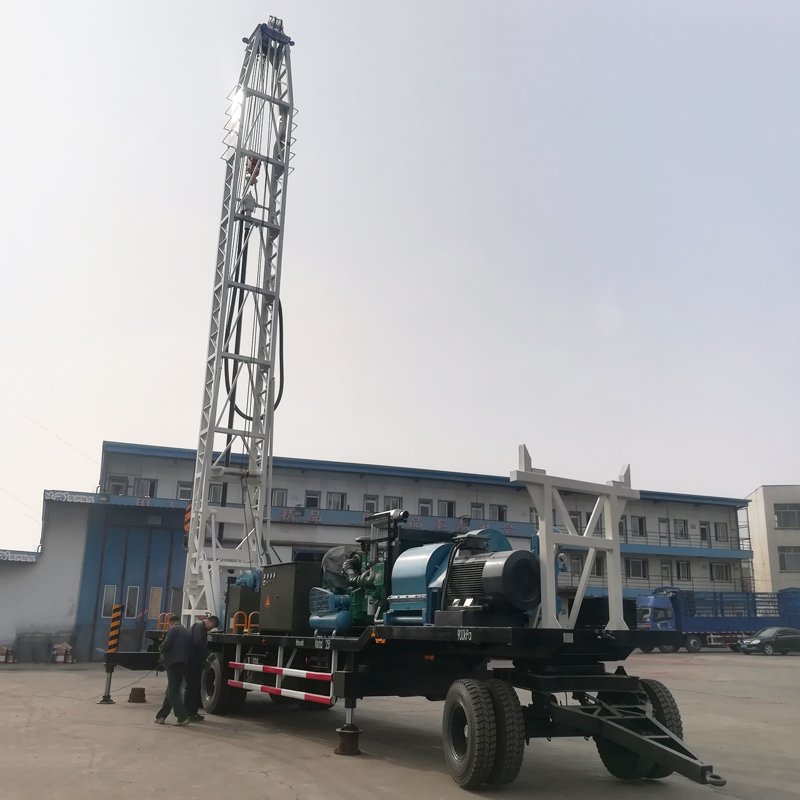
Trailer-Mounted Water Well Drilling Rig
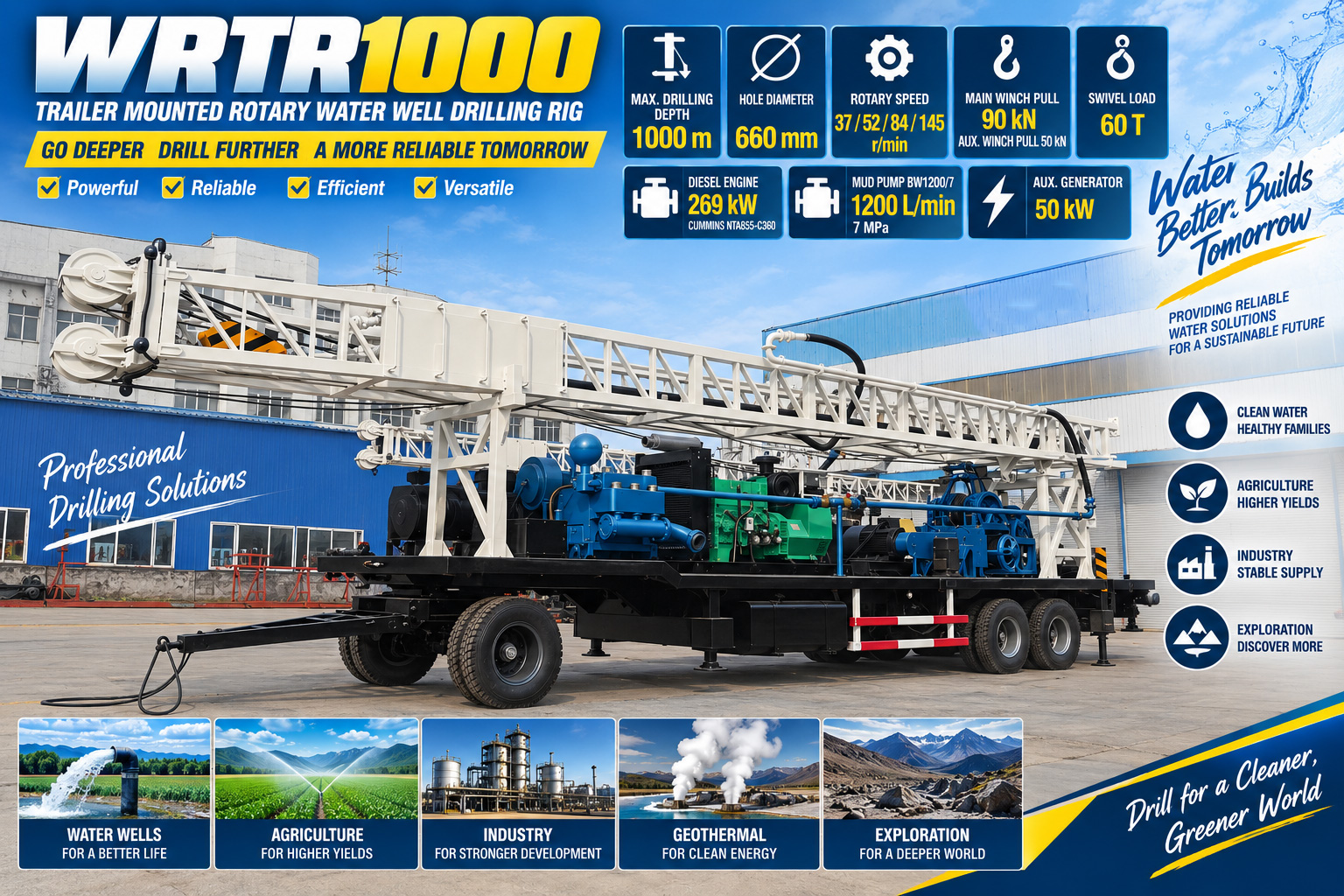
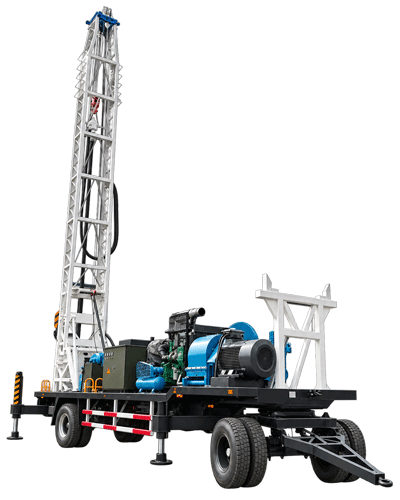
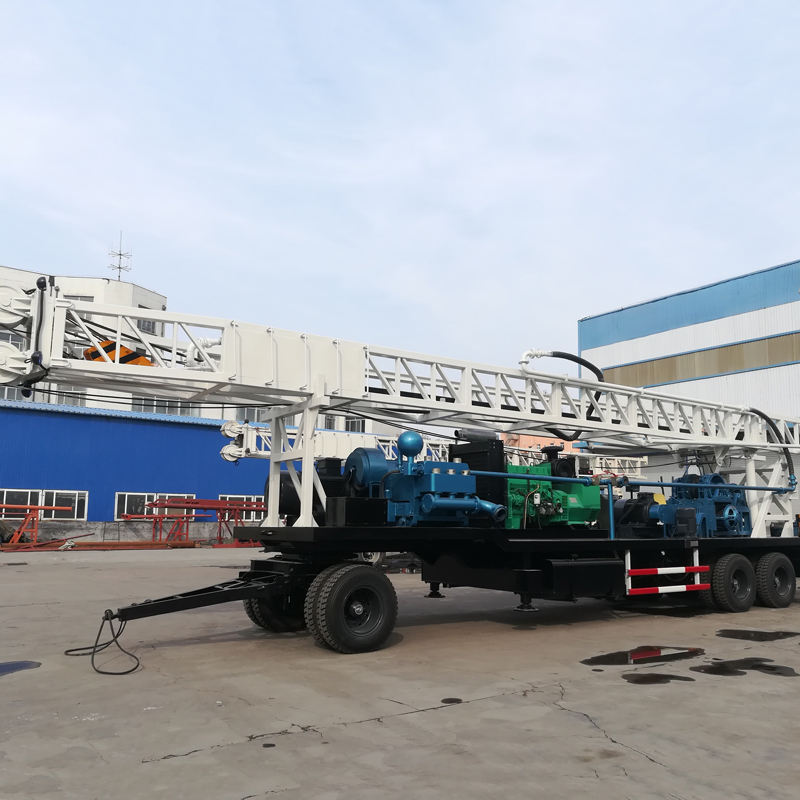
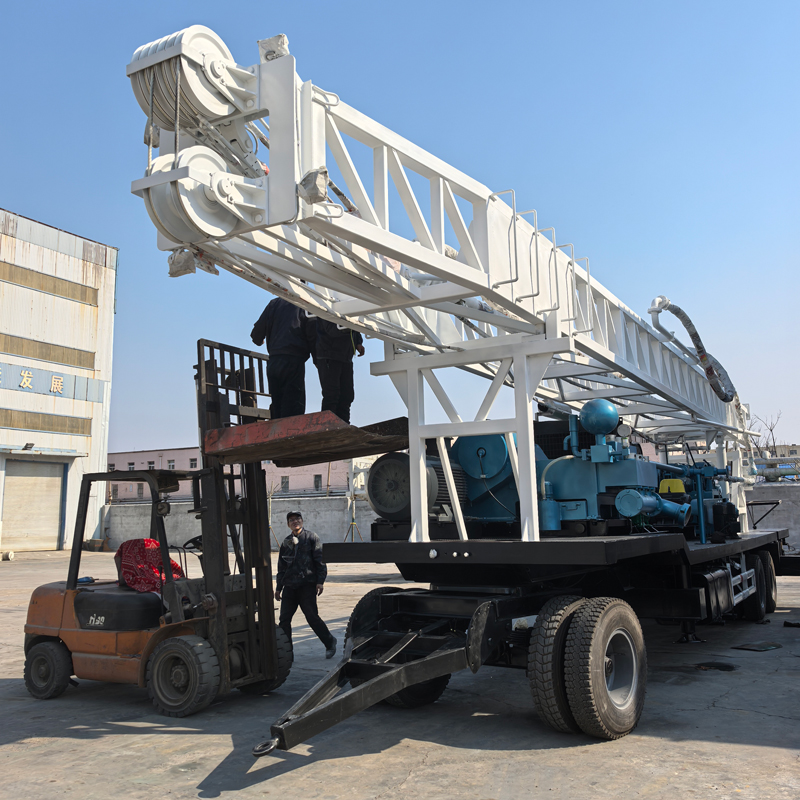
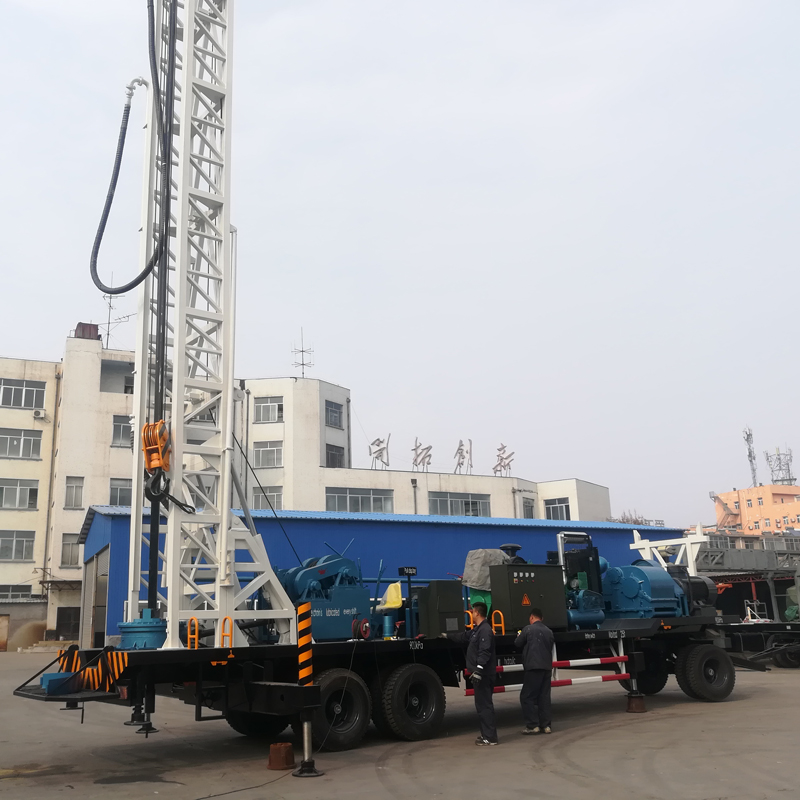
The WRTR1000 is a heavy-duty trailer-mounted rotary table drilling rig designed for 1000-meter-class deep water wells, geothermal, mining water supply, hydrogeology, and large-scale engineering drilling. The complete machine integrates an independent diesel power unit, 25 kN·m rotary table, 60 T hydraulic telescopic K-type mast, dual winches, BW1200/7 high-displacement mud pump, and 50 kW auxiliary generator on a trailer chassis. It can switch among direct mud circulation, air foam, DTH hammer, and optional air-lift reverse circulation according to formation conditions.
With a maximum drilling depth of 1000 m, the WRTR1000 can cover deep groundwater projects that ordinary shallow-to-medium water well equipment cannot handle. For mining water supply, large industrial water use, deep wells in arid areas, geothermal surveys, and deep hydrogeological drilling, this class provides greater depth reserve. Actual drilling depth still needs to be determined based on hole diameter, drilling tools, formation, circulation method, and well completion design.
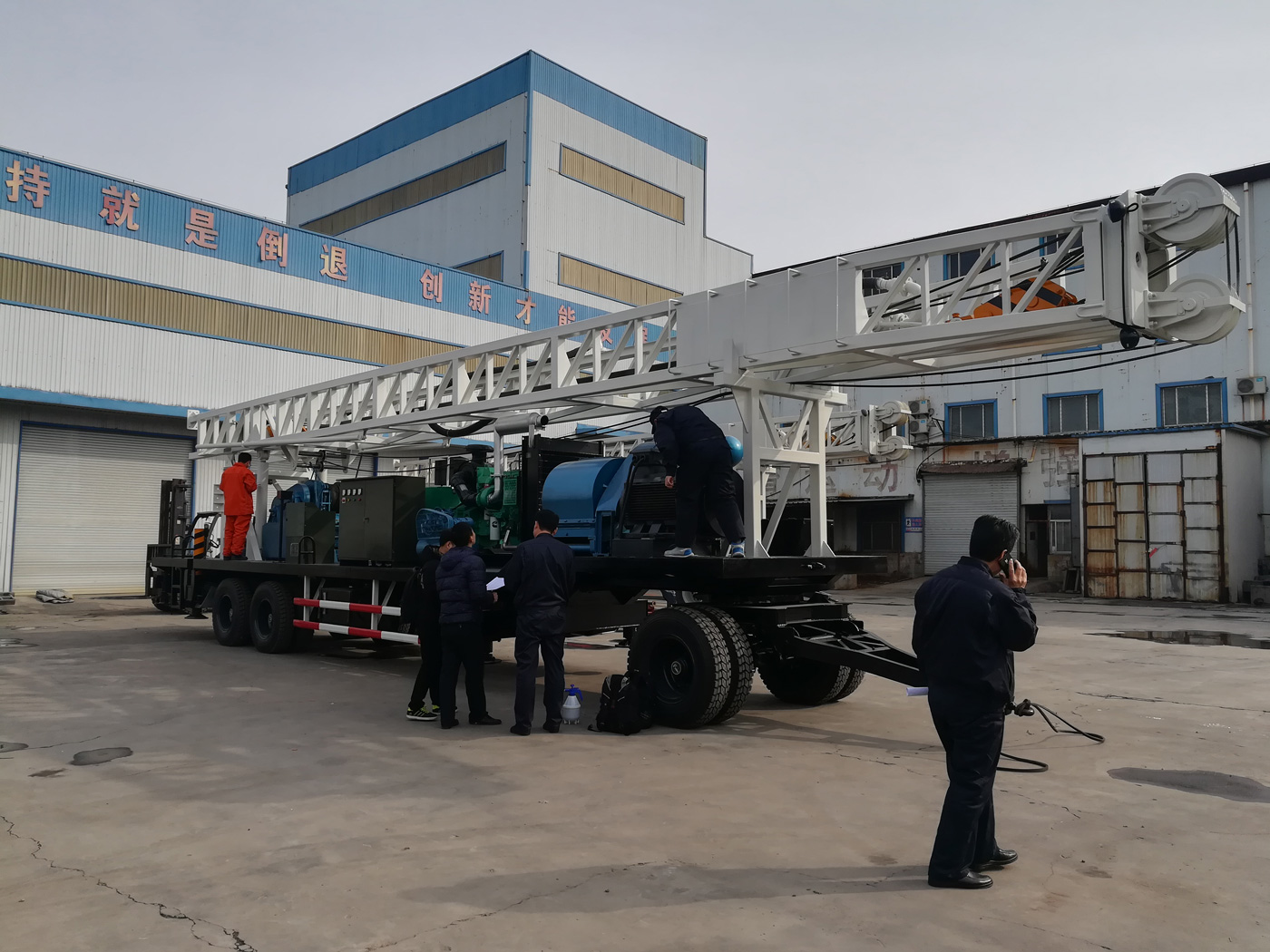
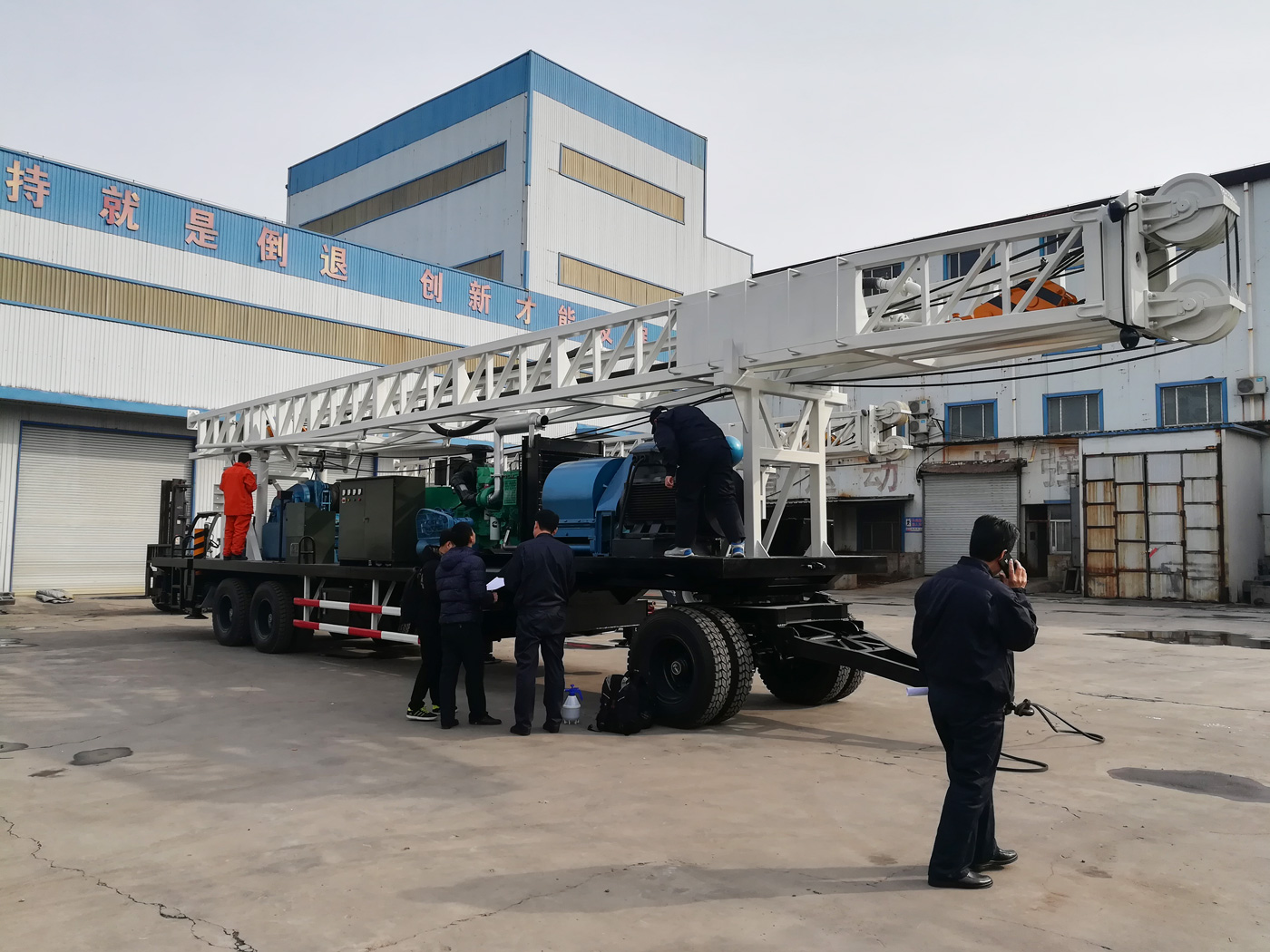
The mast, rotary table, winches, mud pump, and power system are all arranged around the trailer-mounted platform, allowing transfer between projects by suitable towing vehicles. For mining areas, farms, geothermal fields, and remote water well projects, this structure is more convenient for cross-project mobilization than a fully fixed drilling site, but road width, bridge load capacity, turning radius, and transport height limits must be verified in advance.
The mast has a total height of 19.5 m, an effective height of 18.482 m, and a maximum load of 60 T. The hydraulic telescopic K-type structure can handle long drill pipes and deep-hole drill strings while reducing part of the working height in transport condition. In 1000-meter-class projects, both drill string weight and casing operation loads are higher, so mast load capacity is an important foundation for the entire machine.
The rotary table has a maximum torque of 25 kN·m and provides four speeds: 37 / 52 / 84 / 145 r/min. Low speed and high torque are suitable for large drilling tools, casing operations, and high-resistance formations; higher speeds are suitable for relatively stable soft rock, weathered layers, and some sedimentary formations. During deep-hole construction, the gear should be adjusted promptly according to torque, mud return, and drilling tool load.
The rotary table has a maximum through-hole diameter of 660 mm, providing space for large-size kelly, drilling tools, and casing operations. For deep water wells and some engineering holes, the large through-hole structure facilitates the configuration of larger well pipes and casing systems, but the final completed well diameter should be designed according to aquifer, well pipe, pump type, and formation stability, and cannot be directly understood as a fixed drilling diameter based on the through-hole size.
The main winch has a single-line lifting force of 90 kN, and the auxiliary winch has a single-line lifting force of 50 kN. Both drums have a rope capacity of 160 m. The main and auxiliary winches can separately handle drill strings, assist casing, move drilling tools, and perform on-site lifting, improving the continuity of long drill pipe and deep-hole operations.
The rated loads of the traveling hook and swivel are both 60 T. In 1000-meter-class drilling, the self-weight of the drill string, casing weight, and borehole wall friction all gradually increase, and higher rated loads provide margin for normal tripping and tool handling. When sticking and abnormal resistance occur, they should still be handled first through circulation, slow lifting, and downhole judgment.
The kelly specification is 108 × 108 × 12192 mm, and the standard drill pipe is 89 × 9400 mm, with optional drill pipe diameters of 89 / 114 / 127 mm. Longer drill pipes help reduce the number of connections in 1000-meter deep holes, but also place higher demands on mast space, lifting, and transport organization.
The BW1200/7 mud pump has a maximum pressure of 7 MPa and a displacement of 1200 L/min. It can be used for cuttings carrying, wall protection, drill bit cooling, and downhole pressure control in deep-hole direct mud circulation. As hole depth increases, circulation resistance and cuttings transport distance increase, and a high-displacement mud pump is more conducive to maintaining stable mud return.
Clay, silt, and other soft formations can use direct mud circulation, stabilizing the borehole wall and carrying drill cuttings back to the surface through reasonable mud properties. In clay layers, bit balling and poor mud return should be prevented, and drilling conditions can be improved by adjusting rotation speed, bit type, and mud properties.
Loose sand and gravel layers are prone to hole collapse, mud loss, and hole enlargement, and may require temporary casing or staged casing. The 660 mm rotary table through-hole and 60 T mast load provide greater operating space for casing operations, but the specific casing stages still need to be determined according to formation design.
After entering strongly weathered or decomposed rock layers, rotary drilling can continue according to bottom-hole resistance and mud return conditions, or air foam or other suitable processes can be used. The four-speed rotary table facilitates adjusting speed and torque according to changes in formation hardness.
When drilling enters relatively intact hard rock, suitable air compressors, DTH hammers, and bits can be configured for DTH drilling. In hard rock deep holes, special attention should be paid to air compressor capacity, DTH hammer lubrication, and cuttings discharge status. If rock powder at the bottom of the hole cannot be discharged in time, drilling efficiency will be significantly reduced.
Air foam drilling can play a role in some dry, lost-circulation, or sections requiring improved cuttings carrying capacity. Foam concentration, air volume, and injection method should be adjusted according to hole depth, hole diameter, and formation permeability, and uniform parameters cannot cover all formations.
The WRTR1000 can be optionally equipped with air-lift reverse circulation for projects requiring rapid cuttings return or cuttings sampling. This is an optional drilling method and is not a dedicated RC exploration rig; if the project has clear requirements for sample representativeness and splitting quality, matching dual-wall drill pipes, air compression systems, and sampling equipment should also be configured.
Deep wells often pass through clay, sand, gravel, weathered rock, and bedrock at the same time. The WRTR1000 can use mud circulation and casing protection in the upper loose layers, then switch to DTH or air foam drilling after entering rock layers, reducing the need to frequently change rigs because a single process cannot adapt to formation changes.
After entering a high-yield aquifer, the circulation method, casing program, and hole cleaning process need to be adjusted according to water inflow. The ultimate goal of deep water well construction is not simply to reach depth, but to form a stable borehole wall and effectively utilize the aquifer, so screen pipe, water shutoff, and pump type design are equally important.
The WRTR1000 is suitable for municipal water supply, large communities, schools, hospitals, and other projects requiring a stable groundwater source. The 1000-meter-class depth can cover deeper aquifers, but hydrogeological surveys and water quality evaluations should be carried out before formal construction to reasonably determine the target horizon.
In arid areas, large farms, and agricultural regions with deep groundwater levels, the WRTR1000 can be used to construct deep irrigation wells and livestock water supply wells. Completed well diameter, screen length, and pump capacity should be designed in combination with aquifer thickness, expected water yield, and long-term pumping demand.
Mining areas can use this equipment to construct domestic water supply, dust suppression, equipment cleaning, and auxiliary production water wells, and can also undertake some dewatering holes according to hydrogeological design. Mining project hole locations are usually scattered, and the trailer-mounted platform facilitates mobilization between different drilling points within the mining area.
The 1000 m drilling depth, heavy-duty mast, and multi-process capability enable the WRTR1000 to be used for geothermal surveys, temperature gradient holes, and some geothermal water wells. Geothermal projects also need to consider high-temperature formations, casing grades, cementing, and circulation media, and formal construction should be carried out according to special design.
The equipment can be used for hydrogeological surveys and general deep geological drilling, judging formation changes through drill cuttings, mud return, water inflow, and drilling response. If the project requires continuous high-quality cores, a dedicated core drilling rig should be selected.
The complete machine adopts a Cummins NTA855-C360 diesel engine with a power of 269 kW and a rated speed of 2100 r/min, suitable for remote sites without a stable power grid. For continuous deep-hole operations, maintenance of the cooling, fuel, and air filtration systems should be emphasized to avoid power decline caused by long-term high load.
The auxiliary generator has a power of 50 kW and can supply power for construction lighting, tools, auxiliary pumps, and on-site electrical equipment. Remote projects should still reasonably calculate the total electrical load and carry out grounding and distribution protection according to regulations.
The support system uses 4 hydraulic outriggers and 2 mechanically locked outriggers. Hydraulic outriggers are used for rapid leveling, and mechanical outriggers provide secondary locking after positioning, which helps maintain complete machine stability during high-torque rotation, winch lifting, and casing operations.
Transport dimensions are approximately 15300 × 2800 × 4450 mm. Before cross-regional transportation, towing vehicles, road width and height limits, bridge load capacity, turning radius, and local transport regulations should be confirmed. The drilling site also needs to reserve sufficient working space for mast erection, mud system, drill pipes, and casing.
Before starting work, inspect the diesel engine, rotary table, K-type mast, winches, wire ropes, swivel, mud pump, outriggers, and electrical system; during the deep-hole stage, continuously record changes in rotary table torque, mud return, pump pressure, tripping resistance, and water inflow; when switching between different drilling methods, reconfirm drilling tools, circulation system, and safety conditions.
Due to differences in actual geological conditions, downhole tools, drilling angle, and operating methods, the final drilling efficiency, drilling depth, and well completion effect should be based on on-site conditions.
| Parameter Item | Parameter Value |
|---|---|
| Basic Parameters | |
| Product Model | WRTR1000 |
| Equipment Type | Trailer-mounted rotary table water well drilling rig |
| Maximum Drilling Depth | 1000 m |
| Applicable Formations | Clay, sand, gravel, weathered rock, fractured rock, and bedrock |
| Optional Drill Pipe Diameters | 89 / 114 / 127 mm |
| Drilling Methods | |
| Direct Mud Circulation | Suitable for clay, sand, and other loose formations |
| Air Foam Drilling | Suitable for some lost-circulation, dry holes, and mixed formations |
| DTH Hammer Drilling | Suitable for relatively intact bedrock and hard rock |
| Air-Lift Reverse Circulation | Optional configuration, used for projects requiring rapid cuttings return or cuttings sampling |
| Power System | |
| Diesel Engine Model | Cummins NTA855-C360 |
| Engine Power | 269 kW |
| Rated Speed | 2100 r/min |
| Auxiliary Generator | 50 kW |
| Rotary Table System | |
| Maximum Through-Hole Diameter of Rotary Table | 660 mm |
| Rotary Table Speed | 37 / 52 / 84 / 145 r/min |
| Maximum Torque of Rotary Table | 25 kN·m |
| Main Winch | |
| Single-Line Lifting Force | 90 kN |
| Single-Line Speed | 0.84 / 1.90 / 3.3 m/s |
| Wire Rope | 26NAT6×36SW+FC1770SZ |
| Drum Rope Capacity | 160 m |
| Auxiliary Winch | |
| Single-Line Lifting Force | 50 kN |
| Wire Rope | 20NAT6×36SW+FC1770SZ |
| Drum Rope Capacity | 160 m |
| Hydraulic Telescopic K-Type Mast | |
| Mast Type | Hydraulic telescopic K-type mast |
| Total Mast Height | 19.5 m |
| Effective Height | 18.482 m |
| Maximum Mast Load | 60 T |
| Pulley Block Configuration | Front 5 + Rear 3 + Suspension 2 |
| Pulley Diameter | 600 / 450 mm |
| Kelly and Drill Pipe | |
| Kelly Specification | 108 × 108 × 12192 mm |
| Kelly Height | 12192 mm |
| Standard Drill Pipe | 89 × 9400 mm |
| Traveling Hook and Swivel | |
| Traveling Hook Load | 60 T, three-pulley type |
| Swivel Rated Load | 60 T |
| Swivel Outlet Diameter | 63.5 mm |
| Adapter | Used for connecting kelly and swivel |
| Mud Pump | |
| Mud Pump Model | BW1200/7 |
| Maximum Pressure | 7 MPa |
| Displacement | 1200 L/min |
| Support and Transport | |
| Support System | 4 hydraulic outriggers + 2 mechanically locked outriggers |
| Transport Dimensions | 15300 × 2800 × 4450 mm |
| Typical Applications | |
| Deep Water Wells | Large rural, community, industrial, and groundwater development |
| Agricultural Irrigation | Deep irrigation wells and large farm water supply |
| Mining Water Supply | Mine camps, dust suppression, and auxiliary production water supply |
| Geothermal Projects | Geothermal surveys, temperature gradient holes, and some geothermal wells |
| Geological Exploration | Hydrogeological surveys, formation verification, and general exploration holes |
| Engineering Drilling | Some foundation, casing, and large-diameter engineering holes |
We are a professional drilling equipment manufacturer specializing in the research and development, production and supply of water well drilling rigs, core drilling rigs, reverse circulation drilling rigs, down-the-hole drilling rigs, truck-mounted drilling rigs and mineral exploration equipment.
© 2026 Shandong Hengjianhang Construction Machinery Co., Ltd. All rights reserved.