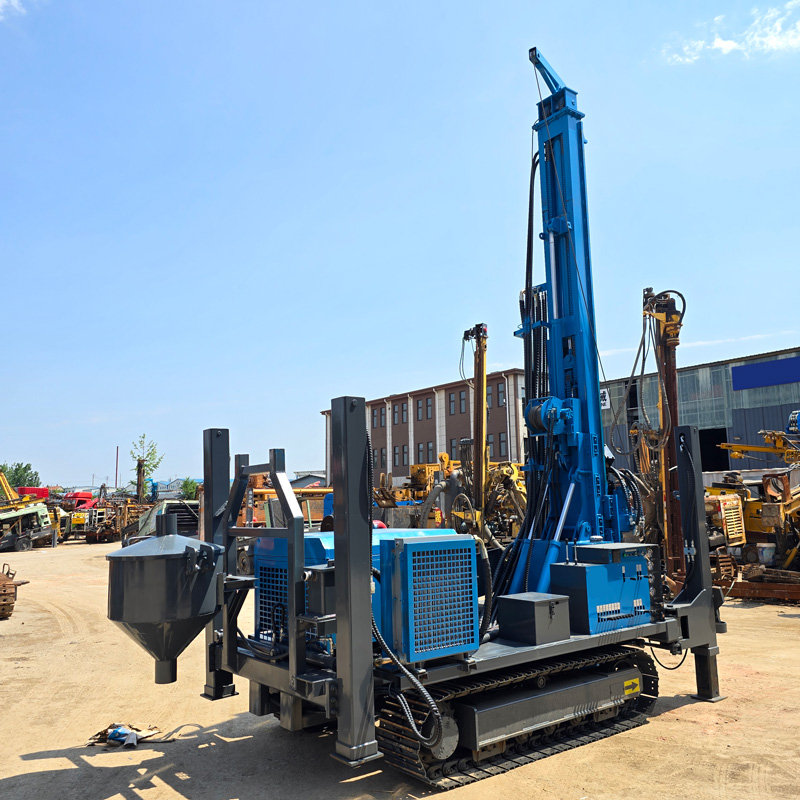
Reverse Circulation Drilling Rig
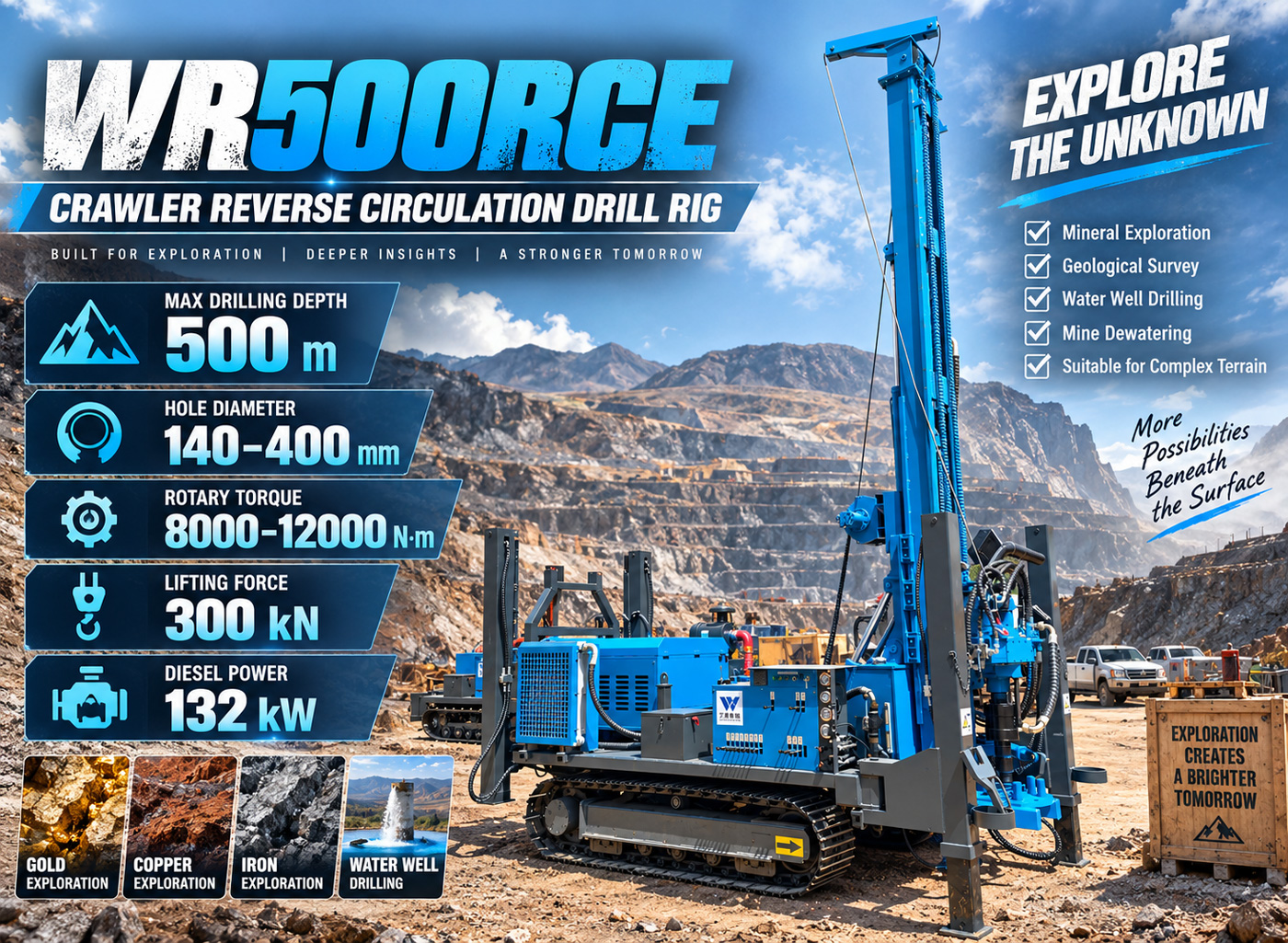
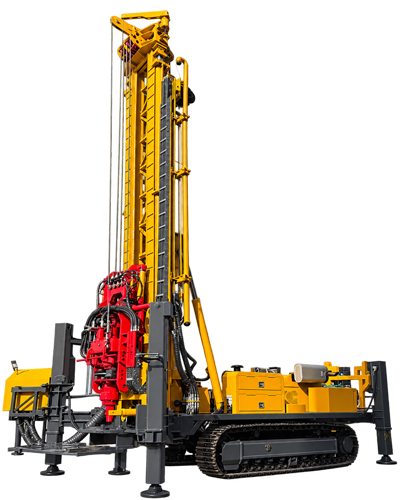
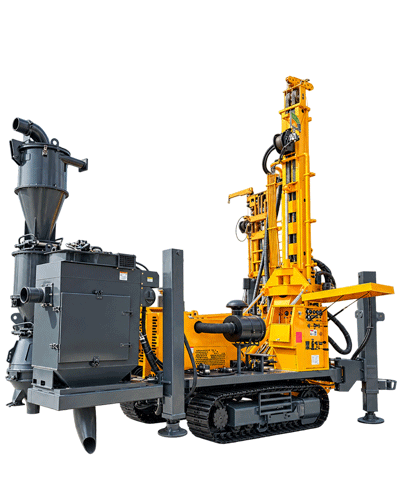
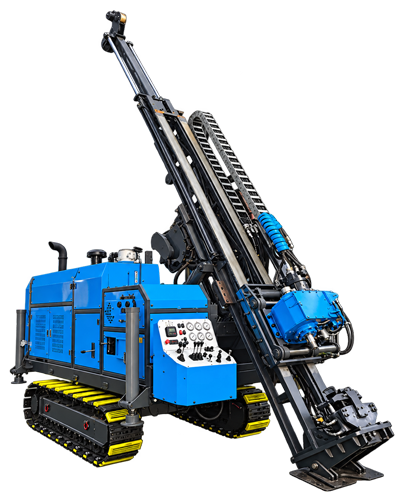
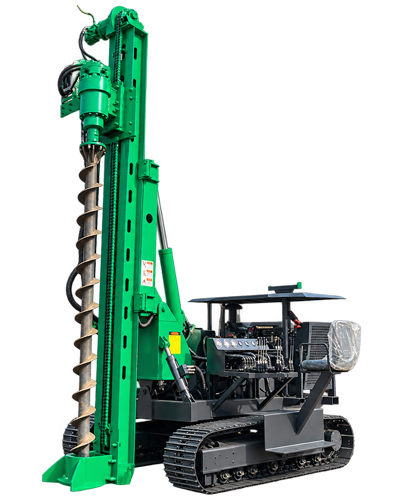
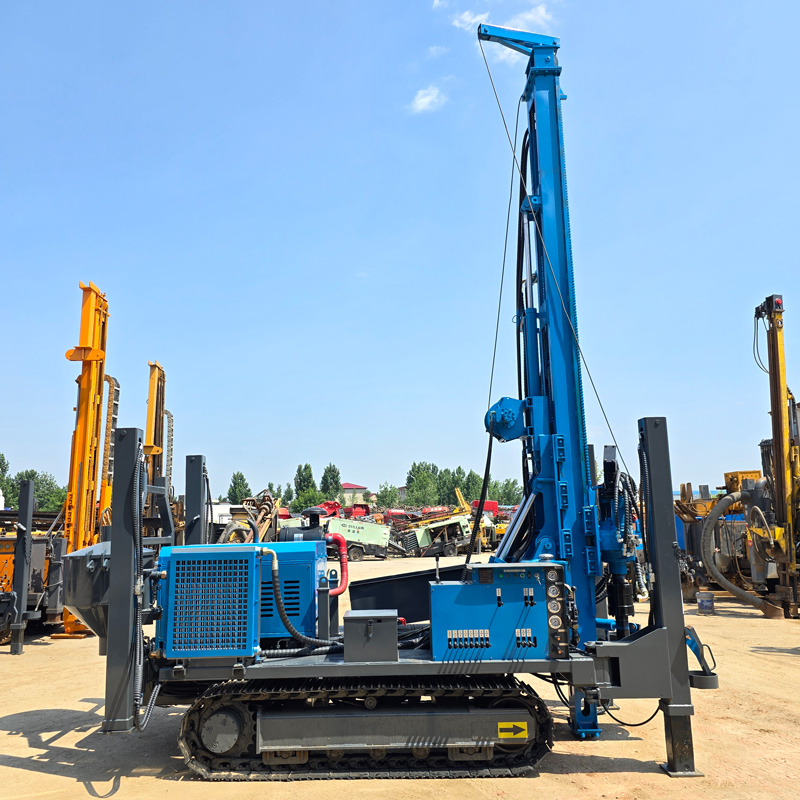
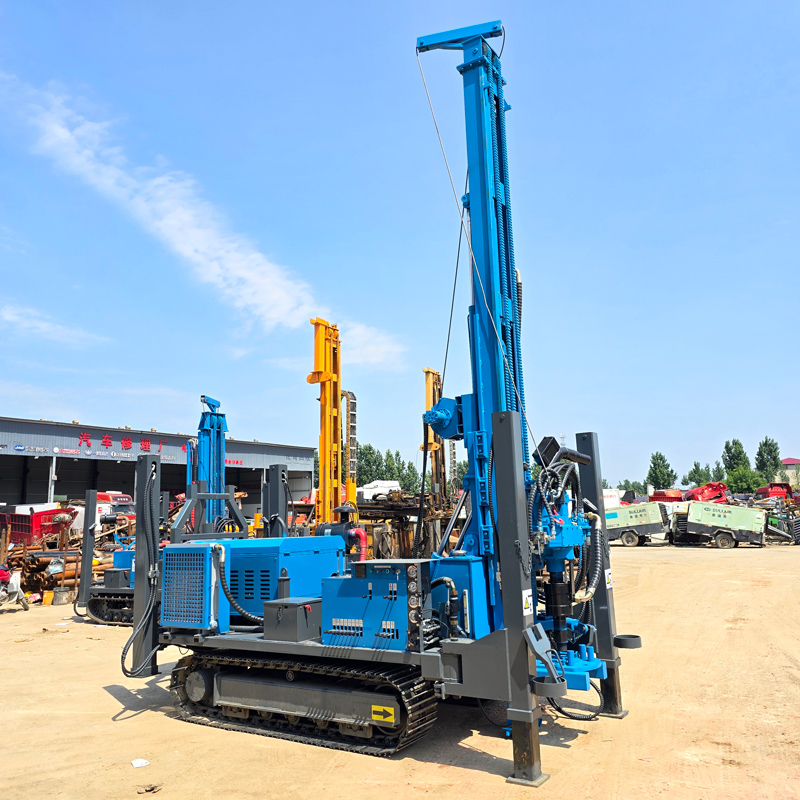
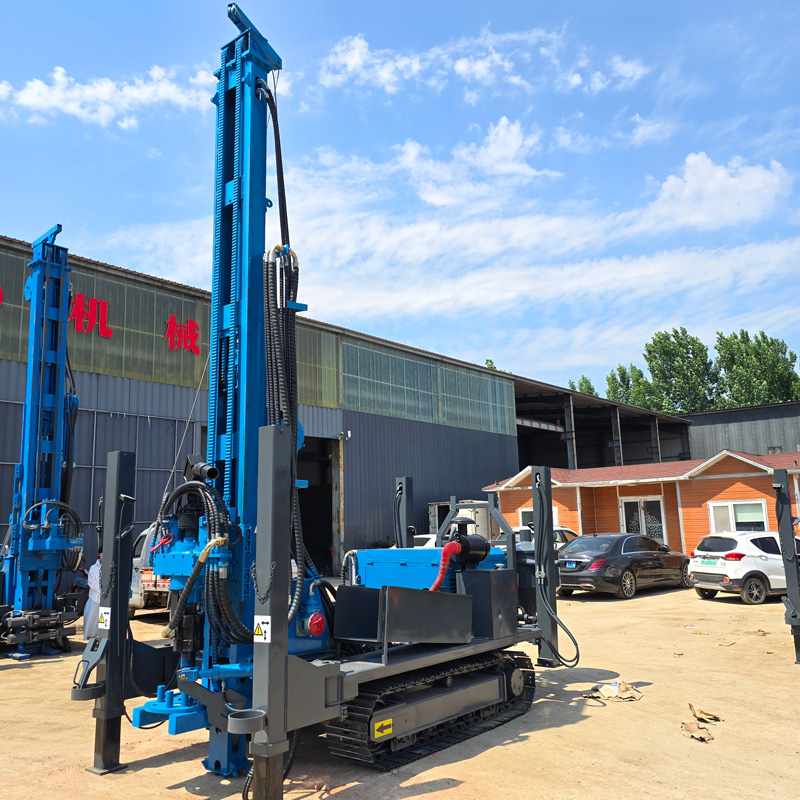
The WR500RCE is a 500-meter-class crawler-mounted air-lift reverse circulation drilling rig designed primarily for deep water well construction. Unlike RC models intended for mineral sampling, this product focuses on deep-hole cuttings removal, hard rock water wells, mining area water supply, and borehole completion in complex formations. At the same time, the E series positioning emphasizes cost-effectiveness, retaining 500-meter-class drilling capability, 300 kN lifting force, and relatively high rotary torque while controlling equipment procurement and configuration complexity.
For deep water well projects, the most critical factor is not having as many additional functions as possible, but whether drilling depth, lifting force, rotation, air compressor matching, and downhole cleaning capability are sufficient. The WR500RCE retains 132 kW power, 8000–12000 N·m rotary torque, 300 kN lifting force, and multiple drill pipe configurations. It is more suitable for construction teams that want to enter the 500-meter-class water well market while controlling initial equipment investment.
Air-lift reverse circulation uses compressed air to establish return flow in the inner pipe, carrying rock cuttings and drilling debris from the bottom of the hole back to the surface along the inside of the drill pipe. For deep hard rock water wells, this cuttings removal path can reduce the long-distance upward return of cuttings in the annulus, helping maintain a clean hole bottom and reducing regrinding and sediment problems. Actual results still depend on air compressor displacement, hole diameter, drill pipe sealing, and formation conditions.
With a maximum drilling depth of 500 m and a borehole diameter of 140–400 mm, it can cover various needs such as rural deep wells, high-flow agricultural water wells, industrial water wells, and mining area water supply. For areas with deep groundwater levels or unstable shallow aquifers, 500-meter-class equipment provides greater depth margin for water exploration, but the final well depth should still be determined by hydrogeological data and the actual water-producing layer.
The WR500RCE can be used for irrigation water wells in large farmland, orchards, greenhouses, and livestock farms. The 140–400 mm diameter range allows different well diameters to be designed according to well casing size, submersible pump, and expected water yield. For agricultural projects requiring larger pumping volumes, in addition to drilling depth, attention should also be paid to well casing, screen pipe, and aquifer section design.
Mining projects usually require domestic water, dust suppression, equipment washing, and auxiliary production water sources. Mining area formations often have a high proportion of hard rock and average road conditions, making the WR500RCE crawler chassis and pneumatic reverse circulation process more suitable for this environment. For open-pit mines, exploration camps, and remote mines far from water supply networks, 500-meter-class drilling depth can also provide greater space for groundwater development.
For open-pit mine slopes, areas around underground mines, and deep foundation pit projects, some projects require dewatering wells arranged through boreholes. The WR500RCE can undertake the corresponding borehole construction, but the hole positions, well diameter, screen pipe, pump capacity, and spacing of dewatering wells must be determined based on hydrogeological calculations. The equipment is only a drilling platform and cannot replace a complete dewatering design.
The equipment is suitable for DTH down-the-hole drilling in relatively intact rock formations such as granite, basalt, limestone, and sandstone. During hard rock construction, DTH hammer impact, rotation speed, feed force, and air volume need to be coordinated and matched. If bottom-hole cuttings removal is poor, continuing to increase feed may instead aggravate drill bit wear and sticking risk.
Fracture zones are prone to block falling, hole shrinkage, air leakage, and sticking. After entering such hole sections, feed speed should be reduced, continuous hole cleaning should be maintained, and casing or foam assistance should be used according to hole wall stability. If pulling resistance continues to increase, the situation of falling blocks and sediment in the hole should first be assessed before deciding on treatment methods.
The difficulty in weathered rock and upper loose overburden is not "cannot drill," but hole wall instability. Soil layers, sand layers, gravel, and strongly weathered sections can first use casing, mud, or other hole stabilization methods to establish a stable hole section, then enter relatively intact rock formations for pneumatic reverse circulation drilling, thereby reducing hole wall problems in the later stages of deep holes.
When the borehole enters the main aquifer, groundwater will change the cuttings return and DTH hammer working state in the hole. The depth of the main water-producing layer should be recorded, and air supply, hole cleaning, and casing methods should be adjusted according to water inflow. During well completion, screen pipes and water-stop sections also need to be reasonably arranged according to aquifer position to ensure long-term pumping performance.
Open fractures, karst caves, and high-permeability formations may cause severe air leakage. If only pressure is increased while displacement is insufficient, effective airflow may still not be obtained at the bottom of the hole. In such cases, air compressor displacement can be increased according to severity, foam can be used, casing can be installed, or the drilling method can be adjusted to avoid large air losses causing DTH hammer failure.
The equipment has a lifting force of 300 kN and a feed force of 150 kN. In 500-meter-class boreholes, drill pipe self-weight, hole wall friction, and casing weight all increase significantly, so greater pulling capacity is beneficial for normal tripping and tool recovery. If abnormal resistance occurs, hole cleaning should be prioritized and downhole conditions assessed, avoiding direct use of maximum lifting force to pull forcefully.
Rotary torque is 8000–12000 N·m, and rotation speed is 40–160 r/min. Large diameter, hard rock, and high-friction conditions require low speed and high torque; stable hole sections with less resistance can use higher rotation speeds. Actual drilling should be adjusted in real time according to torque changes, cuttings return volume, and drilling tool condition.
The feed stroke can be configured as 3.3 m or 6.6 m, and supports 1.5 / 2 / 3 / 6 m drill pipes. The 6.6 m long stroke is suitable for projects that want to reduce pipe connection frequency and improve continuous drilling efficiency; the 3.3 m configuration is more conducive to controlling overall working height and site adaptability. The final choice should consider transportation, hole position space, and main drill pipe length.
The air compressor is key supporting equipment for the air-lift reverse circulation system. Recommended working air pressure is 1.7–3.5 MPa, and air consumption is 17–42 m³/min. As hole depth increases, hole diameter becomes larger, rock formations become harder, or construction altitude rises, required displacement increases. Actual selection must consider both DTH hammer and reverse circulation cuttings return requirements.
The equipment uses 132 kW diesel power with a rated speed of 2400 r/min. Mining areas, rural areas, and remote sites often lack stable power supply, and diesel power can provide better independent operation capability. During long-term high-load operation, engine cooling, air filtration, and fuel system maintenance should be strengthened.
Travel speed is about 2.5 km/h, with a reference gradeability of 30°. The crawler structure is more suitable for mining area gravel roads, rural roads, and generally uneven ground. Since the overall weight is about 12 T, ground bearing capacity and slope conditions must be confirmed before relocation, and movement should be cautious in soft soil and wet slippery areas.
The auxiliary winch has a lifting force of 20 kN and can be used for handling DTH hammers, drill pipes, casing tools, and some on-site accessories. Reasonable use of the auxiliary winch can reduce manual labor intensity, but rated load should be controlled during lifting, and personnel should be kept away from suspended objects and wire rope stress areas.
Transport dimensions are approximately 6300 × 2100 × 2500 mm, working dimensions are approximately 4000 × 2900 × 6800 mm, and overall weight is approximately 12 T. Before transportation, vehicle load capacity, loading fixation points, and road height limits should be confirmed; after arriving at the site, sufficient space for mast erection and a safe working range should also be reserved.
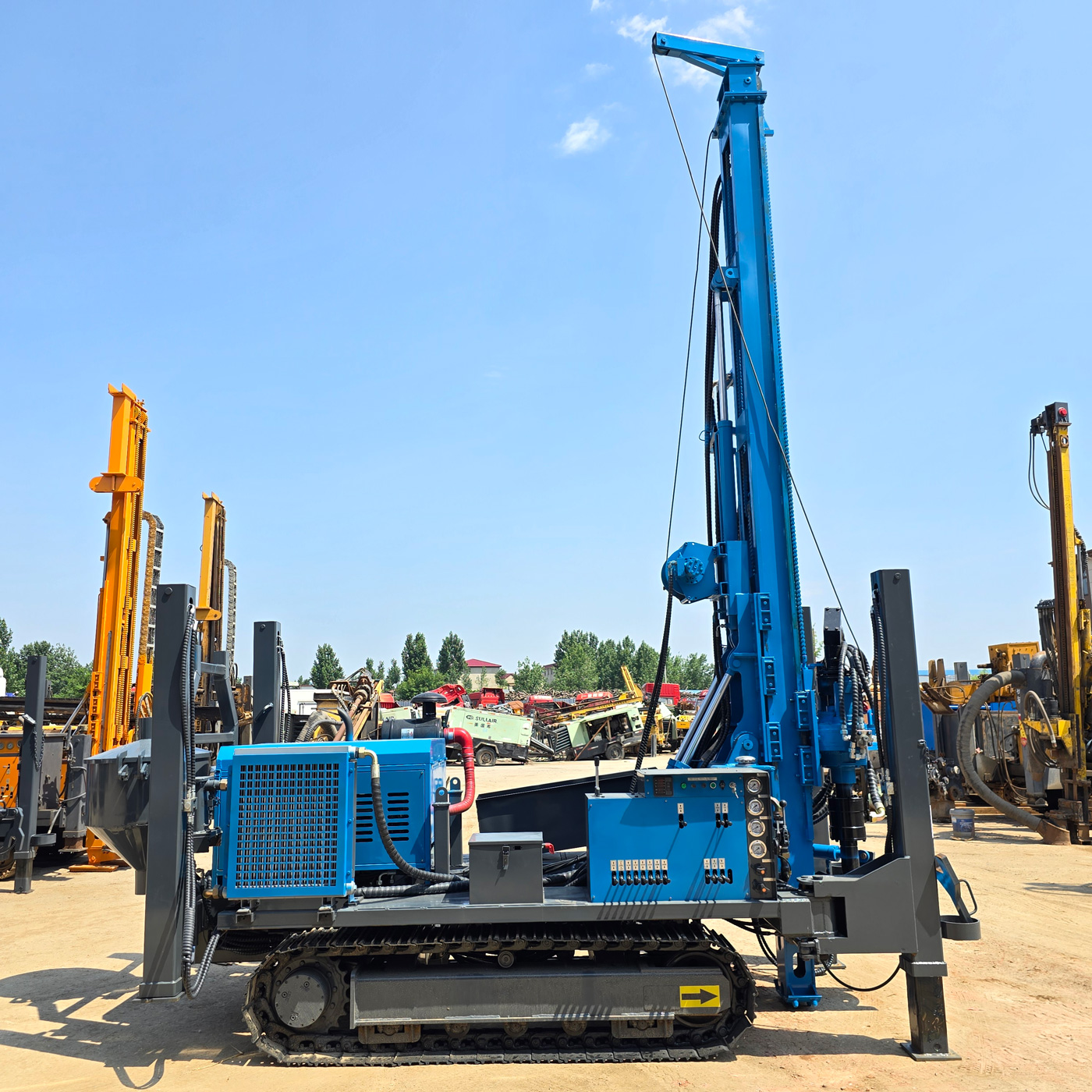
The complete construction system can be configured according to project requirements with reverse circulation DTH hammers, drill bits, drill pipes of different specifications, casing tools, air compressors, high-pressure air hoses, lubricators, foam pumps, and generators. Not all configurations are needed for different formations; reasonable optional configuration can continue to reflect the cost advantage of the E series while ensuring construction capability.
Before starting work each day, check high-pressure air hoses, joints, safety ropes, rotary head, crawler, mast, and hydraulic system; during drilling, continuously observe air pressure, cuttings return, water return, and torque changes; after construction is completed, promptly clean drilling tools and the reverse circulation channel, and check DTH hammer lubrication, drill pipe sealing, and high-pressure pipeline wear.
Due to differences in actual geological conditions, downhole tools, drilling angle, and operating methods, final drilling efficiency, drilling depth, and well completion results should be based on on-site working conditions.
| Parameter Item | Parameter Value |
|---|---|
| Basic Parameters | |
| Product Model | WR500RCE |
| Series Positioning | E series high cost-effectiveness / lower equipment investment |
| Equipment Type | Crawler-mounted air-lift reverse circulation water well drilling rig |
| Maximum Drilling Depth | 500 m |
| Borehole Diameter | 140–400 mm |
| Main Drilling Method | Reverse circulation DTH hammer drilling |
| Drill Pipe Configuration | |
| Drill Pipe Diameter | 76 / 89 / 102 / 114 mm |
| Drill Pipe Length | 1.5 / 2 / 3 / 6 m |
| Rotation and Feed System | |
| Rotary Torque | 8000–12000 N·m |
| Rotation Speed | 40–160 r/min |
| Feed Stroke | 3.3 / 6.6 m |
| Lifting Force | 300 kN |
| Feed Force | 150 kN |
| Fast Lifting Speed | 20 m/min |
| Fast Feed Speed | 40 m/min |
| Power System | |
| Power Type | Diesel engine |
| Rated Power | 132 kW |
| Rated Speed | 2400 r/min |
| Auxiliary System | |
| Auxiliary Winch Lifting Force | 20 kN |
| Air Compressor Matching Parameters | |
| Working Air Pressure | 1.7–3.5 MPa |
| Air Consumption | 17–42 m³/min |
| Compatible DTH Hammer | Medium and high-pressure reverse circulation series |
| Matching Notes | Air compressor should be selected according to hole depth, hole diameter, rock formation, altitude, and DTH hammer specifications |
| Crawler Chassis | |
| Travel Speed | 2.5 km/h |
| Gradeability | 30° |
| Applicable Sites | Mining areas, rural roads, gravel ground, and general uneven sites |
| Dimensions and Weight | |
| Transport Dimensions | 6300 × 2100 × 2500 mm |
| Working Dimensions | 4000 × 2900 × 6800 mm |
| Overall Weight | 12 T |
| Typical Formation Adaptability | |
| Intact Hard Rock | Suitable for granite, basalt, limestone, sandstone, etc. |
| Weathered Rock | Upper hole sections can use casing or hole stabilization tools according to stability |
| Mixed Formations | First stabilize loose overburden, then enter rock formation for drilling |
| Fault / Fracture Zone | Control feed, strengthen hole cleaning, and follow up with casing as needed |
| Aquifer | Adjust air compressor, casing, and hole cleaning methods according to water inflow |
| Air-Leakage Formation | Can increase air volume, use foam, casing, or adjust drilling process |
| Typical Applications | |
| Deep Water Wells | Rural, community, industrial, and general groundwater development |
| Agricultural Irrigation | High-flow irrigation wells, orchards, and livestock water use |
| Mining Area Water Supply | Mine domestic water, camp water supply, dust suppression, and auxiliary production water |
| Mining Area Dewatering | Open-pit mines, underground mining areas, and foundation pit dewatering boreholes |
| Geothermal Investigation | Temperature gradient holes and some shallow geothermal investigation projects |
| Optional Accessories | |
| RC DTH Hammer | Can be configured according to hole diameter and formation |
| Drill Bits and Drill Pipes | Selected according to hole diameter, hole depth, and process |
| Casing Tools | Optional |
| Air Compressor and High-Pressure Air Hose | Matched according to project |
| Foam Pump / Generator | Optional |
We are a professional drilling equipment manufacturer specializing in the research and development, production and supply of water well drilling rigs, core drilling rigs, reverse circulation drilling rigs, down-the-hole drilling rigs, truck-mounted drilling rigs and mineral exploration equipment.
© 2026 Shandong Hengjianhang Construction Machinery Co., Ltd. All rights reserved.